9 Best Hard-Wired Smoke Detector Replacements (October 2026)
The best hard-wired smoke detector replacements include the Kidde 20SA10 Hardwired 10-Year Smoke Alarm 3-Pack for fewer battery changes, the Kidde 30CUA10 Hardwired Smoke and CO Alarm for combo coverage, and the First Alert SMI100-AC Hardwired Smoke Alarm 6-Pack for whole-home sets.
On this page (9 sections)
- How we chose hard-wired smoke detector replacements
- The best hard-wired smoke detector replacements
- How do you choose the best hard-wired smoke detector replacement?
- Which backup battery makes sense for a replacement?
- How do you match a replacement to an interconnected system?
- What should you do before installation?
- How should you care for a hardwired alarm?
- What mistakes should you avoid when replacing a wired detector?
- Which hard-wired smoke detector replacement should you choose?
The Kidde 20SA10 is the best hard-wired smoke detector replacement for most smoke-only needs, with a built-in 10-year battery backup and interconnect capability. If you also need carbon monoxide detection, choose a combo alarm such as the Kidde 30CUA10 and confirm it works with your existing system.
For the best hard wired smoke detector replacement, match the old alarm's coverage, power connection and interconnect system before choosing by features. A similar shape does not guarantee that a replacement's plug or signaling will work with the alarms already installed.
Use our wired vs wireless smoke detector guide if you are deciding whether to keep a wired setup. If the alarm is beeping while you plan a replacement, our guide to why a smoke detector keeps beeping explains common causes.
Our picks at a glance
-
1
 Best for fewer battery changes
Kidde 20SA10 Hardwired 10-Year Smoke Alarm 3-Pack
9.2/10 our score
See it on Amazon -
2
 Best for combo coverage
Kidde 30CUA10 Hardwired Smoke and CO Alarm
9.0/10 our score
See it on Amazon -
3
 Best for whole-home sets
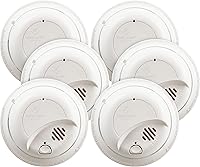
First Alert SMI100-AC Hardwired Smoke Alarm 6-Pack
8.8/10 our score
See it on Amazon
- 4
 Check it
First Alert Hardwired Smoke Alarm, Precision Detection
Best for matching quick connects - 5
 Check it
First Alert SC9120B Hardwired Smoke and CO Alarm 3-Pack
Best for three combo locations - 6
 Check it
First Alert SMI105-AC Hardwired Smoke Alarm, 10-Year Backup
Best for long backup intervals - 7
 Check it
Kidde Hardwired Voice Smoke and CO Alarm, 10-Year Backup
Best for spoken hazard alerts - 8
 Check it
Kidde 30CUAR Hardwired AA Smoke and CO Alarm
Best for AA backup batteries - 9
 Check it
Kidde Hardwired Ionization Smoke Alarm 4-Pack
Best for front-access batteries
How we chose hard-wired smoke detector replacements
The best hard-wired smoke detector replacements match the old alarm's job, backup power and interconnection needs. We compared those features and pack sizes to find options for replacing one unit or several.
Scores reflect how well each alarm's stated features fit common replacement needs. The key decisions are whether you need smoke-only or combo coverage, what backup battery works for you, and whether the new alarm can interconnect with the installed models.
| Product | Best for | Backup power | Alarm type | Pack size | Our score |
|---|---|---|---|---|---|
| Kidde 20SA10 Hardwired 10-Year Smoke Alarm 3-Pack | fewer battery changes | Built-in 10-year battery | Smoke only | 3 alarms | 9.2 |
| Kidde 30CUA10 Hardwired Smoke and CO Alarm | combo coverage | Built-in 10-year battery | Smoke and carbon monoxide | 9.0 | |
| First Alert SMI100-AC Hardwired Smoke Alarm 6-Pack | whole-home sets | 9V battery | Smoke only | 6 alarms | 8.8 |
| First Alert Hardwired Smoke Alarm, Precision Detection | matching quick connects | Included, type not specified | Smoke only | 8.6 | |
| First Alert SC9120B Hardwired Smoke and CO Alarm 3-Pack | three combo locations | 9V battery | Smoke and carbon monoxide | 3 alarms | 8.3 |
| First Alert SMI105-AC Hardwired Smoke Alarm, 10-Year Backup | long backup intervals | 10-year battery | Smoke only | Three alarms | 8.3 |
| Kidde Hardwired Voice Smoke and CO Alarm, 10-Year Backup | spoken hazard alerts | Built-in 10-year battery | Smoke and carbon monoxide | 8.2 | |
| Kidde 30CUAR Hardwired AA Smoke and CO Alarm | AA backup batteries | Two AA alkaline batteries | Smoke and carbon monoxide | 7.8 | |
| Kidde Hardwired Ionization Smoke Alarm 4-Pack | front-access batteries | 9V battery | Smoke only | 4 alarms | 7.7 |
The best hard-wired smoke detector replacements
The Kidde 20SA10 is the leading smoke-only option in this group, while the other picks cover combo alarms, different backup batteries and larger replacement sets. Your old unit's model number and wiring should guide the final choice.
Kidde 20SA10 Hardwired 10-Year Smoke Alarm 3-Pack: Best for fewer battery changes
- Hardwired 120V AC
- Built-in 10-year battery backup
- Photoelectric sensor
- Interconnect capability
A smoke-only three-pack with built-in battery backup and interconnect capability. It suits replacing several compatible alarms together.
Pros
- No routine battery replacement
- Interconnects with compatible Kidde alarms
- Photoelectric sensor
Cons
- Smoke detection only
- Check compatibility before connecting to existing alarms
The Kidde 20SA10 fits a multi-alarm smoke-only replacement when you want to avoid routine battery swaps. The three-pack uses a built-in 10-year backup battery and 120V AC power.
Kidde says its sensing technology detects smoke over 25% faster and helps reduce false alarms from cooking or steam. The photoelectric sensor pairs with an 85-decibel alarm and red LED light.
It can interconnect with other Kidde alarms, but requirements vary by model. Check your existing alarm models and the user guide before connecting the units.
Choose this set when three smoke-only alarms and built-in backup suit the job. For a related model comparison, see Kidde 20SA10 vs 20SD10.
Kidde 30CUA10 Hardwired Smoke and CO Alarm: Best for combo coverage
- Hardwired 120V AC
- Built-in 10-year battery backup
- Photoelectric and electrochemical sensors
- Interconnect capability
This hardwired combo alarm detects smoke and carbon monoxide, with a built-in 10-year backup battery. Check compatibility with your current interconnect system.
Pros
- Smoke and CO detection in one unit
- Built-in battery backup
- Interconnect capability
Cons
- Not a smoke-only alarm
- Compatibility depends on existing alarm models
The Kidde 30CUA10 suits one location where you want both smoke and carbon monoxide detection in a hardwired alarm. Its built-in 10-year battery backs up 120V AC power.
Photoelectric and electrochemical sensors handle the two hazards. The alarm also has an 85-decibel sound, a red LED light and interconnect capability with compatible Kidde alarms.
This is a single unit, so it is a focused choice for one replacement point rather than a multi-room refresh. Skip it if you need a smoke-only alarm or cannot confirm compatibility with your existing interconnect system.
For a wider look at combo options, see how to choose a smoke detector.
First Alert SMI100-AC Hardwired Smoke Alarm 6-Pack: Best for whole-home sets
- 120V AC power
- 9V battery backup
- Interconnects with compatible alarms
- Six alarms
A six-pack of hardwired smoke alarms with 9V battery backup. It can fit a multi-room replacement when the existing wiring and compatible alarms match.
Pros
- Six alarms in one pack
- Battery backup during power outages
- Interconnects with compatible devices
Cons
- Requires periodic battery replacement
- Confirm interconnect compatibility
The First Alert SMI100-AC six-pack is suited to replacing several compatible smoke-only alarms at once. Each alarm uses a replaceable 9V backup battery to keep operating during a power outage.
Its 85-decibel alarm has a test and silence button. The design includes a side-load battery compartment, and the alarms interconnect with compatible units.
Choose this set if six locations need smoke alarms and 9V backup is acceptable. Skip it if you need carbon monoxide detection or want a built-in long-term battery instead of replaceable cells.
Our guide to wireless interconnected smoke alarm sets can help if you are considering a different system type.
First Alert Hardwired Smoke Alarm, Precision Detection: Best for matching quick connects
- Precision Detection sensing
- Battery backup
- Quick Connect Plug
- Interconnect capability
First Alert includes a Quick Connect Plug for replacing an existing compatible alarm without rewiring. Confirm the plug and backup setup fit your installation.
Pros
- Quick Connect Plug included
- Designed for interconnection with compatible alarms
- Precision Detection sensing
Cons
- Backup battery type not specified here
- Check plug compatibility before buying
The First Alert Precision Detection alarm is a smoke-only replacement to consider when its Quick Connect Plug matches the existing connection. First Alert says the included plug allows replacement without rewiring.
Its sensing technology is designed to reduce cooking nuisance alarms and provide early warning in a home fire emergency. It has battery backup and can interconnect with compatible alarms.
The backup battery type is not specified here, so this pick is a poor fit if you need to know the exact battery format before buying. Confirm the connector and model compatibility before removing the old alarm.
Choose it when the plug works with your installation. If your current alarm keeps sounding, see why a smoke detector keeps beeping for common causes.
First Alert SC9120B Hardwired Smoke and CO Alarm 3-Pack: Best for three combo locations
- Smoke and CO detection
- 9V battery backup
- Three alarms
- Interconnects with compatible First Alert or BRK alarms
This three-pack combines smoke and CO detection with 9V backup batteries. It suits replacing several compatible hardwired combo alarms.
Pros
- Three combo alarms
- Battery backup during power failure
- Interconnects with compatible alarms
Cons
- Requires battery replacement
- Confirm compatibility with existing wiring and alarms
The First Alert SC9120B three-pack combines smoke and carbon monoxide detection with replaceable 9V backup batteries. It suits several rooms where combo coverage is needed and the existing system accepts compatible First Alert or BRK alarms.
An ionization sensor detects smoke, while an electrochemical sensor detects carbon monoxide. Indicator lights show which hazard is detected, and the alarm has an 85-decibel siren.
Choose this pack for a multi-room combo update with 9V backup. Skip it if your current wiring or interconnect setup is incompatible, or if you prefer a built-in battery that does not need periodic replacement.
See our guide to smoke alarm and carbon monoxide detector combos for more options.
First Alert SMI105-AC Hardwired Smoke Alarm, 10-Year Backup: Best for long backup intervals
- 10-year battery backup
- Precision Detection sensing
- Interconnect capability
- End-of-life warning
The SMI105-AC pairs hardwired smoke detection with a 10-year battery backup. Its end-of-life warning helps signal when the alarm needs replacement.
Pros
- 10-year battery backup
- End-of-life warning
- Interconnects with compatible alarms
Cons
- Check compatibility with the existing system
- Smoke detection only
The First Alert SMI105-AC is a smoke-only option with a 10-year battery backup and hardwired power. Its end-of-life warning helps signal when the alarm needs replacement.
First Alert says its Precision Detection sensing is designed to reduce cooking nuisance alarms while providing early warning. The alarm can interconnect with compatible units, so check the existing models before replacing just one detector.
The package contains three alarms, making it useful for updating several locations. Choose it when long-term backup matters and smoke-only coverage is right; skip it if the old units are combo alarms.
If you are planning a larger refresh, review how long smoke detectors last before setting a replacement schedule.
Kidde Hardwired Voice Smoke and CO Alarm, 10-Year Backup: Best for spoken hazard alerts
- Smoke and CO detection
- Built-in 10-year battery backup
- Voice alerts
- Interconnect capability
Voice alerts identify fire or carbon monoxide, and the alarm has a built-in 10-year backup battery. Check that its interconnect options suit your system.
Pros
- Voice alerts name the detected hazard
- Smoke and CO detection
- Built-in battery backup
Cons
- Voice alerts may not suit every preference
- Verify interconnect requirements
The Kidde voice alarm suits a multi-location replacement where spoken hazard alerts are useful. Its voice warnings identify fire or carbon monoxide, and its built-in 10-year battery provides backup.
The four-pack detects smoke and CO, operates on 120V AC and can interconnect with compatible alarms. Kidde notes that interconnection options and requirements differ by model, so check the user guide before adding it to a network.
Choose this set if you want voice alerts and need several combo alarms. Skip it if you prefer a simpler audible alert or cannot confirm compatibility with the existing system.
For CO alarm placement guidance, see how many carbon monoxide detectors you need.
Kidde 30CUAR Hardwired AA Smoke and CO Alarm: Best for AA backup batteries
- Hardwired 120V AC
- Two AA battery backup
- Smoke and CO detection
- Interconnect capability
This Kidde combo alarm uses two AA batteries for backup and detects both smoke and carbon monoxide. Choose it if you prefer replaceable backup batteries.
Pros
- Uses two AA backup batteries
- Smoke and CO detection
- Interconnect capability
Cons
- Backup batteries need replacement
- Check model compatibility before connecting
The Kidde 30CUAR is a hardwired smoke-and-CO alarm with two AA alkaline batteries for backup. It operates on 120V AC and can interconnect with compatible Kidde alarms.
It uses photoelectric and electrochemical sensors, with an 85-decibel alarm and red LED light. Kidde says its sensing technology helps reduce false alarms from everyday cooking or steam.
Choose it if combo coverage and replaceable AA backup fit your preferences. Skip it if you want a smoke-only detector or do not want to maintain replaceable batteries.
Kidde Hardwired Ionization Smoke Alarm 4-Pack: Best for front-access batteries
- 120V power
- 9V battery backup
- Ionization sensor
- Front-load battery door
This four-pack uses ionization sensing and a replaceable 9V backup battery. Its front-load battery door allows battery changes without removing the alarm from its bracket.
Pros
- Four alarms in one pack
- Front-load battery door
- Test and hush button
Cons
- Requires battery replacement
- Ionization sensor type may differ from the alarm being replaced
The Kidde ionization four-pack suits a smoke-only refresh when front-access battery changes are useful. Its 9V battery doors let you replace batteries without taking each alarm off its mounting bracket.
The alarms use 120V power and ionization sensing. Kidde describes this sensor as detecting invisible fire particles associated with flaming fires, and recommends using both ionization and photoelectric alarms for coverage of different fire types.
Choose it when you need four smoke-only alarms and accept periodic battery changes. Skip it if the replacement must preserve a different sensor type or if the existing interconnect setup is not compatible.
How do you choose the best hard-wired smoke detector replacement?
Start with the old alarm's model number, alarm type, connector and backup battery. Those details narrow the choices before you compare features.
First decide whether the location needs smoke-only detection or a smoke-and-CO combo. Replacing a combo alarm with a smoke-only unit removes CO detection at that point, so keep the same coverage unless another appropriate CO alarm serves the location.
Next, identify the backup style. Built-in 10-year batteries reduce routine battery changes, while 9V and AA backups use replaceable cells; choose based on the maintenance you are willing to do.
Then check the connector and interconnect system. A plug that looks similar, or a shared brand name, does not prove compatibility.
Look up the exact old and replacement models in their instructions, and ask an electrician if the match remains unclear.
Pack size matters when several alarms need replacement. A single combo alarm suits one location, while three-, four- or six-alarm packs can cover multiple points if each location needs the same alarm type and compatible system.
Which backup battery makes sense for a replacement?
A built-in 10-year backup suits people who want fewer routine battery changes, while replaceable 9V or AA batteries suit people who prefer accessible standard cells. Every alarm still needs care and replacement according to its instructions.
The Kidde 20SA10, 30CUA10 and voice combo, along with the First Alert SMI105-AC, have 10-year backup batteries. The First Alert SMI100-AC and SC9120B use 9V batteries, and the Kidde 30CUAR uses two AA batteries.
The First Alert Precision Detection model has backup power, but the battery type is not specified here. Confirm that detail if a particular battery format matters to you.
A long-life backup battery does not mean the whole detector lasts forever. Check the alarm's replacement date and follow its end-of-life guidance.
How do you match a replacement to an interconnected system?
Confirm model compatibility before connecting a replacement to alarms that share an interconnect circuit. The alarms may use compatible power wiring but different connectors or signaling methods.
Read the model number on each existing alarm and compare the manufacturer's compatibility instructions with the new unit. If you cannot verify that the replacement will trigger the other alarms, replace the set with a compatible family or ask a qualified electrician.
Do not assume that two alarms from the same brand will interconnect. Keep a required alarm in place and working while arranging the replacement, and follow local requirements for any temporary work.
What should you do before installation?
Read the replacement alarm's instructions and local requirements before starting. If you are not comfortable with electrical wiring or the connector does not match, hire a qualified electrician.
Turn off power at the breaker before handling the wiring connection. Confirm the new alarm fits the mounting point and connector, then install it as directed rather than forcing a plug or modifying wiring.
After installation, restore power and use the test control. Test connected alarms as their instructions describe, and learn what the indicator lights and sounds mean for that model.
Keep the user guide where household members can find it. Note the installation or replacement date so you can check the alarm's service life later.
How should you care for a hardwired alarm?
Test the alarm as often as its instructions direct, and keep it free of dust using the recommended cleaning method. Replace backup batteries when the alarm signals they need attention, except for built-in batteries that are not user-replaceable.
Pay attention to chirps, warning lights and end-of-life signals. A chirp can point to a backup battery or service issue, so identify the alarm and follow its instructions instead of removing it and leaving the location unprotected.
Cooking nuisance alarms do not make an alarm safe to disconnect. Use the hush feature only as directed, and consider whether the alarm type and placement fit the room.
What mistakes should you avoid when replacing a wired detector?
The most common mistake is choosing by shape alone. A matching diameter does not confirm the plug, voltage, alarm type or interconnect behavior.
Do not replace a smoke-and-CO alarm with a smoke-only unit unless the location still has appropriate CO coverage. Also avoid connecting alarms across brands or models without checking their compatibility instructions.
Another mistake is forgetting the backup battery. A hardwired alarm may still need battery maintenance, and a built-in battery does not remove the need to replace the alarm at end of life.
Finally, do not leave a required alarm disconnected while waiting for parts or help. Keep the system complete and follow local rules during replacement.
Which hard-wired smoke detector replacement should you choose?
Choose the Kidde 20SA10 for smoke-only coverage across several compatible locations with built-in 10-year backup. Choose the Kidde 30CUA10 for one hardwired smoke-and-CO point, or a replaceable-battery model if standard 9V or AA cells fit your maintenance preference.
For a multi-room update, select a pack only after confirming that every location needs the same alarm type and the alarms work with the system. Before buying the best hard wired smoke detector replacement for your home, match the model, connector and interconnect requirements; use our wired vs wireless smoke detector guide if you are reconsidering the wiring approach.
Our top 3 picks at a glance
-
1
Best for fewer battery changes
Kidde 20SA10 Hardwired 10-Year Smoke Alarm 3-Pack
9.2/10 our score
See it on Amazon -
2
Best for combo coverage
Kidde 30CUA10 Hardwired Smoke and CO Alarm
9.0/10 our score
See it on Amazon -
3
Best for whole-home sets
First Alert SMI100-AC Hardwired Smoke Alarm 6-Pack
8.8/10 our score
See it on Amazon
Frequently asked questions
Can I replace a hard-wired smoke detector myself?
A replacement may use existing wiring, but electrical work and alarm compatibility matter. Turn off power at the breaker before handling wiring, follow the alarm's instructions and local rules, and use a qualified electrician if the wiring or connector doesn't match.
Never leave a required alarm disconnected.
Can I mix brands of hard-wired smoke alarms?
Only if the manufacturers confirm the models are compatible for interconnection. Hardwired alarms may share wiring but use different connectors or signaling methods.
Check the exact model instructions before connecting a new alarm to older units, and replace interconnected alarms as a compatible set when needed.
Should I replace all hardwired smoke detectors at once?
Replace alarms that are expired or at the end of their service life, and consider replacing the set when they interconnect and the models must be compatible. Check each alarm's manufacture or replacement date and follow its instructions.
A single failed unit may still need prompt replacement.
Do hardwired smoke alarms work during a power outage?
They can if they have working battery backup. Backup types vary: these picks include built-in 10-year batteries, replaceable 9V or AA batteries, and models where the backup type needs confirmation.
Check and maintain the backup as the alarm instructions direct.