10 Best Smoke Alarm and Carbon Monoxide Detector Combos (October 2026)
The best smoke alarm and carbon monoxide detector combos include the X-Sense SC07 Smoke and CO Alarm 5-Pack for multi-room homes, the Kidde 30CUA10 Hardwired Smoke and CO Alarm for wired Kidde systems, and the Kidde 30CUD10 10-Year Battery Smoke and CO Alarm for battery simplicity.
On this page (7 sections)
- How we chose smoke alarm and carbon monoxide detector combos
- Compare the best smoke and CO combo alarms
- The best smoke alarm and carbon monoxide detector combos
- What should you check before buying a combo alarm?
- How should you set up and care for a combination alarm?
- What mistakes should you avoid when choosing a combo alarm?
- Which smoke and CO combo should you choose?
The best smoke alarm and carbon monoxide detector combo depends on your wiring, coverage plan and preferred alerts. The X-Sense SC07 is a practical multi-room standalone choice, while the Kidde 30CUA10 fits homes with compatible hardwiring and interconnection needs.
A combo alarm detects smoke and carbon monoxide in one unit. Before choosing, decide whether you need a single replacement or several alarms, and whether you want voice alerts, a CO display or connected alarms that sound together.
If you're deciding between separate and combined devices, read whether smoke detectors detect carbon monoxide. To compare two X-Sense combos, see X-Sense SC01 vs SC07.
Our picks at a glance
-
1

-
2
 Best for wired Kidde systems
Kidde 30CUA10 Hardwired Smoke and CO Alarm
9.0/10 our score
See it on Amazon -
3
 Best for battery simplicity
Kidde 30CUD10 10-Year Battery Smoke and CO Alarm
8.9/10 our score
See it on Amazon
- 4
 Check it
Kidde 30CUD10-V 10-Year Voice Smoke and CO Alarm
Best for voice alerts - 5
 Check it
X-Sense SC01 Smoke and CO Alarm 5-Pack
Best for CO display packs - 6
 Check it
X-Sense SC06 Smoke and CO Alarm 5-Pack
Best for simple five-room setups - 7
 Check it
First Alert SC9120B Hardwired Smoke and CO Alarm 6-Pack
Best for six-alarm replacements - 8
 Check it
First Alert Battery Smoke and CO Alarm
Best for battery-only locations - 9
 Check it
First Alert Hardwired Smoke and CO Alarm
Best for First Alert wiring - 10
 Check it
Kidde 30CUDR AA Battery Smoke and CO Alarm
Best for replaceable batteries
How we chose smoke alarm and carbon monoxide detector combos
We compared power sources, sensor details, alert types, pack sizes and stated interconnection features. The picks below reflect how those features fit common needs, such as replacing a wired alarm, covering several rooms or avoiding routine battery changes.
A multi-pack can simplify buying for several locations, but pack size alone does not make it suitable for every home. Check placement requirements, wiring and whether you need alarms to alert one another.
Some standalone alarms use sealed or built-in batteries, while hardwired choices may include backup power. Decide which setup your rooms support before you compare optional features.
Compare the best smoke and CO combo alarms
The main differences are power source, number of alarms, display and connection options. Confirm your home's wiring and each model's instructions before replacing an installed system.
| Product | Best for | Power | Alarm type | Display | Our score |
|---|---|---|---|---|---|
| X-Sense SC07 Smoke and CO Alarm 5-Pack | multi-room homes | Sealed 10-year lithium battery | Standalone smoke and CO | Battery level and CO in PPM | 9.0 |
| Kidde 30CUA10 Hardwired Smoke and CO Alarm | wired Kidde systems | 120V AC with 10-year battery backup | 9.0 | ||
| Kidde 30CUD10 10-Year Battery Smoke and CO Alarm | battery simplicity | Built-in 10-year battery | 8.9 | ||
| Kidde 30CUD10-V 10-Year Voice Smoke and CO Alarm | voice alerts | Built-in 10-year battery | 8.7 | ||
| X-Sense SC01 Smoke and CO Alarm 5-Pack | CO display packs | Sealed 10-year lithium battery | Standalone smoke and CO | CO and battery status LCD | 8.6 |
| X-Sense SC06 Smoke and CO Alarm 5-Pack | simple five-room setups | Built-in 10-year lithium battery | Standalone smoke and CO | 8.4 | |
| First Alert SC9120B Hardwired Smoke and CO Alarm 6-Pack | six-alarm replacements | Hardwired with 9V battery backup | 8.3 | ||
| First Alert Battery Smoke and CO Alarm | battery-only locations | Battery operated | 8.0 | ||
| First Alert Hardwired Smoke and CO Alarm | First Alert wiring | Hardwired with 9V battery backup | 7.9 | ||
| Kidde 30CUDR AA Battery Smoke and CO Alarm | replaceable batteries | Two AA batteries | 7.7 |
The best smoke alarm and carbon monoxide detector combos
These picks cover standalone battery alarms, hardwired replacements and models with voice or multi-alarm options. Choose by the installation you have and the features you'll use.
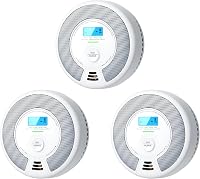
X-Sense SC07 Smoke and CO Alarm 5-Pack: Best for multi-room homes
- 5 alarms
- Sealed 10-year battery
- LCD with real-time CO readings
- No wireless interconnection
Five alarms can cover several rooms. The LCD shows real-time CO readings, while the standalone design has no wireless interconnection.
Pros
- 5-pack
- LCD shows CO readings
- No rewiring
Cons
- No wireless interconnection
- No Wi-Fi or base station support
The X-Sense SC07 five-pack suits homes that need several combo alarms without wiring. Each unit has a sealed lithium battery designed to provide 10 years of continuous power.
An LCD shows battery level and real-time carbon monoxide readings in parts per million. Photoelectric smoke sensing and electrochemical CO sensing combine in each unit.
The key limit is connectivity: SC07 is standalone. It does not support wireless interconnection, Wi-Fi or a base station, so skip it if one alarm must trigger others.
Choose this pack when you want the same model in multiple rooms and a CO display matters more than system links. For a detailed look at the connected version, see the X-Sense SC07-W review.
Kidde 30CUA10 Hardwired Smoke and CO Alarm: Best for wired Kidde systems
- 120V AC power
- Built-in 10-year battery backup
- Connects with other Kidde alarms
- 85-decibel alarm
This hardwired model has a built-in 10-year battery backup and can connect with other Kidde alarms. Check the guide for model-specific interconnection options.
Pros
- Hardwired power with backup
- Can connect with other Kidde alarms
- Smoke and CO sensing
Cons
- Requires a compatible hardwired setup
- Single unit
The Kidde 30CUA10 suits a compatible system that needs smoke and CO detection with backup power. It runs on 120V AC and has a built-in 10-year battery backup.
This model can connect with other Kidde alarms so that all connected alarms sound when one detects danger. Interconnection options and requirements vary by model, so check the user guide before combining alarms.
A red LED and an 85-decibel alarm provide visual and audible alerts. Kidde says its sensing technology is designed to reduce false alarms from everyday cooking or steam.
Choose the 30CUA10 if hardwired power and compatible interconnection are central to your plan. If you're comparing hardwired replacements, our Kidde 20SA10 vs 20SD10 guide explains how to think through wiring and battery choices.
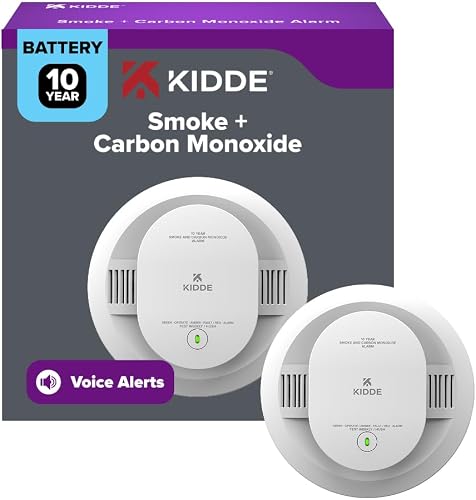
Kidde 30CUD10 10-Year Battery Smoke and CO Alarm: Best for battery simplicity
- Built-in 10-year battery
- No battery replacement
- 85-decibel alarm
- Red LED
The 30CUD10 runs on a built-in 10-year battery, so it does not need routine battery changes. It detects smoke and CO and has a red LED indicator.
Pros
- No routine battery replacement
- Smoke and CO detection
- 10-year limited warranty
Cons
- Single unit
- No voice alerts
The Kidde 30CUD10 suits buyers who want a single combo alarm with a built-in 10-year battery. It detects smoke and carbon monoxide, with a red LED for visual notification.
Kidde says the model's sensing technology helps distinguish real smoke from everyday cooking or steam. It is tested to meet UL 217 10th Edition, UL 2034 5th Edition and FCC standards.
This model needs no connection to household power. The battery is built in, so it avoids routine battery changes but cannot be swapped like AA cells.
Pick it for a battery-powered location where a voice alert is not needed. Compare it with the Kidde 30CUD10-V voice model after confirming the product and model number match what you need.
Kidde 30CUD10-V 10-Year Voice Smoke and CO Alarm: Best for voice alerts
- Built-in 10-year battery
- Voice alerts name the hazard
- 85-decibel alarm
- Red LED
Voice messages distinguish between “Fire” and “Warning, Carbon Monoxide.” The built-in 10-year battery avoids regular battery changes.
Pros
- Voice messages identify the hazard
- Smoke and CO detection
- 10-year limited warranty
Cons
- Single unit
- Battery is built in
The Kidde 30CUD10-V adds spoken messages that name the detected hazard. It says “Fire” for smoke and “Warning, Carbon Monoxide” for CO.
Like the standard 30CUD10, it has a built-in 10-year battery, an 85-decibel alarm and a red LED. The voice prompt gives occupants another cue about which hazard triggered the alarm.
This is a single battery-powered unit, not a multi-room set. Plan the number and placement of alarms using local requirements and each alarm's instructions.
Choose it when spoken identification of the hazard is useful in your household. The built-in battery avoids regular changes, but this is not the right fit if you specifically want replaceable AA cells.
X-Sense SC01 Smoke and CO Alarm 5-Pack: Best for CO display packs
- 5 alarms
- Sealed 10-year battery
- LCD for CO and battery status
- No wireless interconnection
This five-pack combines smoke and CO detection with sealed 10-year batteries. The SC01 is standalone, without wireless interconnection or Wi-Fi.
Pros
- 5-pack
- LCD status display
- No rewiring
Cons
- No wireless interconnection
- No Wi-Fi or base station support
The X-Sense SC01 five-pack offers sealed 10-year batteries and an LCD for CO and battery status. It installs without rewiring, which can help when adding alarms in rooms without existing alarm wiring.
The SC01 is a standalone model. It does not support wireless interconnection, Wi-Fi or a base station, so skip it if you need a connected alarm network.
Its photoelectric and electrochemical sensors detect smoke and CO in the same unit. The five alarms make the pack relevant when several rooms need coverage.
Choose it when you want five alarms with sealed batteries and an LCD. For a five-unit battery set without an LCD, also consider the SC06 below.
X-Sense SC06 Smoke and CO Alarm 5-Pack: Best for simple five-room setups
- 5 alarms
- Built-in 10-year lithium batteries
- No rewiring
- Photoelectric and electrochemical sensors
The SC06 five-pack uses built-in 10-year batteries and installs without rewiring. It is a standalone model without wireless interconnection.
Pros
- 5-pack
- No battery swaps during the stated battery life
- No rewiring
Cons
- No wireless interconnection
- No Wi-Fi or base station support
The X-Sense SC06 five-pack pairs smoke and CO detection with a built-in lithium battery designed for 10 years. Its photoelectric and electrochemical sensors detect both hazards in one standalone alarm.
Installation does not require rewiring, and the package includes mounting brackets, screws and anchors. That can suit adding several alarms where compatible power wiring is not available.
The SC06 does not support wireless interconnection, Wi-Fi or base station connection. If one alarm sounding must trigger others, choose a compatible connected system instead.
Pick this set if you want a five-pack and a built-in battery without an LCD for CO readings. The CO detector quantity guide can help you plan how many locations need alarms.
First Alert SC9120B Hardwired Smoke and CO Alarm 6-Pack: Best for six-alarm replacements
- 6 alarms
- Hardwired with 9-volt backup batteries
- Adapter plugs
- Smoke or CO indicator
This six-pack includes hardwired alarms with battery backup and adapter plugs to avoid rewiring. Confirm compatibility with your existing alarm system before replacing units.
Pros
- 6-pack
- Battery backup
- Adapter plugs included
Cons
- Requires a compatible hardwired setup
- Uses replaceable 9V backup batteries
The First Alert SC9120B six-pack is a hardwired combo option with battery backup. Adapter plugs are included to help with installation without rewiring, but verify compatibility with your existing alarm connections.
The alarm has a single test button and indicator lights that distinguish smoke from carbon monoxide. A side-load battery compartment and locking brackets are also part of the design.
This six-alarm set may suit a broader replacement job. Its backup power uses 9-volt batteries, so include battery checks in your upkeep routine.
Choose this pack when you are replacing compatible hardwired alarms and want six units together. If your system uses another connector or interconnection type, confirm the requirements before buying.
First Alert Battery Smoke and CO Alarm: Best for battery-only locations
- Battery operated
- Smoke and CO detection
- Test and silence button
- End-of-life warning
This battery-operated combination alarm has a test and silence button and an end-of-life warning. Its power source can suit places without a hardwired alarm connection.
Pros
- No hardwiring needed
- Test and silence button
- End-of-life warning
Cons
- Battery replacement is part of upkeep
- Single alarm
The First Alert battery combo alarm suits a location where a hardwired connection is not a fit. It combines smoke and CO detection with a test and silence button.
An end-of-life warning signals when it is time to replace the alarm. First Alert's Precision Detection technology is designed to reduce cooking nuisance alarms.
This model is battery operated, so plan to check and replace its battery as needed. It does not have the sealed 10-year battery described for some other picks here.
Choose it for a battery-powered installation with a test button and end-of-life warning. Follow its instructions for battery care and replacement timing.
First Alert Hardwired Smoke and CO Alarm: Best for First Alert wiring
- Hardwired power
- Battery backup
- Quick Connect Plug
- Interconnects with compatible alarms
The hardwired alarm includes battery backup and a Quick Connect Plug. It can interconnect with compatible alarms, so check the model requirements before adding it to a system.
Pros
- Battery backup
- Quick Connect Plug
- Interconnection with compatible alarms
Cons
- Compatibility matters for interconnection
- Single alarm
The First Alert hardwired combo includes battery backup and a Quick Connect Plug. It also supports early warning interconnection with compatible alarms, allowing connected units to sound together.
The plug can help with installation, but compatibility still matters. Check the connector and requirements for your current alarm before treating it as a direct replacement.
A test and silence button supports routine checks. First Alert's Precision Detection technology is designed to reduce cooking nuisance alarms.
Choose this model when you have a compatible First Alert system and want hardwired power with backup. For a six-unit hardwired pack, compare the SC9120B above and verify the wiring details for either choice.
Kidde 30CUDR AA Battery Smoke and CO Alarm: Best for replaceable batteries
- Two included AA batteries
- No wiring required
- 85-decibel alarm
- Red LED
Two included AA batteries power this Kidde alarm, which needs no wiring. Its batteries are replaceable, unlike the sealed or built-in battery models above.
Pros
- No wiring required
- Two AA batteries included
- Smoke and CO detection
Cons
- Batteries need replacement
- Single unit
The Kidde 30CUDR uses two included AA batteries, so it can be installed without wiring and the cells can be replaced. It detects smoke and carbon monoxide and has an 85-decibel alarm with a red LED.
Kidde says its sensing technology helps reduce false alarms from cooking or steam while maintaining smoke detection. The model is tested to meet UL 217 10th Edition, UL 2034 5th Edition and FCC standards.
This is a single alarm, so it can suit a specific room rather than a multi-pack. Unlike sealed-battery models, it needs battery checks and replacement when indicated.
Choose it if replaceable AA cells matter more than a sealed long-life battery. Follow the manual's instructions for testing and battery changes.
What should you check before buying a combo alarm?
Start with the power source and current wiring, then check how many locations need alarms and whether they should interconnect. Those choices narrow the field before you compare displays, voice prompts or other features.
Does a smoke alarm and carbon monoxide detector need to be hardwired?
No. Battery models can operate without household wiring, while hardwired models connect to AC power and may include battery backup.
For a replacement, check the connector, voltage and interconnection requirements. A plug that fits does not by itself confirm that an alarm is compatible with the whole system.
If you're choosing between standalone and connected options, our guide to wired and wireless smoke detectors explains the trade-offs.
Do all combo alarms interconnect?
No. The X-Sense SC07, SC01 and SC06 here are standalone models, while the Kidde 30CUA10 can connect with other Kidde alarms.
First Alert models also describe interconnection with compatible units. Confirm the exact model guide and compatibility requirements before adding alarms to an existing system.
Don't assume alarms from different brands or product lines will connect. If whole-home alerts are important, make interconnection compatibility a buying requirement.
Is a 10-year battery the same as a 10-year alarm life?
No. Some models have batteries designed for 10 years, but battery duration and alarm replacement timing are separate questions.
Follow the alarm's end-of-life signal and instructions. For more on smoke alarm replacement timing, see how long smoke detectors last.
How do you choose between a sealed battery and replaceable cells?
Choose a sealed or built-in battery when you want to avoid routine battery swaps. Choose replaceable cells if you prefer to change the batteries rather than replace an alarm with a built-in battery when its battery reaches the end of its stated life.
The Kidde 30CUDR uses two AA batteries, while the Kidde 30CUD10 and 30CUD10-V have built-in 10-year batteries. First Alert's battery model is also battery operated, so follow its manual for checking and replacement.
How should you set up and care for a combination alarm?
Install each alarm according to its own manual and your local fire and building rules. A combo unit saves space, but it still needs suitable placement for both smoke and carbon monoxide detection.
Before mounting, identify the room and position required by the instructions. Use the included bracket and hardware for standalone models, and confirm wiring and connector compatibility for hardwired replacements.
After installation, use the test button as directed. Keep the manual and note the model and installation date so you can follow care instructions and recognize end-of-life alerts.
Keep alarms clear of dust and obstructions, and follow the manufacturer's cleaning directions. Do not paint over an alarm or cover its openings, since that can interfere with sensing.
Test the alarm on the schedule in its manual, and replace batteries when the alarm or instructions indicate. For a CO-specific walkthrough, see how to test a carbon monoxide detector.
What mistakes should you avoid when choosing a combo alarm?
The most common mistake is assuming that every combo alarm works with an existing system. Check power, connector type and interconnection compatibility before buying a hardwired replacement.
Another mistake is treating a five-pack as proof that the home has enough alarms. Work out the needed locations using local requirements and the manuals, then choose a pack size that matches the plan.
Don't mistake a test button for a reason to ignore an active alarm. Follow the alarm's emergency instructions and respond to smoke or carbon monoxide alerts promptly.
Finally, don't assume a long-life battery means you can forget about the alarm. You still need to test it as directed, keep it unobstructed and respond to end-of-life or fault signals.
Which smoke and CO combo should you choose?
Choose the X-Sense SC07 if you need several standalone alarms and want an LCD with CO readings. Pick the Kidde 30CUA10 for compatible hardwired Kidde interconnection, or the 30CUD10-V if voice alerts are your priority.
For battery-powered installation, choose a built-in battery model to avoid routine changes, or the Kidde 30CUDR if replaceable AA cells suit you. Before buying the best smoke alarm and carbon monoxide detector for your home, confirm placement, wiring and system compatibility, then read our guide to how many carbon monoxide detectors you need.
Our top 3 picks at a glance
-
1
-
2
Best for wired Kidde systems
Kidde 30CUA10 Hardwired Smoke and CO Alarm
9.0/10 our score
See it on Amazon -
3
Best for battery simplicity
Kidde 30CUD10 10-Year Battery Smoke and CO Alarm
8.9/10 our score
See it on Amazon
Frequently asked questions
Are combination smoke and carbon monoxide alarms a good choice?
A combination alarm detects both smoke and carbon monoxide in one unit. It can simplify installation and upkeep, but check that you have enough alarms for the home and that their power and interconnection features match your setup.
A combo alarm does not replace following local alarm placement rules.
Should I choose a hardwired or battery combo alarm?
Choose a hardwired model if your home has compatible wiring and you want alarms connected to that system. A battery model can suit a location without wiring, while built-in batteries reduce routine changes.
Check backup power, connector type and interconnection compatibility before replacing an existing alarm.
Do all combo alarms interconnect?
No. The X-Sense SC07, SC01 and SC06 listed here do not support wireless interconnection, while Kidde 30CUA10 can connect with other Kidde alarms.
Read the model guide to confirm compatible units and wiring requirements.
Where should I put combination smoke and CO alarms?
Follow the instructions for the exact model and your local fire and building rules when placing alarms. Smoke and CO alarms may have different placement guidance, so review both parts of the manual.
Our guide to smoke detector placement covers common locations, and the CO detector quantity guide helps with planning.
How often should I test a combination alarm?
Use the test button as directed in the manual and follow the manufacturer's schedule. A test checks the alarm function, but it does not replace checking the sensor's end-of-life date or responding to a real alert.
For CO-specific steps, see how to test a carbon monoxide detector.