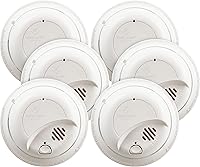
Kidde 20SA10 Hardwired 10-Year Smoke Alarm Review: Worth It? (October 2026)
The Kidde 20SA10 suits homes replacing compatible hardwired alarms that want a 10-year battery backup and interconnected alerts. Check your existing wiring and model compatibility before choosing it.
On this page (7 sections)
- The Kidde 20SA10 review: who is it for?
- What are the Kidde 20SA10’s key features?
- Will the Kidde 20SA10 work with your existing alarms?
- How does it compare with First Alert hardwired alarms?
- Is the 20SA10 a good choice for a hardwired replacement?
- How should you maintain a Kidde 20SA10?
- Should you buy the Kidde 20SA10?
The Kidde 20SA10 is a hardwired smoke alarm with a built-in 10-year battery backup and interconnect capability. It suits you if you’re replacing compatible Kidde alarms and want backup power without routine battery changes.
Its photoelectric sensor and red LED distinguish it from the First Alert alternatives below. The main buying check is compatibility: hardwired alarms and their interconnect systems need to work together.
The Kidde 20SA10 review: who is it for?
The Kidde 20SA10 fits homes that already have compatible hardwired alarms and need a replacement with a built-in 10-year battery. It runs on 120V AC and has a battery backup.
Kidde 20SA10 Hardwired 10-Year Smoke Alarm 3-Pack: Best for Kidde hardwired replacements

- 120V AC power
- Built-in 10-year battery
- Photoelectric sensor
- Kidde interconnect capability
A hardwired Kidde alarm with a built-in 10-year battery backup and interconnect capability. Confirm the wiring and compatibility requirements for your existing alarms before replacing them.
Pros
- Built-in 10-year battery backup
- Photoelectric sensor
- Red LED warning light
- Can interconnect with other Kidde alarms
Cons
- Requires compatible hardwired installation
- Interconnection options vary by model
Kidde says the alarm detects smoke over 25% faster, based on internal testing comparing smoldering wood fires for Kidde 9th Edition products with leading competitor 8th Edition products. That comparison is specific to those conditions and doesn’t tell you how every alarm performs in every fire.
Kidde says its sensing technology helps reduce false alarms from cooking or steam while maintaining detection when smoke is present. Follow the user guide for alarm placement and care.
When should you choose the 20SA10?
Choose it when your existing wiring and alarms are compatible, you prefer a photoelectric sensor, and you want a built-in battery backup. The 3-pack can suit a home replacing several alarms at once.
Look elsewhere if you need a wireless alarm or a combination smoke and carbon monoxide alarm. Read Kidde 20SA10 vs 20SD10 for a comparison with Kidde’s battery-powered alternative.
What are the Kidde 20SA10’s key features?
The 20SA10 combines hardwired power, a photoelectric sensor, a built-in battery and interconnect capability. These details matter when matching a replacement to your home’s existing alarm system.
| Detail | Kidde 20SA10 |
|---|---|
| Power | 120V AC with built-in 10-year battery |
| Sensor | Photoelectric |
| Alarm | Audible, 85 decibels |
| Visual warning | Red LED light |
| Interconnect | Connects with other Kidde alarms; requirements vary |
| Pack size | 3 alarms |
| Warranty | 10-year limited warranty |
The battery is built into the alarm, so it isn’t a removable backup battery you swap when it chirps. Kidde says the design eliminates low-battery chirps and can save up to 40 dollars over the alarm’s life in battery replacements.
The warranty covers the alarm, not battery performance.
Kidde says the 20SA10 meets UL 217 10th Edition and FCC standards. Follow the user guide for installation, use and interconnection details.
Will the Kidde 20SA10 work with your existing alarms?
Check the brand, model and wiring requirements before connecting the 20SA10 to an existing alarm system. Kidde says the 20SA10 connects with other Kidde alarms, but interconnection options and requirements vary by model.
Write down the model numbers on the alarms you plan to keep. Compare them with the 20SA10’s user guide, and ask Kidde or a qualified installer if the guide doesn’t clearly cover your setup.
Don’t assume alarms will interconnect just because they share a wire or fit the same mounting base. A mismatch can stop connected units from sounding as intended.
If you’re comparing wiring types before replacing an alarm, our guide to wired vs wireless smoke detectors explains how the options differ. For more replacement choices, see hard-wired smoke detector replacements.
How does it compare with First Alert hardwired alarms?
The First Alert alternatives offer different backup and installation details, so choose based on the alarm you’re replacing and the features you need. Check compatibility before choosing either as a replacement.
First Alert Hardwired Smoke Alarm, Precision Detection: Best for a quick-connect replacement

- Hardwired power
- Battery backup
- Quick Connect Plug
- Precision Detection
A First Alert hardwired alternative with a Quick Connect Plug for replacing an existing alarm without rewiring. Check the exact model and backup battery details before you buy.
Pros
- Quick Connect Plug included
- Compatible alarms can interconnect
- Alarm indicator identifies the initiating unit
Cons
- Backup battery details vary by exact model
- Interconnect compatibility needs checking
The First Alert Hardwired Smoke Alarm includes a Quick Connect Plug for replacing an existing alarm without rewiring. Confirm that the plug and alarm model suit your existing setup before buying.
Its backup battery details depend on the exact model.
First Alert SMI105-AC Hardwired Smoke Alarm, 10-Year Backup: Best for a 10-year backup alternative

- Hardwired power
- 10-year battery backup
- Ionization sensor
- Interconnect capability
This First Alert option pairs hardwired power with a 10-year battery backup and interconnect capability. Check compatibility with the alarms already installed in your home.
Pros
- 10-year battery backup
- Compatible alarms can interconnect
- Alarm indicator identifies the initiating unit
Cons
- Ionization sensor differs from the Kidde's photoelectric sensor
- Compatibility depends on the other alarms
The First Alert SMI105-AC has a 10-year battery backup and Precision Detection. It uses an ionization sensor, while the Kidde uses a photoelectric sensor.
Both can interconnect with compatible alarms, so check model requirements for your home.
For a closer look at another First Alert hardwired model, read our First Alert SMI100-AC review. Compare its exact model number and backup details with the alarm you plan to replace.
Is the 20SA10 a good choice for a hardwired replacement?
The 20SA10 can suit you as a compatible hardwired replacement with a built-in 10-year battery. Its 3-pack may work if several alarms need replacing, but first confirm that each location and the wiring match the user guide.
Before ordering, check whether your current alarms interconnect, note their model numbers and confirm the connection requirements. If you’re choosing between a hardwired alarm and a battery-powered one, the guide to smoke detector types and power can help you compare.
Follow the user guide for installation and testing. If you’re uncertain about the wiring or interconnection, contact a qualified installer.
How should you maintain a Kidde 20SA10?
Test the alarm as directed in its user guide and keep it free of dust and debris. A built-in battery doesn’t remove the need to check the alarm or replace it according to its end-of-life guidance.
When a hardwired alarm beeps, the sound can point to backup power, an end-of-life signal or another condition. Use the model’s guide to identify the pattern before resetting or replacing the unit.
Our guide to resetting a smoke detector covers common steps and when to check the manual.
The 20SA10’s red LED provides a visual warning, but a blinking light can mean different things on different models. See what a red light on a smoke detector means and compare the pattern with the Kidde user guide.
Should you buy the Kidde 20SA10?
Choose the Kidde 20SA10 if your home has compatible Kidde hardwired alarms and you want a photoelectric sensor with a built-in 10-year battery backup. Choose the First Alert SMI105-AC if its ionization sensor and 10-year backup better fit your needs, or consider the Quick Connect option if its plug suits your existing wiring.
Before you buy, confirm the exact model, wiring and interconnect requirements. That check matters more than choosing by pack size alone.
Frequently asked questions
Is the Kidde 20SA10 hardwired?
Yes. The Kidde 20SA10 runs on 120V AC and has a built-in 10-year battery backup.
Before replacing an alarm, confirm that your wiring and existing alarm system are compatible with the 20SA10 and follow the user guide or a qualified installer’s instructions.
Can Kidde 20SA10 alarms interconnect?
The 20SA10 can connect with other Kidde alarms, so connected units can sound together when one detects danger. Interconnection options and requirements vary by model; check the user guide for the specific alarms in your home before combining them.
Does the Kidde 20SA10 have a photoelectric sensor?
Yes, the 20SA10 uses a photoelectric sensor. It also has a red LED light and an audible 85-decibel alarm.
Sensor type is one factor in choosing an alarm, so compare it with your home’s needs and the requirements for your location.
Should I replace all hardwired alarms at once?
Replace alarms according to their age, condition and manufacturer guidance, and check whether your home’s interconnected units need compatible models. If you are changing several alarms, confirm wiring and interconnect requirements before buying a set; a qualified installer can help with unfamiliar wiring.