How Many Carbon Monoxide Detectors Do I Need?
Plan for at least one carbon monoxide detector on every level and coverage near each sleeping area. To decide how many carbon monoxide detectors you need, count your floors and bedrooms, then confirm placement with local rules and each alarm’s instructions.
On this page (10 sections)
- How many carbon monoxide detectors do I need per home?
- Which rooms need carbon monoxide detectors?
- How do I work out the number for my floor plan?
- Which alarm type fits each location?
- How should I choose alarms for the spots you counted?
- How many carbon monoxide detectors should I buy?
- What should I check before installing each alarm?
- How do I care for alarms after setup?
- What mistakes lead to poor coverage?
- How many carbon monoxide detectors do I need? Make the final decision
If you’re asking how many carbon monoxide detectors do I need, start with one on every level and coverage near each sleeping area. Your final count depends on the floor plan, local rules, and where each model can be installed.
A two-story home with bedrooms upstairs needs a plan for both floors and the sleeping area. A home with bedrooms on several levels or in separate wings may need more alarms so each area has suitable coverage.
Count locations before shopping. Then choose alarms that fit those spots.
Check the installation instructions, and confirm any local requirements with your fire department or building authority. Our guide to testing a carbon monoxide detector explains the next step after installation.
How many carbon monoxide detectors do I need per home?
Use one alarm per level as a starting point, then plan coverage near bedrooms. This is a practical way to estimate how many carbon monoxide detectors a home needs, but local requirements and each alarm’s instructions set the final placement and count.
| Home layout | Starting point |
|---|---|
| One level with one sleeping area | One on the level, with coverage near the sleeping area |
| Two levels with bedrooms on one level | One on each level, plus coverage near bedrooms |
| Two levels with bedrooms on both levels | One on each level, plus coverage near bedroom areas |
| Three levels with bedrooms on the top level | One on each level, plus coverage near bedrooms |
| Home with separate bedroom wings | Count each sleeping area and check placement instructions |
These examples help you begin a count, but they are not a substitute for local fire code. Some rules set specific alarm locations or distances, so check with your local fire department or building authority before installation.
Floor count alone may not capture the whole layout. A long hallway, a closed door, or bedrooms separated from one another can affect whether one alarm is suitably placed for everyone in the sleeping area.
Include finished basements in your initial floor-by-floor plan, then verify the requirements for your area. For garages and attics, check whether the model’s instructions allow that environment and placement instead of assuming every space is suitable.
Which rooms need carbon monoxide detectors?
Plan for alarms on every level and near sleeping areas, following local rules and the instructions for each alarm. This places coverage where people spend time and where they can hear an alert while asleep.
Do bedrooms need carbon monoxide detectors?
Place alarms in or near bedrooms when local rules or the alarm’s instructions call for it. First Alert recommends an alarm on each level and in each bedroom for the CO606 models described here.
If you’re considering one hallway alarm outside several bedrooms, check whether that placement meets the rules for your area and the alarm’s instructions. Don’t assume a unit at the other end of a hall provides the required coverage.
A bedroom near other bedrooms may share a suitable nearby location under some instructions, while a separate sleeping area may need its own alarm. Plan around the actual layout and use the required distances, rather than counting rooms mechanically.
Should I put a detector in the kitchen?
A kitchen can be part of the coverage plan if the location meets the alarm’s instructions. Keep the alarm away from fuel-burning appliances and other locations the instructions rule out.
Cooking and steam are practical reasons to pay attention to placement. The Kidde 30CUD10 combination alarm has sensing technology intended to help reduce false alarms from everyday cooking or steam, but that feature does not replace the placement guidance for the model.
What about a basement, garage or attic?
Add each level to your initial plan, then confirm the right locations for the spaces there. A finished basement is a distinct level to account for, while garages and attics may have conditions that make a particular alarm unsuitable.
Don’t place a detector in a garage or attic just to increase the count. Check the model’s temperature, moisture, and mounting guidance, and use another suitable location if those conditions fall outside its instructions.
Does one detector cover rooms behind closed doors?
Don’t count on one alarm to cover distant or separated rooms without checking the instructions. Walls, closed doors, and distance can change how sound reaches a sleeping area, and local requirements may specify a detector in or near each room.
Count separate sleeping zones as separate planning questions. If you’re uncertain whether a hallway or shared area qualifies, ask your local fire department or a qualified alarm installer to review the plan.
How do I work out the number for my floor plan?
Count levels first, then sleeping areas, and compare that first estimate with local rules and model instructions. This makes it easier to spot floors or bedrooms that still need a suitable location.
- Write down each level, including a finished basement.
- Mark every bedroom and separate sleeping area.
- Add one alarm as a starting point for each level.
- Check whether the rules or instructions call for alarms in each bedroom or nearby.
- Mark suitable locations and the required distances from appliances or other conditions.
- Add alarms where a floor or sleeping area still lacks a suitable location.
Don’t remove a planned alarm just because another unit is nearby. The two positions may serve different floors or sleeping areas, and a wall or door can affect whether people hear an alarm.
For a simple home with bedrooms grouped together, the first count may be straightforward. A home with bedrooms on multiple floors, a long layout, or separate wings deserves a closer check against local rules.
If a placement or requirement is unclear, ask your local fire department or a qualified alarm installer for guidance. They can help you interpret local requirements for your address and floor plan.
Which alarm type fits each location?
Choose an alarm that fits the approved location and available power. Count coverage first; then decide whether a battery-powered, plug-in, or combination alarm suits each spot.
A plug-in alarm needs a suitable outlet where you want coverage. The First Alert CO606 has battery backup for power outages and a single test/silence button.
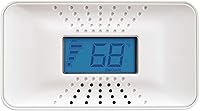
The Kidde plug-in model also has battery backup, and its digital display shows the CO level it senses.
A display can help if you want to see a sensed level, while a simpler alarm may suit you if you want fewer controls. The First Alert CO606 does not have a digital display, so it suits buyers who prefer a basic plug-in unit with a test/silence button.
A combination alarm handles smoke and CO detection at its installed location. The Kidde 30CUD10 combines both, runs on a built-in 10-year battery, and includes a red LED light.
It suits a spot where both types of detection are useful and where the model’s instructions allow installation.
These options don’t determine the number of alarms your home needs. Match the number of spots to your floor plan first, then select an alarm type that fits each approved location.
For a closer look at power choices, read plug-in vs battery carbon monoxide detectors. If you also need smoke coverage, see smoke alarm and carbon monoxide detector combos.
How should I choose alarms for the spots you counted?
Choose by placement, power, and the information you want from the alarm. A unit that fits one location may not suit another, so compare the requirements for each spot before buying a set.
Choose a battery-powered combination alarm when a location needs both smoke and CO detection and has no suitable outlet. The Kidde 30CUD10 is a fit for buyers who want a built-in 10-year battery and one unit for both alarm types; skip it if you need a CO-only unit or your required location does not permit that model.
Choose a plug-in model when the planned spot has a suitable outlet. The Kidde KN-COPP-3 suits someone who wants to see the sensed CO level on a display, while the First Alert CO606 suits someone who wants a simpler plug-in unit with a test/silence button.
Skip either if the location lacks a suitable outlet or local placement rules do not allow it there.
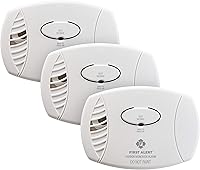
Choose the First Alert 3-pack when your plan calls for several alarms and each planned spot has a suitable outlet. It offers three plug-in CO alarms with battery backup; skip the pack if you need fewer units, need battery-only placement, or cannot use outlets in the locations that need coverage.
When does a combination alarm make sense?
A combination alarm makes sense when one location needs both smoke and CO coverage. It can reduce the number of separate units at that spot, but it does not cover other floors or bedrooms.
Don’t choose a combination model just to reduce the count on paper. Map where smoke and CO detection are needed, then check that the alarm’s instructions allow the combined unit in each planned position.
When is a plug-in alarm the better fit?
A plug-in alarm is a good fit for a planned location with a suitable outlet. Battery backup can keep the unit powered during an outage, and models with different controls let you choose between a digital display and a simpler button-based design.
Skip a plug-in alarm for a spot without a suitable outlet or where the outlet position conflicts with the required placement. An extension cord or shelf placement should only be used if the specific model’s instructions permit it.
How many carbon monoxide detectors should I buy?
Buy enough alarms to cover every planned level and required sleeping area, then confirm the count against local rules. A multi-pack is useful only when its number and power type match the spots you identified.
If your plan calls for three alarms and each spot has a suitable outlet, a 3-pack may be a practical choice. The First Alert CO606 3-Pack contains three plug-in alarms with battery backup, so it suits multiple outlet locations; it is a poor fit for battery-only spots.
For one location where you want smoke and CO detection together, consider the Kidde 30CUD10. For one outlet location where you want to see sensed CO levels, consider the Kidde plug-in model with a digital display.
Don’t buy by room count alone or assume an extra unit can go anywhere. Check the required location, power access, and model instructions for every alarm before you choose the number and type.
What should I check before installing each alarm?
Check local rules and the alarm’s placement instructions before installation. They tell you which positions are suitable and whether a model fits the planned location.
Confirm the mounting position, required distances, and any limits around appliances, moisture, temperature, or airflow. Keep the alarm where furniture will not block it and where it will not be easily damaged.
For plug-in models, make sure the outlet is in the planned location and can be used without changing the required placement. For battery-powered models, follow the mounting instructions and keep the user guide available for future checks.
After installation, test each alarm according to its instructions. Our guide to how to test a carbon monoxide detector at home walks through the checks, and carbon monoxide detector chirping 5 times explains one alarm pattern.
How do I care for alarms after setup?
Test and maintain each alarm according to its instructions. A detector only helps if it is in service, powered, unobstructed, and replaced when its manufacturer says it has reached the end of its service life.
Keep a simple home record with each alarm’s location, model, installation date, and any replacement date given by its instructions. This makes it easier to identify the unit that needs attention when you hear a signal or check the manual.
For a battery-powered unit with replaceable batteries, follow its schedule and use the specified battery type. A built-in battery model such as the Kidde 30CUD10 avoids routine battery replacement, but it still needs the checks and replacement timing in its instructions.
For plug-in alarms, keep the outlet accessible and pay attention to backup-battery signals. The First Alert CO606 has an end-of-life signal chirp, so treat that signal as a prompt to follow the model’s replacement directions.
Don’t ignore chirps or silence an alarm without identifying the signal. Check the manual to tell a low-battery or end-of-life notice from an alarm condition, and follow the emergency directions if the alarm indicates CO.
What mistakes lead to poor coverage?
The most common planning mistake is counting floors but overlooking separate sleeping areas. A unit on each level may not meet bedroom requirements, so check the rules and model guidance for each sleeping zone.
Other common mistakes include:
- Assuming one alarm covers the whole home.
- Placing a unit near an appliance or in a damp, hot, or drafty spot without checking the instructions.
- Buying plug-in alarms before confirming outlets are available in the planned locations.
- Treating a combination alarm as coverage for rooms where it is not installed.
- Ignoring a chirp because the alarm still appears powered.
- Choosing a multi-pack without matching its unit count and power type to the floor plan.
Fix these issues by returning to the room-by-room plan. Mark where each alarm will go, verify each location, and check that the alarm can be heard where people sleep.
How many carbon monoxide detectors do I need? Make the final decision
Start with one alarm on every level and coverage near each bedroom, then add units for separate sleeping areas or local requirements. The right number is the number of suitable alarm locations your floor plan and local rules call for, not a fixed number based only on home size.
Pick a battery-powered combination alarm if you need smoke and CO detection together at a location without a suitable outlet. Pick a plug-in model if the location has a suitable outlet, choosing a digital display if you want to see sensed levels or a simpler unit if you want basic controls.
Choose a 3-pack only when three suitable outlet locations need alarms. Before installation, confirm the final count and placement with local rules and each model’s instructions, then test every alarm as directed.
Frequently asked questions
How many carbon monoxide detectors do I need in a 2-story house?
Start with one CO alarm on each level, then add coverage near sleeping areas as local rules and each alarm’s instructions require. A two-story home with bedrooms upstairs may need more than 2 alarms, especially if bedrooms are separated.
Check the rules for your area before settling on the final count.
Should I put a carbon monoxide detector in every bedroom?
Place alarms in or near sleeping areas according to local rules and the model’s instructions. Some manufacturers recommend one in each bedroom, while local requirements can differ.
Check the required distance and mounting position rather than assuming a hallway alarm covers every room.
Where should I place carbon monoxide detectors?
Start with one alarm on every level and coverage near bedrooms. Follow the alarm’s instructions for mounting position and distance because approved locations can differ by model.
Avoid locations the instructions rule out, including spots affected by moisture or airflow.
Can I use one plug-in CO alarm for the whole house?
One plug-in alarm covers only its location; it cannot provide coverage on other floors or near separate sleeping areas. Plan enough units for your layout, and make sure every chosen outlet and placement fit the alarm’s instructions.
Do combination smoke and CO alarms count toward the total?
A combination alarm can provide smoke and carbon monoxide detection where it is installed, but it covers only that location. Count it as CO coverage for that spot, then check the remaining levels and bedroom areas against local rules and the alarm’s instructions.