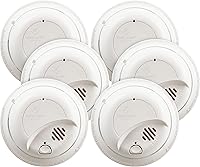
How to Choose a Smoke Detector: Types, Power and Placement
Choose a smoke detector that fits your home's wiring, alarm needs and placement plan. Compare photoelectric and other sensor options, battery or hardwired power, interconnection, certifications and the locations required by local rules.
On this page (9 sections)
- What type of smoke detector should you buy?
- Should you choose a battery or hardwired alarm?
- Do you need interconnected smoke detectors?
- Should you get a smoke-only or combination alarm?
- Where should smoke detectors go?
- How do you compare models before buying?
- How many smoke detectors do you need?
- How do you maintain a smoke detector?
- Which smoke detector should you choose?
To choose a smoke detector, match its sensor, power source and alert features to your home, then install it where local rules require. Start by checking whether you need a smoke-only alarm or a combination unit, whether existing wiring can support a hardwired model, and whether connected alarms would help people hear an alert.
The right choice also depends on who needs to hear it, which rooms need coverage and how you'll maintain the alarms. Use the manual and local fire requirements to settle placement and compatibility before you buy.
For a quick overview of smoke detector types and options, start with sensor and power differences. Then use this guide to compare the choices and plan placement.
What type of smoke detector should you buy?
Choose a smoke alarm that meets your local requirements and suits the likely fire risks and conditions in your home. Photoelectric sensing is one option to compare, but the alarm's certification, placement and maintenance matter too.
Photoelectric sensors use light to detect smoke particles. Some alarms use other sensing methods, and combination alarms may include more than one sensor type.
Read the model details to understand what it detects instead of assuming every alarm works the same way.
Cooking steam and fumes can cause nuisance alarms when a detector is too close to a kitchen. Look for a location that follows the manual and local rules, and choose an alarm with a hush feature if you want a way to silence a nuisance alert while you address its cause.
A smoke alarm does not detect carbon monoxide unless it is specifically designed as a combination alarm. If you need both kinds of detection in one device, compare smoke and carbon monoxide alarms and make sure the combination model meets the relevant requirements.
Should you choose a battery or hardwired alarm?
Choose hardwired power if your home already has compatible wiring and you want an alarm connected to that supply. Choose a battery-powered model when avoiding wiring is a priority, while checking its battery type, service life and replacement instructions.
Hardwired models may include battery backup for a power outage. For example, the Kidde 20SA10 uses 120V AC and includes a built-in 10-year battery backup; a licensed electrician can help assess existing wiring and installation needs.
Battery alarms can be easier to install where wiring is unavailable or impractical. Some have replaceable batteries; others use sealed batteries intended to power the alarm for a stated period.
Follow the manual for testing and end-of-life replacement either way.
Don't assume a 10-year battery means every part of the alarm remains suitable for 10 years. Check the alarm's expiration or replacement date, and replace it according to the manufacturer's instructions.
Our guide to 10-year smoke detector reliability covers the distinction between battery life and alarm service life.
If you're comparing the wiring trade-offs, see wired vs wireless smoke detectors. “Wireless” can refer to alarms that connect to one another without wiring, not necessarily alarms with Wi-Fi or app alerts.
Do you need interconnected smoke detectors?
Interconnected alarms can sound together when one unit detects smoke, giving people in other rooms or on another floor more notice. Consider interconnection when the home is large, has multiple levels or has sleeping areas far from the kitchen and living room.
Hardwired systems often use wired connections, while some battery-powered models support wireless interconnection. Compatibility varies, so check the manual and model numbers before adding alarms to a system.
A standalone alarm alerts locally. A wireless interconnected alarm may alert other compatible alarms, but wireless interconnection does not automatically mean it offers Wi-Fi, remote notifications or an app.
The X-Sense SC07-W is a battery-powered smoke and carbon monoxide alarm with wireless interconnection, while the SD2J0AX is a standalone smoke alarm. Compare these features with your alert needs before choosing a system.
Should you get a smoke-only or combination alarm?
Choose a smoke-only alarm when you need smoke detection at that location and have separate carbon monoxide alarms where required. A combination smoke and carbon monoxide alarm can cover both hazards in one unit, but it does not replace any additional devices required by code or your home's layout.
A combination unit may reduce the number of separate devices to install, but check its placement instructions carefully. Smoke and carbon monoxide detection have different placement considerations, so one location may not be ideal for every room.
For example, the Kidde 30CUD10 is a battery-powered combination alarm with photoelectric smoke sensing and electrochemical carbon monoxide sensing. Compare its requirements with those for dedicated carbon monoxide detectors before deciding how many units your home needs.
Where should smoke detectors go?
Install alarms in the locations required by your local code and the manufacturer's manual. Common guidance calls for alarms inside each sleeping room, outside sleeping areas and on every level of the home, including the basement.
Exact requirements can vary by jurisdiction and building type. Check local fire department or building authority guidance before relying on a general room list, especially in a rental or a home undergoing renovation.
Keep alarms away from spots where cooking smoke, steam or drafts may trigger nuisance alerts, while following the distance and placement rules in the manual. Don't place an alarm somewhere simply because it is convenient to reach.
Our detailed guide explains where to place smoke detectors in a house, including placement by room and level. Test each alarm after installation and follow its maintenance schedule.
How do you compare models before buying?
Compare the alarm's detection type, power source, interconnection, certification, installation needs and replacement date. A feature matters only if it fits your home and the required location.
Use this checklist to narrow the options:
| Check | What to confirm |
|---|---|
| Detection | Smoke-only or smoke and carbon monoxide; sensor types |
| Power | Hardwired, replaceable battery or sealed battery |
| Backup | Whether a hardwired model includes battery backup |
| Connection | Standalone, wired interconnection or wireless interconnection |
| Alerts | Audible alarm, visual indicator, hush or test button |
| Certification | Applicable safety standard and certification for your area |
| Fit | Manual-approved placement and mounting requirements |
| Replacement | Alarm service life and replacement date |
A certification mark is useful only when it applies to the model and the standards required where you live. Check the packaging and manual, and ask your local authority or a qualified installer if you are unsure about a code requirement.
How to choose a smoke detector for an existing wired system
For a home with hardwired alarms, find the existing model number and wiring details before you buy replacements. Choose a compatible model and follow the manufacturer's replacement guidance, since plug connections and interconnection requirements can differ.
Don't assume a connector fits just because the alarm brand matches. If the replacement requires wiring work or you cannot confirm compatibility, ask a qualified electrician to check the system.
The Kidde 20SA10 is a hardwired model with a 10-year battery backup and interconnect capability. It is a possible fit to consider when those features match your existing system and local requirements.
How to choose a smoke detector for a home without wiring
For a home without compatible alarm wiring, compare battery-powered models and their installation requirements. A sealed-battery alarm may reduce battery changes, while a replaceable-battery model lets you replace its batteries as directed.
Check whether a battery alarm is standalone or can interconnect with other units. If you want alarms to sound together, confirm that the exact models support that feature and work as a system.
The X-Sense SD2J0AX is a standalone, battery-powered smoke alarm with a sealed battery designed for up to 10 years. The SC07-W is a wireless interconnected combination alarm, so it addresses a different need.
How many smoke detectors do you need?
The number depends on your home's layout, local code and the alarm's instructions. Use required locations as your baseline, then consider whether hallways, extra levels or distant sleeping areas need additional coverage.
Count the required locations on a simple floor plan. Mark every sleeping room, hallway outside sleeping areas, level and basement, then compare the plan with local requirements.
Don't put multiple alarms close together just to increase the count. Each unit should cover a required or useful location, and placement should follow the manual.
How do you maintain a smoke detector?
Test alarms on the schedule in the manual and keep them clear of dust. Replace batteries and alarms when their instructions call for it, and never ignore a chirp or a failed test.
Use the test button to check the alarm's function. A test does not replace the need to follow the manufacturer's guidance on cleaning, battery replacement or end-of-life warnings.
If an alarm keeps beeping, identify whether it signals a low battery, a fault or an end-of-life warning. Our guide to why a smoke detector keeps beeping can help you sort out the next step.
Which smoke detector should you choose?
Choose a hardwired alarm when you have compatible wiring and want a model that fits the existing system; choose a battery-powered alarm when wiring is unavailable or impractical. Choose interconnected alarms when you need alerts to reach other areas, and choose a combination model only where both smoke and carbon monoxide detection make sense.
Before buying, confirm the required locations, code rules, system compatibility and replacement date. For a closer look at options by use, browse our smoke detector guide, then follow the placement instructions for each alarm.
Frequently asked questions
What type of smoke detector should I buy?
Choose an alarm that meets local requirements and fits your home's wiring, placement and alert needs. Photoelectric models are one option; also compare whether you want a smoke-only or combination smoke and carbon monoxide alarm, and whether connected alarms are important.
Is a hardwired or battery smoke detector better?
Hardwired alarms can suit a home with compatible wiring, while battery-powered models can avoid new wiring. Some hardwired alarms also have battery backup, and some battery models have sealed batteries; check the alarm's power details and local rules before choosing.
Where should smoke detectors go in a house?
Follow your local fire code and the alarm manual for required locations. Common guidance calls for alarms inside and outside sleeping areas and on every level, including the basement; placement near kitchens or bathrooms needs special care to reduce nuisance alarms.
Should smoke detectors be interconnected?
Interconnected alarms can sound together when one detects danger, which can help alert people elsewhere in the home. Check whether the alarms connect by wire or wirelessly, and confirm that the models are compatible before adding units to an existing system.
How often should I replace a smoke detector?
Check the alarm's label and manual for its replacement date, because service life varies by model. Replace an alarm when it reaches that date, fails a test, or the manufacturer says it should be replaced; don't assume a sealed battery means the alarm lasts indefinitely.