Smoke Detector 3 Beeps: What It Means and What to Do
If your smoke detector gives 3 beeps and stops, check for smoke or fire first and leave if you see or smell danger. The smoke detector 3 beeps pattern varies by model, so use the alarm label and manual before treating it as a fault.
On this page (10 sections)
- What does a smoke detector 3 beeps pattern mean?
- What should you do when the alarm gives three beeps?
- Why might a smoke detector beep three times and then stop?
- How do you tell an alarm signal from a fault?
- Should you reset a smoke detector after three beeps?
- When should you replace the smoke detector?
- How can you reduce nuisance alarms without losing protection?
- What mistakes should you avoid after three beeps?
- What if the three-beep pattern keeps returning?
- Which smoke alarm should you choose after three beeps?
If your smoke detector gives 3 beeps and stops, check for smoke or fire first and leave if you see or smell danger. The smoke detector 3 beeps pattern varies by model, so use the alarm label and manual before treating it as a fault.
A beep count alone cannot tell you what happened. Brands and models use different sounds, lights, and voice messages, so identify the exact unit before troubleshooting.
What does a smoke detector 3 beeps pattern mean?
Three beeps may indicate an alarm event or a model-specific status. The sound alone is not enough to diagnose the cause.
Check the brand and model number printed on the back or side of the alarm. Compare the sound and any LED signal with that model's manual or manufacturer support instructions.
If several alarms are installed, note which one sounded first. Interconnected units may all sound after one detects a hazard, while combination alarms may use separate signals for smoke and carbon monoxide.
Does a smoke alarm three-beep signal mean fire?
It might. Treat the sound as a possible fire alarm until you confirm otherwise.
Look for smoke or flames only if you can do so safely. If you see smoke, smell burning, or feel unsafe, get everyone outside, close doors behind you if possible, and call emergency services from outside.
Don't stop to find the manual or remove a battery when there may be a fire. Stay outside until emergency responders say it's safe to return.
What should you do when the alarm gives three beeps?
Check for danger first, leave if needed, and identify the alarm only when the area is safe. Keep children and pets with you instead of spending time trying to silence the detector.
- Look and listen for smoke or fire without entering a smoky area.
- Leave promptly if you see or smell danger.
- Call emergency services from a safe location.
- If there's no sign of danger, identify which alarm sounded and note its lights or voice message.
- Find the exact model's instructions before resetting, cleaning, or replacing it.
A detector that stops after three beeps still needs attention. If the cause remains unclear, contact the manufacturer or a qualified alarm professional.
Why might a smoke detector beep three times and then stop?
A short burst may be an alarm or status signal, depending on the model. Its stopping does not prove the home is safe or the alarm is working properly.
If it happens during cooking, move smoke or steam away from the detector if you can do so safely. Don't disable the alarm to prevent another burst; improve ventilation and check the manufacturer's placement guidance.
Dust, age, or an alarm event may also be involved, depending on the unit. For a sound that keeps returning without an obvious hazard, read why a smoke detector keeps beeping and troubleshoot using your model's instructions.
Could it be a carbon monoxide signal?
Three beeps do not always mean carbon monoxide. Combination alarms may use separate patterns for smoke and CO, but the signals vary by model.
If the alarm identifies carbon monoxide, or anyone feels dizzy, weak, nauseated, confused, or has a headache, get everyone outdoors immediately. Call emergency services or the local fire department from outside, and don't go back in until responders say it's safe.
A combination alarm detects both hazards, but you still need its manual to identify the sound. Learn the difference in whether smoke detectors detect carbon monoxide.
How do you tell an alarm signal from a fault?
Check the alarm's label and lights, then compare them with its manual. Similar sounds can mean different things on different brands and models.
A blinking red light may be normal or a warning, depending on the alarm. Use our guide to a red light on a smoke detector to interpret the indicator for your unit.
Don't remove a battery or disconnect a hardwired alarm just to stop an unexplained sound. If the manual calls for service or replacement, follow that instruction and keep working alarms in place.
Should you reset a smoke detector after three beeps?
Reset only after ruling out an emergency and following the manual's steps. Some models use a button, while hardwired alarms may have a separate reset process.
A reset can clear some temporary conditions, but it doesn't repair a fault or prove the detector is safe. If the sound returns, stop repeating the reset and contact the manufacturer or a qualified professional.
For safe steps by alarm type, read how to reset a smoke detector. Follow your exact model's instructions before handling a hardwired unit.
When should you replace the smoke detector?
Replace an alarm that has reached its stated service life, fails its self-test, or keeps showing a fault after you follow the manual. Check the date and replacement guidance on the alarm itself.
A sealed battery can reduce routine battery changes, but it does not make an alarm last forever. Match the replacement to your wiring, coverage plan, and need for smoke-only or combination detection.
The X-Sense SD2J0AX is a standalone smoke alarm with a sealed battery designed to power it for up to 10 years. It suits someone replacing several smoke-only units who wants no-wire installation, but skip it if you need Wi-Fi, app alerts, a base station, or wireless interconnection.
For one location that needs both smoke and carbon monoxide detection, consider the Kidde 30CUD10. It has a built-in 10-year battery and a red LED, but it is a single alarm, not a multi-room pack.
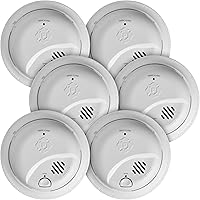
The Kidde 20SD10 is a three-pack of smoke-only alarms with built-in 10-year batteries. Choose it for multiple rooms that need smoke coverage; skip it if you want carbon monoxide detection in the same unit.
Before buying, check whether your home needs hardwired, standalone, or interconnected alarms. Our smoke detector selection guide explains types, power, and placement.
How can you reduce nuisance alarms without losing protection?
Keep alarms installed and working, and address nuisance sources instead of disabling a detector. Use the hush feature only as the manufacturer directs and only when there's no sign of danger.
Cooking fumes and steam can trigger some alarms. Use a range hood or open a window when appropriate, and check whether a detector is too close to a kitchen or bathroom.
Don't move an alarm to a spot that leaves a bedroom, hallway, or other required area uncovered. Review where to place smoke detectors in a house and follow local code and the alarm's instructions.
What mistakes should you avoid after three beeps?
Don't assume a stopped alarm is harmless, silence it before checking for danger, or use one model's beep code to interpret another. Those shortcuts can leave a hazard or fault unresolved.
Avoid repeatedly resetting an alarm without finding the cause. Don't remove its battery, disconnect its wiring, or leave it out of service to prevent a nuisance sound.
Another common mistake is replacing a working interconnected or hardwired unit with a standalone alarm without checking compatibility. Match the new alarm to your home's wiring and interconnection needs, and ask a qualified professional about wiring concerns.
What if the three-beep pattern keeps returning?
Treat a repeating unexplained signal as an unresolved alarm or status warning. Check the model's manual and contact the manufacturer if the instructions don't identify or resolve it.
If the alarm sounds again after a reset, don't remove it from service while the home is occupied. A qualified professional can check hardwired units and wiring concerns; replace an alarm the manufacturer says is faulty or expired.
When the alarm goes off without a clear cause, use our guide to smoke detectors that go off randomly to work through common causes safely.
Which smoke alarm should you choose after three beeps?
Choose a replacement based on the coverage and features you need. Pick the X-Sense SD2J0AX for several standalone smoke alarms, the Kidde 30CUD10 for one smoke and CO alarm, or the Kidde 20SD10 for several smoke-only alarms with sealed batteries.
Check compatibility with your current wiring and interconnection before buying. If you are unsure whether the alarm is faulty or expired, confirm its model and service guidance first.
The decision rule is simple: check for danger first, then decode the beeps using the exact model's instructions. Replace an expired or faulty unit, and keep working smoke protection in every required area.
Frequently asked questions
What does it mean when a smoke detector beeps 3 times?
Three beeps can signal an alarm event or a model-specific status. Check for smoke or fire first, then identify the brand and model and consult its manual.
Don't assume the sound is harmless because it stops.
Why does my smoke detector beep 3 times and then stop?
A three-beep burst may be a short alarm event or a model-specific alert. Look for smoke, heat, and other alarms sounding, then check the alarm's manual and status lights.
If you cannot confirm the cause, treat the signal seriously and contact the manufacturer or fire service.
Should I reset a smoke alarm after 3 beeps?
Reset it only after checking for smoke or fire and following the model's instructions. A reset can silence an alarm temporarily, but it won't fix a real hazard or a failing unit.
If the sound returns, investigate the cause instead of repeatedly resetting it.
Do three beeps mean carbon monoxide?
Not on every alarm. A combination smoke and carbon monoxide alarm can use different sound patterns for each hazard, and patterns vary by model.
Check the label and manual, and if anyone has symptoms or a CO alarm signal is suspected, leave immediately and call emergency services from outside.