Why Does My Smoke Detector Go Off Randomly?
A smoke detector that goes off randomly may be reacting to cooking smoke, steam, dust, insects, or a fault. Treat every alarm as real first: check for smoke or fire, get everyone outside if you find danger, and call emergency services from a safe place.
On this page (8 sections)
- Why does my smoke detector go off randomly?
- What should you do when an alarm starts?
- Could cooking, steam, dust, or insects trigger it?
- What does the alarm's light or sound pattern tell you?
- How can you clean, reset, or troubleshoot it safely?
- Which replacement may suit a wired home?
- How can you reduce repeat nuisance alarms?
- What should you do if it keeps sounding without a cause?
A smoke detector that goes off randomly may be reacting to cooking smoke, steam, dust, insects, or an alarm fault. Treat every alarm as real first: check for danger, get everyone outside if you find smoke or fire, and call emergency services from a safe place.
If there is no sign of fire, look for a pattern: which alarm sounds, what was happening nearby, and whether it repeats. Don't remove batteries or leave an alarm disabled to stop nuisance alerts.
Why does my smoke detector go off randomly?
Common causes include cooking smoke, steam, dust, insects, poor placement, and an alarm that needs service or replacement. A loud alarm can also mean actual smoke is present, so investigate before assuming it's a false alarm.
Cooking fumes can reach a nearby alarm even without a fire. Steam from a shower, aerosol sprays, dust from work around the home, or insects inside the unit may also cause trouble, depending on the detector and its location.
Age, damage, a wiring issue, or another fault can make an alarm act unpredictably. Check its manual for what the sound and indicator lights mean; a brief chirp and a full alarm may signal different issues.
Our guide to why a smoke detector keeps beeping explains how to tell chirps from alarm sounds.
What should you do when an alarm starts?
Check for smoke or fire immediately, and get everyone outside if you find danger or can't safely tell what is happening. Call emergency services from outside; don't delay to silence an alarm or find its source.
If you don't see smoke or fire and the area seems safe, check the alarm's indicator and listen to its pattern. Follow its instructions to silence or reset it, then look for a likely trigger.
If multiple alarms are interconnected, one unit may start the sound throughout the home. Find the alarm showing the initiating signal if the system has one, but don't assume the quiet-looking units are faulty.
For a three-beep pattern, see what a smoke detector's 3 beeps mean.
Could cooking, steam, dust, or insects trigger it?
Yes, cooking particles, moisture, and debris can cause nuisance alarms. Note what was happening just before the alarm so you can address the likely trigger without leaving the detector out of service.
Use the kitchen exhaust fan while cooking, and keep the alarm at the distance from cooking appliances required by its manual and local rules. If showers seem to set it off, improve bathroom ventilation and check whether the alarm is too close to the steam path.
Dust or small insects inside an alarm can interfere with sensing. Clean it only as the manufacturer directs, with power disconnected first if the manual requires it.
Don't spray cleaner or insecticide into the unit.
Can poor placement make an alarm go off?
An alarm placed too close to cooking fumes or shower steam may be more prone to nuisance alerts. Placement still needs to meet the detector's instructions and local fire-safety requirements.
Don't move an alarm to a less protective location just to stop alerts. Review where to place smoke detectors in a house and check the manual for the model's spacing and placement rules.
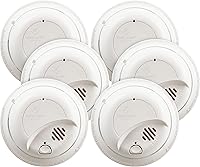
The First Alert Hardwired Smoke Alarm, Precision Detection, has sensing technology that First Alert says is designed to reduce cooking nuisance alarms. It also has battery backup and an indicator that identifies the unit that started an alarm.
Confirm that the model and connection suit your existing wiring before choosing it.
What does the alarm's light or sound pattern tell you?
The sound pattern and indicator light can help identify whether the alarm signals smoke, a fault, or another condition. The meaning varies by model, so use the manual rather than relying on a generic beep chart.
A steady alarm may call for an immediate check for smoke or fire. Short chirps can point to a battery, power, or end-of-life issue, but the exact pattern depends on the alarm.
See what a blinking red light on a smoke detector means to interpret an indicator in context.
Don't press buttons or disconnect wiring without checking the instructions. If you're unsure what the signal means, contact the manufacturer or a qualified electrician.
How can you clean, reset, or troubleshoot it safely?
Use the model's manual to clean or reset the alarm, and restore protection as soon as troubleshooting is done. Don't leave a detector disconnected while you wait to see whether the problem returns.
If the manual permits cleaning, gently remove dust from the outside and vents as directed. Replace batteries only when the alarm uses replaceable batteries and its instructions call for it; don't open a sealed unit.
Resetting may clear a temporary condition, but it won't fix the underlying cause. Follow how to reset a smoke detector for general steps, then check whether the alarm signals trouble again.
When should you replace a smoke detector?
Replace an alarm at the end of its stated service life, if it's damaged, or if the manual's troubleshooting steps don't resolve repeated alarms. Check the manufacture date and the unit's end-of-life warning rather than guessing its age.
The First Alert 10-Year Slim Smoke Alarm has a sealed 10-year battery and an end-of-life warning. First Alert says its Precision Detection technology is designed to reduce cooking nuisance alarms.
Choose a battery-powered replacement only if that fits your home's needs and local requirements. For wiring and power choices, start with how to choose a smoke detector.
Which replacement may suit a wired home?
A hardwired replacement may suit you if your home already has compatible wiring and you want interconnected alarms. Confirm compatibility, installation steps, and any local rules before replacing a wired unit.
The Kidde 20SA10-V Hardwired Voice Smoke Alarm 3-Pack has voice alerts, a built-in 10-year battery backup, and interconnect capability with other compatible Kidde alarms. Kidde says its sensing technology is designed to reduce false alarms from cooking or steam.
Don't assume alarms from different models or brands will interconnect. Check the user guide and wiring before buying or installing a set.
How can you reduce repeat nuisance alarms?
Reduce common triggers while keeping alarms installed, powered, and in approved locations. Use ventilation when cooking, clean units as directed, and keep track of which alarm starts each event.
If the alarm is old, damaged, or continues to sound without an obvious trigger, follow the manufacturer's troubleshooting steps and replace it if needed. Don't cover it, remove its battery, or leave it disconnected as a workaround.
Choose a replacement based on your home's wiring, power needs, placement, and interconnect requirements. If a sound pattern is the main concern, compare it with smoke detector beeping causes and the model's manual.
What should you do if it keeps sounding without a cause?
If your smoke detector keeps going off and you find no smoke, steam, dust, or other clear trigger, check its age, placement, lights, and sound pattern against the manual. Clean or reset it only as directed, then replace it or contact the manufacturer if the problem returns.
Pick a battery-powered model if that suits your setup, or a compatible hardwired replacement if your home uses wired alarms. If the alarm sounds again, treat it as real and check for danger before troubleshooting.
Frequently asked questions
Why does my smoke detector go off randomly at night?
A detector may react to dust, insects, temperature changes, or a problem with the alarm as the house cools. Check for an actual fire first, then review the manual, clean the unit as directed, and note whether the alarm repeats in the same conditions.
Don't disconnect a working alarm to stop nuisance alerts.
Can steam set off a smoke detector?
Yes, steam or very humid air can trigger some smoke alarms, especially when they are close to a bathroom or kitchen. Improve ventilation and check whether the alarm is placed according to its instructions.
Don't move or disable it without checking local requirements and the alarm manual.
Should I replace a smoke detector that keeps going off?
Replace an alarm that has reached its stated service life, is damaged, or continues to give trouble after you follow its manual's cleaning and troubleshooting steps. Check the manufacture date and end-of-life signals, and choose a replacement that suits the home's wiring and required placement.
What should I do if a smoke detector sounds and I see no smoke?
Check for smoke, fire, and signs of danger without putting yourself at risk. If anything seems unsafe, get everyone outside and call emergency services.
If there's no sign of danger, follow the alarm's instructions to identify the unit and silence or reset it, then investigate the cause before restoring normal use.