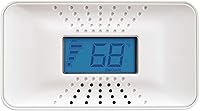
Do Smoke Detectors Detect Carbon Monoxide?
A standard smoke detector does not detect carbon monoxide. For both hazards, choose a combination alarm labeled for smoke and CO, or install separate alarms for each.
On this page (9 sections)
- Do smoke detectors detect carbon monoxide?
- How can you tell whether an alarm detects both?
- What does a combination alarm do?
- How should you choose power and interconnection?
- When is a separate CO alarm the better choice?
- Where should smoke and CO alarms go?
- How do you set up and care for these alarms?
- What common mistakes leave a home unprotected?
- Which alarm should you choose for your home?
A standard smoke detector does not detect carbon monoxide (CO). If you're asking, “do smoke detectors detect carbon monoxide,” the answer depends on the model: only an alarm designed and labeled for both smoke and CO covers both hazards.
Smoke and CO alarms have different sensing functions. A smoke alarm responds to smoke, while a CO alarm uses a carbon monoxide sensor.
A loud siren or a test button doesn't turn a smoke-only alarm into a CO alarm.
Do smoke detectors detect carbon monoxide?
Only combination alarms are designed to detect both smoke and CO. Check the label, model name, and manual for both hazards; if they identify smoke detection alone, treat the unit as a smoke alarm only.
A combination model puts both types of sensing in one housing. That can save space, but it doesn't mean one unit covers every floor or replaces alarms in other required locations.
For models that combine the two functions, see our guide to smoke alarm and carbon monoxide detector combos.
How can you tell whether an alarm detects both?
Look for “carbon monoxide” or “CO” in the alarm's product name, label, and instructions. Don't rely on the sound it makes or the fact that it has a test button.
A test button checks the alarm as described by its maker. It doesn't show that a smoke-only model can sense CO, and it may not demonstrate how the unit responds to actual smoke or carbon monoxide.
Read the instructions for the alarm's warning patterns and test procedure. If you need to check the CO alarm function, follow our guide on how to test a carbon monoxide detector.
What does a combination alarm do?
A combination alarm uses smoke sensing and CO sensing in one device. The X-Sense SC07, for example, pairs a photoelectric smoke sensor with an electrochemical CO sensor.
The SC07 is a standalone model with a sealed 10-year battery. It doesn't support wireless interconnection or Wi-Fi, so skip it if you want alarms to signal one another or connect to an app.
Combination alarms can simplify the number of devices to mount, but they still need a suitable location and power arrangement. If one unit's location doesn't fit both hazards or your local requirements, use separate alarms where appropriate.
How should you choose power and interconnection?
Choose a power type that fits your existing wiring and the way you want alarms to alert across the home. A hardwired unit may suit an existing wired setup, while a battery model avoids wiring work.
The Kidde 30CUA10 operates on 120V AC and has a built-in 10-year battery backup. It can interconnect with other Kidde alarms, so compatible connected units can sound together when one detects danger.
The Kidde 30CUD10 is battery powered and has a built-in 10-year battery. It suits a location where a standalone battery alarm is a better fit than a wired replacement.
Before replacing a hardwired unit, check its wiring, connector, and installation instructions. Don't assume that two alarms from the same brand have the same interconnection setup or can share every existing connection.
For another way to add CO coverage, the First Alert CO606 plugs into a standard outlet and includes battery backup. It's CO-only, so it doesn't replace smoke alarms.
Compare the tradeoffs in plug-in vs. battery carbon monoxide detectors.
When is a separate CO alarm the better choice?
A separate CO alarm makes sense when a combination alarm doesn't fit the location, power setup, or replacement plan. It also lets you add CO detection while keeping a smoke alarm that's already suitable.
The First Alert CO606 is a plug-in CO alarm with battery backup and an electrochemical sensor. First Alert advises placing it on each level of the home and in each bedroom; follow the instructions for the alarm you choose and check local requirements.
A CO-only alarm does not replace a smoke detector because it monitors carbon monoxide rather than smoke. Keep both functions covered throughout the home, whether they come from combination units or separate alarms.
Where should smoke and CO alarms go?
Follow local requirements and each alarm's instructions for placement and quantity. The right setup depends on your home's floors and rooms, the alarm type, and the rules that apply where you live.
Don't assume one centrally mounted combination alarm protects every floor or bedroom. Plan for both smoke and CO coverage, then check the specific model's manual for mounting locations and limits.
Use our guide to how many carbon monoxide detectors you need to think through CO coverage. For smoke placement, see where to place smoke detectors in a house.
How do you set up and care for these alarms?
Install each alarm using its instructions, then keep its power source, test schedule, and replacement guidance in mind. A correct setup starts with choosing a location and mounting method that match the model.
For the X-Sense SC07, use the included mounting bracket, screws, and anchor plugs to attach it to a wall or ceiling. The Kidde 30CUA10 needs a suitable hardwired connection, while the 30CUD10 is battery powered; read each manual before installation.
Use the test button at the intervals and in the way the maker specifies. Keep vents clear and follow the manual's cleaning directions, since dust or blocked openings can interfere with an alarm's operation.
A sealed 10-year battery reduces routine battery changes, but it doesn't mean you can ignore the alarm. Pay attention to warning signals, check the unit's end-of-life guidance, and replace alarms as directed.
Don't remove batteries, disconnect wiring, or silence a warning and leave the alarm out of service. If a signal is unclear, use the manual to identify it and restore protection promptly.
What common mistakes leave a home unprotected?
The most common mistake is assuming every smoke alarm also senses CO. Confirm both functions by checking the model label and instructions instead of judging by the shape, brand, or sound.
Other gaps come from choosing a unit that doesn't fit the wiring, placing too few alarms, or expecting a standalone alarm to alert other rooms. Check power and interconnection before buying, then plan coverage by location.
A CO-only plug-in alarm can be useful, but it doesn't cover smoke. A combination unit covers both functions at its installed location, but it doesn't automatically replace every alarm elsewhere in the home.
If a CO alarm sounds, treat it as a warning. Leave the area and contact emergency services or your local fire department from outside if anyone may be in danger; return only when responders say it's safe.
Which alarm should you choose for your home?
Choose a combination alarm when you want smoke and CO detection in one unit and its power and placement fit your home. Choose separate alarms when a dedicated CO unit or your existing smoke alarm arrangement better meets the need.
Pick the X-Sense SC07 5-pack for standalone combination coverage and a display of real-time CO levels. Skip it if you need Wi-Fi or interconnected alarms.
Pick the Kidde 30CUA10 if you have a suitable hardwired setup and want battery backup with interconnection capability. Pick the Kidde 30CUD10 for battery-powered combination coverage without a hardwired connection.
Choose the First Alert CO606 for plug-in CO detection with battery backup, while keeping smoke alarms in place. For more combination options, compare the best smoke alarm and carbon monoxide detector combos.
Frequently asked questions
Do all smoke detectors detect carbon monoxide?
No. A standard smoke detector responds to smoke, while carbon monoxide needs a CO sensor.
A combination alarm is designed to detect both, but check its label and instructions to confirm it covers smoke and carbon monoxide.
How can I tell if my smoke alarm also detects carbon monoxide?
Check the alarm's label, model name, and manual for the words carbon monoxide or CO. A combination alarm identifies both hazards and may use different alert patterns for smoke and CO, so read its instructions before relying on the signals.
Should I replace smoke detectors with combination alarms?
A combination alarm can cover both hazards in one device, but it may not suit every location or wiring setup. Check local rules, the alarm instructions, and whether the unit fits your home's power and interconnection needs before replacing alarms.
Where should carbon monoxide alarms go?
Follow local requirements and the alarm maker's placement instructions. First Alert advises placing its CO606 on each level of the home and in each bedroom.
Other models may have different instructions, so check the manual for your alarm.