Are 10-Year Smoke Detectors Reliable?
Yes, 10-year smoke detectors can be reliable when installed correctly, tested regularly, and replaced on schedule. The 10-year battery reduces routine battery changes, but it does not remove the need for checks and care.
On this page (8 sections)
- Are 10-Year Smoke Detectors Reliable?
- Are 10-year smoke detectors reliable?
- What does “10-year battery” mean for reliability?
- How should you choose a reliable 10-year smoke alarm?
- Does a hardwired alarm make a 10-year detector more reliable?
- How do you keep a sealed-battery smoke detector dependable?
- What mistakes can make a 10-year smoke alarm less dependable?
- Are 10-year battery smoke detectors a good fit for your home?
Are 10-Year Smoke Detectors Reliable?
Yes, 10-year smoke detectors can be reliable when installed in the right places, tested as directed, and replaced on schedule. The sealed battery can cut routine battery changes, but it does not make the alarm maintenance-free.
The phrase “10-year” usually describes the battery’s intended service period. It does not guarantee the sensor will work for the full decade without checks, or that the alarm will suit every room and wiring setup.
Are 10-year smoke detectors reliable?
They can be reliable, but the battery label alone does not guarantee protection. Placement, testing, cleaning, and replacement all matter.
A smoke alarm is a complete device: the sensor must detect smoke, the alert must sound, and smoke must reach the alarm. Follow the manual for installation, testing, cleaning, and replacement.
Some sealed-battery models reduce low-battery chirps and remove routine battery changes. A fault or end-of-life warning still needs attention.
If you are choosing a new alarm, our guide to how to choose a smoke detector explains how power type, sensor, placement, and interconnection affect the fit.
What does “10-year battery” mean for reliability?
It describes the battery’s intended service period, not a promise that the alarm never needs attention. Check the alarm’s instructions for its replacement date and warning signals.
Some alarms run on a sealed battery alone. Others use household power with a built-in battery backup.
Both types need to match the location and installation requirements.
The X-Sense SD2J0AX uses a sealed lithium battery intended to power the alarm for up to 10 years. It is standalone, with no Wi-Fi, app alerts, base station, or wireless interconnection.
This model suits someone who wants battery-powered alarms and straightforward mounting without wiring. Skip it if you need alarms to interconnect or remote app alerts.
It is not a replacement for an existing hardwired alarm. Check local requirements before choosing standalone units for your home.
How should you choose a reliable 10-year smoke alarm?
Start with the power setup and required placement, then decide whether you need interconnection, a particular sensor design, or a multi-alarm pack. These choices matter more than the battery label by itself.
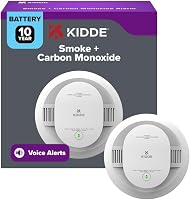
For a home with compatible hardwired alarms, the Kidde 20SA10 connects to 120V AC and includes a built-in 10-year battery backup. It can interconnect with other Kidde alarms, subject to model requirements.
Choose it when the existing wiring and interconnection setup match. Skip it if you need a simple battery-only replacement or cannot confirm compatibility with the alarms already installed.
This model is also a fit for someone who wants multiple alarms from the same Kidde line.
For a battery-only replacement, the Kidde 20SD10 has a built-in 10-year battery and does not require household wiring. Kidde says its sensing technology helps reduce nuisance alarms from cooking or steam.
It suits homes that need several battery-only alarms. Skip it if the location requires a hardwired model.
It may also be unsuitable if alarms across rooms need to interconnect. Before replacing an alarm, confirm the power type and mounting setup for that position.
The First Alert 10-Year Dual-Sensor Smoke Alarm combines photoelectric and ionization sensors. First Alert says the sensors provide protection from fast flaming and slow smoldering fires; the alarm also has a test/silence button and an end-of-life warning.
Consider it if you prefer a dual-sensor design and need a battery-powered alarm. Skip it if you need hardwired power or interconnection.
It also may not fit if you need a multi-unit pack. For more choices, see our smoke detector guide.
Does a hardwired alarm make a 10-year detector more reliable?
Hardwired power can suit a home that already has compatible wiring, while a sealed-battery model avoids wiring work. Neither power type excuses missed tests or an overdue replacement.
The Kidde 20SA10 combines household power with a battery backup, so it can suit an existing compatible wired setup. Do not assume it will connect to every brand or model of alarm.
Confirm the wiring and interconnection requirements before you buy or install it.
A battery-only unit can make sense where there is no hardwired alarm to replace. But it is not an interchangeable substitute for a wired alarm when local rules or the home’s installation call for hardwired power.
If you are uncertain about the existing setup, identify the model and consult its instructions or a qualified installer.
How do you keep a sealed-battery smoke detector dependable?
Test it on the schedule in its instructions, keep it clean as directed, and replace it when required. Treat chirps and warnings as prompts to find the cause rather than sounds to ignore.
Use the test button according to the manual. A test checks that the alarm responds at that time; it does not replace routine care or prove that the sensor will work in every future emergency.
Keep the alarm uncovered and do not paint or disable it to stop nuisance alarms. Address the cause of an unwanted alarm, and use a hush or silence feature only as instructed.
If an alarm chirps, do not assume the battery is the only cause. Depending on the model, the sound may signal a fault or an end-of-life warning.
It may also indicate another issue. See why a smoke detector keeps beeping and match the sound to the specific manual.
Placement also affects how quickly smoke can reach an alarm. Follow local requirements and the manufacturer's directions; our guide to where to place smoke detectors in a house covers common locations and placement considerations.
What mistakes can make a 10-year smoke alarm less dependable?
Ignoring the installation instructions, assuming the battery guarantees a decade of operation, and leaving warning signals unresolved are avoidable mistakes. A sealed battery changes battery maintenance, not the need to care for the alarm.
A few common errors can undermine the alarm:
- Choosing by battery life alone: First confirm whether the space needs a battery-powered or hardwired alarm.
- Assuming all alarms interconnect: Check the specific brand and model requirements before replacing one unit in a connected system.
- Treating a test as a full guarantee: A successful test shows a response at that moment, not future performance.
- Ignoring chirps or warning lights: Find the meaning in the manual and act on it.
- Waiting beyond end of life: Replace the unit on the schedule specified for that alarm, even if it still sounds during a test.
The smoke detector lifespan guide explains why an alarm that still sounds may nevertheless be due for replacement.
Are 10-year battery smoke detectors a good fit for your home?
Choose a 10-year alarm when its power type, sensor, placement, and interconnection needs match your home. The long-life battery can reduce routine replacements, but reliability still depends on correct setup and ongoing care.
Pick the Kidde 20SA10 if you need a compatible hardwired alarm with battery backup. Choose the X-Sense SD2J0AX for standalone battery-powered alarms in several rooms, or the Kidde 20SD10 for a battery-powered three-pack.
Consider the First Alert model if you want photoelectric and ionization sensors in one battery-powered alarm.
If alarms need to sound together, confirm compatibility before buying. If the home’s wiring or local requirements call for a particular alarm type, choose to match that setup.
For any 10-year detector, follow its test and replacement instructions, and check how long smoke detectors last before deciding an older unit can stay in place.
Frequently asked questions
Are 10-year smoke detectors reliable?
They can be reliable when installed in the right locations, tested as directed, and replaced when they reach end of life. A 10-year battery describes the battery design or intended service period, not a promise that the alarm will work without checks for 10 years.
Follow the instructions for your model.
Do sealed-battery smoke alarms need testing?
Yes. A sealed battery removes routine battery replacement, but you should still test the alarm using its test button as its instructions direct.
Keep the alarm free of dust and replace it when it signals end of life or reaches the replacement age specified by its manufacturer.
Can a 10-year battery smoke alarm be hardwired?
Yes. Some alarms connect to household power and have a built-in 10-year battery backup.
Others run on a sealed battery alone.
Check which power type your home requires, and confirm compatibility before replacing an existing hardwired alarm.
Should I replace a smoke alarm if it still works after 10 years?
Follow the alarm's replacement date and instructions even if it still sounds during a test. A test confirms that the alarm responds at that moment, but it doesn't mean the sensing parts will keep working as intended.
Check the label or manual for the end-of-life guidance.