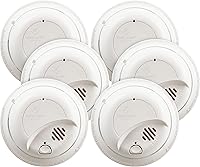
First Alert SMI100-AC Hardwired Smoke Alarm Review: Worth It? (October 2026)
The First Alert SMI100-AC review points to a practical fit for replacing several compatible hardwired alarms at once. Its six alarms use 120-volt AC power and replaceable 9-volt backup batteries.
On this page (7 sections)
- What does the First Alert SMI100-AC review show?
- What should you check before replacing a hardwired alarm?
- How should you set up and care for the SMI100-AC?
- How does the SMI100-AC compare with the SMI105-AC?
- How does it compare with the Kidde 20SA10?
- What are the main trade-offs?
- Is the First Alert SMI100-AC a good choice?
The First Alert SMI100-AC review points to a six-pack for households replacing several compatible hardwired smoke alarms. Each alarm runs on 120-volt AC power and has a replaceable 9-volt backup battery, so the key buying question is whether that backup style and your existing wiring fit your home.
The SMI100-AC also has a test and silence button, tamper-resistant locking pins and interconnect support. It suits a multi-alarm replacement when you want one set of compatible alarms, while a model with a built-in 10-year battery is a better fit if reducing backup battery changes matters more.
What does the First Alert SMI100-AC review show?
The First Alert SMI100-AC is a hardwired, ionization smoke alarm with replaceable battery backup, offered here as a six-pack. It is intended for homes where compatible hardwired alarms need replacing across several locations.
First Alert SMI100-AC Hardwired Smoke Alarm 6-Pack: Best for multi-alarm homes

- 6 hardwired alarms
- 120-volt AC power
- 9-volt battery backup included
- Interconnects with up to 18 compatible devices
A six-alarm set for replacing compatible hardwired units across a home. Each alarm has a 9-volt backup battery, test and silence button, and interconnect support.
Pros
- Six alarms and six backup batteries included
- Works with compatible interconnected devices
- Side-load battery compartment
- Tamper-resistant locking pins
Cons
- Backup uses replaceable 9-volt batteries
- Confirm wiring and compatibility before replacing existing alarms
The set includes six 9-volt batteries and mounting brackets with hardware. A side-load battery compartment makes it easier to reach each backup battery, and the single button handles both testing and silencing.
First Alert specifies interconnection with up to 18 compatible devices, including up to 12 smoke alarms and 6 compatible CO, heat or relay devices. That capacity is useful only when the other alarms and your wiring support the same configuration, so confirm compatibility before mixing models.
Who should consider this First Alert SMI100-AC review pick?
Choose the SMI100-AC if several compatible hardwired alarms need replacement and you prefer to buy a six-unit set. The replaceable backup batteries make sense if you are comfortable checking and changing them as part of routine alarm care.
Skip it if your home has no compatible hardwired connections, if you need a different sensor type, or if you want to avoid routine backup battery replacement. A wireless or battery-operated alarm may fit a home without the right wiring; see our guide to choosing smoke detector types and power.
What should you check before replacing a hardwired alarm?
Check the existing alarm model, wiring connector and interconnect compatibility before buying. Alarms that look alike may use different connectors or may not be approved to work together.
The SMI100-AC has an open mounting design and comes with mounting brackets and hardware. Still, do not assume that the old bracket or wiring harness will fit the new alarm.
Turn off power at the circuit breaker before removing a hardwired alarm, then follow the instructions for the exact model. If you are unsure about the wiring or local requirements, have a qualified electrician handle the replacement.
Count the locations that need alarms, then compare that number with the pack size. A six-pack can cover several replacement spots, but it may leave you with extras or be too small if your home needs more than six.
Our guide to hard-wired smoke detector replacements explains what to check when replacing an existing unit. The broader wired vs. wireless smoke detector guide can help if the choice of power and connection type is still open.
How should you set up and care for the SMI100-AC?
Install each alarm according to its model instructions and test it after installation. The 9-volt backup battery is there for power outages, while the hardwired AC connection supplies normal power.
Before installation, check that each location and mounting point suit the new unit and that the wiring matches its requirements. Keep the instructions for future battery changes, testing and troubleshooting.
After the alarms are mounted and connected, follow the manual’s testing steps for each unit and for the interconnected system. Do not assume that one alarm’s sound confirms every unit is connected correctly.
Check and replace the 9-volt backup batteries as directed by First Alert. The side-load compartment helps with access, but the battery still needs periodic attention.
Keep the alarm clear of dust and follow its care instructions. If the unit sounds during cooking or another nuisance event, use the silence function only as directed, then address the source without disabling the alarm.
How does the SMI100-AC compare with the SMI105-AC?
The SMI105-AC has a 10-year battery backup, while the SMI100-AC uses a replaceable 9-volt battery. The SMI105-AC also has an alarm indicator that identifies the unit that initiated an alarm and an end-of-life warning.
First Alert SMI105-AC Hardwired Smoke Alarm, 10-Year Backup: Best for First Alert loyalists

- 10-year battery backup
- Early warning interconnect
- End-of-life warning
A First Alert hardwired option with a 10-year battery backup, an alarm indicator and end-of-life warning. Its features make it a useful comparison if you want fewer backup battery changes.
Pros
- 10-year battery backup
- Alarm indicator identifies the unit that initiated an alarm
- End-of-life warning
Cons
- Three alarms per pack
- Confirm compatibility with the existing system
The SMI100-AC is the stronger fit when you need six alarms and want to replace several compatible units at once. The SMI105-AC comes in a three-pack, so compare how many alarms you need as well as how you want to manage backup power.
Choose the SMI105-AC if the longer backup period and its indicator features are priorities. Choose the SMI100-AC if the six-unit quantity better matches your replacement plan and you accept regular battery care.
Check compatibility before connecting either model to an existing system. Follow the instructions for the exact model and verify that the alarms are approved to work together.
How does it compare with the Kidde 20SA10?
The Kidde 20SA10 has a built-in 10-year battery backup, while the SMI100-AC uses replaceable 9-volt batteries. Both are hardwired options with interconnect capability, but each has model-specific connection requirements.
Kidde 20SA10 Hardwired 10-Year Smoke Alarm 3-Pack: Best for fewer battery changes

- 120-volt AC power
- Built-in 10-year battery backup
- Interconnect capability
A hardwired alternative with a built-in 10-year battery backup and interconnect capability. Check the user guide for model-specific wiring and interconnection requirements.
Pros
- Built-in 10-year battery backup
- No battery replacement or low-battery chirps
- Interconnect capability
Cons
- Only three alarms in the pack
- Interconnection options and requirements vary by model
The Kidde set includes three alarms, compared with six in the SMI100-AC pack. Kidde says its sensing technology is intended to reduce nuisance alarms from cooking or steam, which may matter if cooking-related alarms are a frequent concern.
Choose the Kidde 20SA10 when a smaller pack and built-in backup suit your needs. Choose the SMI100-AC when six compatible alarms are the better match and you are prepared to maintain their backup batteries.
Read our Kidde 20SA10 review for more on that alternative. Our [First Alert vs.
X-Sense comparison](/first-alert-vs-x-sense/) covers a broader brand choice.
What are the main trade-offs?
The SMI100-AC’s main advantage is the six-alarm set; its main upkeep task is replacing and checking the backup batteries. The alarm also depends on compatible hardwired connections and compatible devices for interconnection.
A four-pack Kidde alternative offers a smaller quantity, replaceable 9-volt backup batteries and a front-load battery door. Consider it if four alarms better match your needs and the wiring is compatible.
Kidde Hardwired Ionization Smoke Alarm 4-Pack: Best for easy battery access

- 120-volt power
- 9-volt battery backup included
- Front-load battery door
A four-alarm hardwired set with a front-load battery door and test or hush button. It suits shoppers comparing a smaller pack with replaceable backup batteries.
Pros
- Four alarms in the pack
- Front-load battery door
- Test and hush button
Cons
- Backup uses a replaceable 9-volt battery
- Confirm compatibility before connecting to an existing alarm system
Avoid choosing by pack count alone. Check the number of locations you need to cover, the wiring already in place, and whether you want replaceable or longer-term backup power.
Is the First Alert SMI100-AC a good choice?
Buy the SMI100-AC if you need six compatible hardwired alarms and are comfortable maintaining replaceable 9-volt batteries. It is a practical match for a multi-alarm replacement where the existing wiring and interconnect setup are compatible.
Pick the Kidde 20SA10 if you need fewer alarms and prefer a built-in 10-year backup. Consider the First Alert SMI105-AC if you want a First Alert option with a 10-year backup, an alarm indicator and end-of-life warning.
Skip the SMI100-AC if your home needs wireless alarms, a different sensor type, or a backup system without routine battery changes. Before ordering, count the alarm locations and verify the wiring and interconnection requirements for your system.
Frequently asked questions
Is the First Alert SMI100-AC hardwired?
Yes. The SMI100-AC uses 120-volt AC power and includes a 9-volt battery backup for power outages.
It can interconnect with compatible devices, up to 18 units total, including up to 12 smoke alarms and 6 compatible devices such as CO or heat alarms.
What is the difference between the SMI100-AC and SMI105-AC?
The SMI100-AC includes a replaceable 9-volt backup battery, while the SMI105-AC has a 10-year battery backup. The SMI105-AC also has an alarm indicator and an end-of-life warning.
Check compatibility with your existing wiring and interconnected alarms before choosing either model.
Can First Alert SMI100-AC alarms interconnect?
Yes, the SMI100-AC supports interconnection with compatible devices, up to 18 units total. That limit includes up to 12 smoke alarms and 6 compatible CO, heat or relay devices.
Compatibility matters, so check the alarm guide and your existing system before connecting units.
Does the SMI100-AC keep working during a power outage?
The SMI100-AC includes a 9-volt battery backup to keep the alarm functioning during a power outage. Replace the backup battery as needed, and use the test button according to the instructions to check operation after installation or battery replacement.