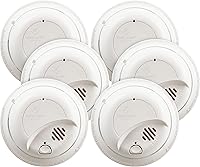
Do Hardwired Smoke Alarms Have Batteries?
No, not all hardwired smoke alarms have batteries, but most modern ones do. They run on 120V AC house power and use a battery only as backup during an outage, either a replaceable 9V or a built-in 10-year cell.
On this page (10 sections)
- Do all hard wired smoke alarms have batteries?
- How does battery backup work in a hardwired alarm?
- What are the two types of backup battery?
- Which hardwired alarms use a 10-year backup?
- How do you check and replace a backup battery?
- Why does a hardwired alarm chirp if it has house power?
- Which backup battery should you buy?
- Do wireless interconnected alarms change the answer?
- What should you check before you buy?
- The short answer on hardwired alarm batteries
No, not all hardwired smoke alarms have batteries, but most modern ones do. They run on 120V AC house power and use a battery only as backup during an outage, either a replaceable 9V or a built-in 10-year cell.
The key point is what "hardwired" means. It describes how the alarm gets everyday power, not whether it carries a backup.
That backup is what keeps the unit watching for smoke when the power goes out.
Do all hard wired smoke alarms have batteries?
No. Some hardwired alarms are AC-only, though most sold today include a backup.
The battery's only job is to keep the alarm working when the household current stops.
An AC-only unit draws all its power from the home's wiring. It detects smoke and sounds its alarm while power flows, but it goes quiet in an outage.
A unit with backup runs on AC as normal and switches to its battery when the power drops. That is why the phrase "do all hard wired smoke alarms have batteries" gets a split answer.
The wiring is standard; the backup is a feature that varies by model.
To tell which type you have, look at the back of the alarm or its user guide. A removable battery door or a "battery backup" label means it carries a cell.
A plain AC label with no battery mention means it does not.
How does battery backup work in a hardwired alarm?
The alarm runs on AC and the battery sits on standby, taking over only when power fails. That design keeps the backup fresh, because it isn't doing the everyday work.
When AC power is present, the alarm rests its backup and runs its sensors from the mains. A power cut triggers the switch to battery power.
The unit keeps sensing smoke and can still sound its 85-decibel alarm.
Backup also covers shorter interruptions, like a tripped breaker or a brief storm outage. Without it, an alarm during that window would be silent exactly when a fire could start.
The backup type decides how much attention it needs. A replaceable 9V cell needs checking and swapping on a schedule.
A sealed 10-year battery is designed to last the alarm's service life and needs no changes.
What are the two types of backup battery?
Replaceable batteries and sealed 10-year batteries are the two main kinds. Each has a different maintenance routine and a different failure point.
Replaceable 9V backup
A replaceable backup is usually a 9V alkaline battery in a small door on the back or side. You swap it when the unit chirps or at the interval in the manual.
The upside is easy service: a fresh cell is cheap and quick to fit. The downside is the routine.
Skip the swap and the alarm may chirp or lose its backup without you noticing.
Keep spare 9V cells on hand so a low-battery chirp doesn't leave the unit unprotected for days.
Sealed 10-year backup
A sealed 10-year battery is built into the alarm and can't be changed. It's designed to last the alarm's whole service life, so there's nothing to swap.
That removes the chirping and the annual battery run. The trade-off is that when the battery or the alarm reaches end of life, the whole unit gets replaced.
Both types keep the alarm live during an outage. The difference is mostly about how much upkeep you want and how long you plan to keep the unit.
Which hardwired alarms use a 10-year backup?
Several current models ship with a sealed 10-year backup, including the Kidde 20SA10 and the First Alert SMI105-AC. Both run on 120V AC and keep working when the power drops.
The Kidde 20SA10 is a photoelectric alarm that Kidde says detects smoke over 25% faster than an earlier edition. Its built-in 10-year battery means no low-battery chirps and no cell changes for the life of the unit.
A 3-pack covers a typical home's key locations.
The First Alert SMI105-AC uses ionization sensing and Precision Detection technology. First Alert says the sensing helps cut cooking nuisance alarms while still giving early warning.
Its 10-year backup provides continuous protection in outages, and an end-of-life warning tells you when to replace it.
Either model answers the backup question with a yes. Pick the Kidde for photoelectric sensing and a 3-pack, or the First Alert for ionization sensing and its end-of-life signal.
For more options across brands, see our guide to hard wired smoke detector replacement.
How do you check and replace a backup battery?
Open the battery door and look at the cell, then swap it if the unit chirps or the manual's interval has passed. A quick check takes a minute and tells you which type you have.
On a replaceable model, the door is usually on the back or side. Slide it open, note the battery size and type, and fit a fresh cell the right way round.
Match the type the manual names; don't force a different size.
Test the alarm after the swap using its test button. A clear, loud siren confirms both the sensor and the backup are working.
On a sealed 10-year model there's no door to open. If the unit chirps near the end of its rated life, it's signaling replacement, not a battery change.
Fit a new alarm in its place.
If you're unsure of the age of any alarm, check the date on its label. Alarms have a service life, and an old unit is worth replacing even if it still sounds.
Why does a hardwired alarm chirp if it has house power?
A chirp usually means the backup battery is weak or the unit has reached end of life, not that house power failed. The alarm uses the chirp to flag a problem the steady AC supply can't fix.
On a replaceable model, a low backup battery is the most common cause. The alarm keeps running on AC but warns that its outage protection is fading.
Swap the cell and the chirp should stop.
On a sealed model, a chirp near the end of the rated period means the whole alarm needs replacing. The battery and sensor are tied together, so there's no cell to change.
Other chirps can come from dust, a fault, or an alarm that needs a reset. Check the manual's chirp chart to match the pattern before you assume it's the battery.
For more troubleshooting and model comparisons, see our First Alert SMI100-AC review and our Kidde 20SA10 review.
Which backup battery should you buy?
Buy a 9V alkaline cell for a replaceable model and skip batteries entirely for a sealed 10-year alarm. The right choice depends on which alarm is already on your ceiling.
For replaceable units, a multi-pack of 9V alkaline batteries covers the swap and leaves spares for the next chirp. Alkaline cells suit smoke alarms and have a long shelf life, so a pack lasts through several change cycles.
Skip the batteries if your alarms use sealed 10-year backups. There's nothing to fit, and buying cells would just leave them sitting in a drawer.
When a replaceable alarm reaches end of life, you can upgrade to a sealed model and end the battery routine. The backup question then becomes simpler: the battery is built in and lasts as long as the alarm.
Do wireless interconnected alarms change the answer?
No. Wireless interconnected alarms still need their own power, and many use batteries for both daily power and backup.
"Wireless" describes how they talk to each other, not how they get electricity.
Some wireless models run on batteries alone and interconnect by radio signal. Others are hardwired with a battery backup and use wireless linking for the interconnect.
In both cases, the backup question comes down to the specific model.
Wireless linking matters in an outage. If one alarm senses smoke, it signals the others to sound, so the whole home gets warned even when the mains are down.
If you're comparing linking options, our guide to wireless interconnected smoke alarms covers how the two approaches differ. Check each model's power source before you buy.
What should you check before you buy?
Check the power source and the backup type on the label, then match the alarm to your wiring. Those two facts decide how much maintenance the unit needs.
Start with the wiring. A hardwired alarm needs a 120V AC connection, so confirm the ceiling box is set up for it before buying.
A battery-only model needs no wiring but needs regular cell changes.
Then pick the backup. A replaceable 9V model costs less up front and needs periodic swaps.
A sealed 10-year model costs more but removes the battery routine for the life of the unit.
Finally, confirm the interconnect. Hardwired alarms usually link through the wiring, and some also offer wireless linking.
For most homes, matching the existing system is the simplest path.
If you're replacing a full set, buying a multi-pack keeps every alarm on the same backup type. That makes the maintenance schedule uniform across the house.
The short answer on hardwired alarm batteries
So do all hard wired smoke alarms have batteries? No, but most modern hardwired alarms do, and that backup is what keeps them working when the power fails.
An AC-only unit goes silent in an outage, while a backup model keeps sensing smoke.
Pick a sealed 10-year model if you want to skip battery changes and chirps. Pick a replaceable 9V model if you prefer a lower upfront cost and don't mind a periodic swap.
Either way, check the backup type before you buy, because it decides how much upkeep the alarm asks of you.
Frequently asked questions
What kind of battery does a hardwired smoke alarm use?
Replaceable backups are usually a 9V alkaline battery. Many newer models instead use a sealed lithium 10-year battery built into the unit.
The type is printed on the alarm's back plate or in its manual.
Does a hardwired smoke alarm still work in a power outage?
It works only if it has a backup battery with charge left. An AC-only alarm goes silent when the power fails.
An alarm with a 10-year sealed battery keeps detecting smoke during outages for the life of that cell.
How do I stop a hardwired smoke alarm from chirping?
The usual cause is a weak backup battery. Open the battery door and replace the cell, or press the hush button if cooking smoke set it off.
A sealed 10-year unit that chirps at end of life needs replacing, not a new battery.
Can I replace a 9V backup with a 10-year battery?
No, not in the same alarm. A 9V model takes a 9V cell and a sealed model takes no user battery.
When a replaceable-battery alarm reaches its end of life, you can replace the whole unit with a 10-year sealed model.