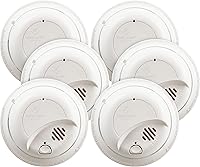
7 Best Smart Smoke Detectors and App Alarms (October 2026)
The best smart smoke detectors and app alarms include the Kidde Smart Smoke and CO Alarm with Ring for flexible home coverage, the Kidde Smart Smoke and CO Alarm with Ring for existing Kidde wiring, and the Kidde Smart Smoke Alarm with Ring for smoke-only rooms.
On this page (7 sections)
- How we chose smart smoke detectors
- Compare smart smoke detectors and app alarms
- Best smart smoke detectors for different homes
- How to choose the best smart smoke detector
- How should you set up and care for a smart smoke alarm?
- What mistakes should you avoid when buying a smart smoke detector?
- Which smart smoke detector should you choose?
The best smart smoke detector for most homes is the Kidde Smart Smoke and CO Alarm with Ring, Battery. It sends smoke, carbon monoxide and low-battery alerts through the Ring app without wiring, making it a straightforward option for a home that needs both types of detection.
Smart alerts add a way to receive warnings while you're away, but they don't replace an audible alarm inside the home. Match the alarm's detection, power source, app and interconnection features to your rooms and existing setup.
For a broader overview of power, sensor type and placement, start with our guide to choosing a smoke detector.
Our picks at a glance
-
1
 Best for flexible home coverage
Kidde Smart Smoke and CO Alarm with Ring, Battery
8.5/10 our score
See it on Amazon -
2
 Best for existing Kidde wiring
Kidde Smart Smoke and CO Alarm with Ring, Hardwired
8.3/10 our score
See it on Amazon -
3
 Best for smoke-only rooms
Kidde Smart Smoke Alarm with Ring, Battery
8.1/10 our score
See it on Amazon
- 4
 Check it
Kidde App-Enabled Hardwired Smart Smoke and CO Alarm
Best for phone-based hush - 5
 Check it
Kidde Smart Plug-In CO Alarm, COPDW
Best for outlet-based CO alerts - 6
 Check it
Kidde Smart CO and Air Quality Alarm, COPDLQW
Best for air quality insights - 7
 Check it
Kidde App-Enabled Hardwired Smart Smoke Alarm
Best for wired smoke alerts
How we chose smart smoke detectors
We compared the products by what they detect, how they get power, which app sends alerts and how they connect with other alarms. Those details shape whether an alarm can replace an existing unit, add coverage in a new location or fill a gap in a connected home.
The first three options combine smoke detection with Ring app alerts, with two of them also detecting carbon monoxide. The other smart smoke alarms use the Kidde app, and two additional devices are plug-in CO alarms that can supplement smoke coverage.
A CO-only alarm cannot replace a smoke alarm. It belongs in the comparison only when you also need CO coverage or want the extra indoor air readings offered by one model.
Compare smart smoke detectors and app alarms
Choose a combo alarm if you want one device to detect both smoke and carbon monoxide. Choose a smoke-only model if your CO coverage is already handled and you want to keep the alarm focused on smoke.
| Product | Best for | Power | Detection | App alerts | Our score |
|---|---|---|---|---|---|
| Kidde Smart Smoke and CO Alarm with Ring, Battery | flexible home coverage | 2 AA alkaline batteries | Smoke and carbon monoxide | Ring app; no subscription required | 8.5 |
| Kidde Smart Smoke and CO Alarm with Ring, Hardwired | existing Kidde wiring | Corded electric | Smoke and carbon monoxide | Ring app; no subscription required | 8.3 |
| Kidde Smart Smoke Alarm with Ring, Battery | smoke-only rooms | 2 AA alkaline batteries | Smoke | Ring app; no subscription required | 8.1 |
| Kidde App-Enabled Hardwired Smart Smoke and CO Alarm | phone-based hush | 120V AC with AA battery backup | Smoke and carbon monoxide | Kidde app; 2.4 GHz Wi-Fi required | 7.6 |
| Kidde Smart Plug-In CO Alarm, COPDW | outlet-based CO alerts | 120V outlet with 2 AA backup batteries | Carbon monoxide | Kidde app; 2.4 GHz Wi-Fi required | 7.6 |
| Kidde Smart CO and Air Quality Alarm, COPDLQW | air quality insights | 120V outlet with 2 AA backup batteries | Carbon monoxide | Kidde app; 2.4 GHz Wi-Fi required | 7.5 |
| Kidde App-Enabled Hardwired Smart Smoke Alarm | wired smoke alerts | 120V AC with AA battery backup | Smoke | Kidde app; 2.4 GHz Wi-Fi required | 7.4 |
Best smart smoke detectors for different homes
The right smart alarm depends on whether you need smoke only or smoke and CO, whether the room has existing wiring, and which app you prefer. These seven picks cover battery, hardwired and plug-in setups.
Kidde Smart Smoke and CO Alarm with Ring, Battery: Best for flexible home coverage
- Smoke and carbon monoxide detection
- Ring app alerts for smoke, CO and low battery
- 2 AA alkaline batteries included
- Wire-free interconnectivity
Battery power avoids wiring, while smoke and CO alerts go to the Ring app. It can also connect wirelessly with other Kidde alarms.
Pros
- No wiring needed
- Alerts for smoke, CO and low battery
- Whole-home wire-free connectivity
Cons
- Uses the Ring app
- Optional 24/7 monitoring requires a separate subscription
The battery-powered Kidde Smart Smoke and CO Alarm with Ring is the best fit for most homes that want remote alerts without adding wiring. It sends smoke, CO and low-battery warnings through the Ring app, and those notifications do not require a subscription.
It runs on two included AA alkaline batteries and supports wire-free interconnectivity with other Kidde alarms. When one connected alarm sounds, others can sound too, subject to the models' interconnection requirements.
Kidde says this alarm detects smoke over 25% faster than a leading competitor, based on internal testing. Its enhanced sensing technology is designed to reduce nuisance alarms caused by cooking compared with earlier Kidde generations.
Choose this alarm if you want smoke and CO detection in a battery-powered device and are comfortable using Ring. Skip it if you need a hardwired replacement or prefer all devices to use the Kidde app.
For more options that connect alarms wirelessly, see our guide to wireless interconnected smoke alarms.
Kidde Smart Smoke and CO Alarm with Ring, Hardwired: Best for existing Kidde wiring
- Smoke and carbon monoxide detection
- Ring app alerts
- Hardwired power
- Connects with existing hardwired Kidde alarms
This hardwired option adds app alerts for smoke, CO and low batteries. One smart detector can provide mobile alerts for compatible hardwired Kidde alarms.
Pros
- Smoke and CO detection
- App alerts without a subscription
- Connects with hardwired Kidde alarms
Cons
- Needs a hardwired setup
- Optional 24/7 monitoring requires a separate subscription
This hardwired combo alarm is a strong fit for a home that already has compatible hardwired Kidde alarms. Kidde says adding one smart detector can provide mobile alerts for every hardwired alarm in the home.
The Ring app sends smoke, CO and low-battery notifications while you're home or away, without requiring a subscription. Alexa-enabled devices can also receive notifications.
Kidde says the enhanced sensing technology reduces false alarms often caused by cooking compared with prior Kidde generations. Its faster smoke detection claim is based on internal testing against a leading competitor.
Choose this model when you want smoke and CO detection in a hardwired setup already built around compatible Kidde alarms. Skip it if your home has no suitable wiring or you need a battery-only alarm.
Check the interconnection instructions before buying. For help choosing a compatible wired replacement, compare it with our hard-wired smoke detector replacement guide.
Kidde Smart Smoke Alarm with Ring, Battery: Best for smoke-only rooms
- Smoke detection
- Ring app alerts for smoke and low battery
- 2 AA alkaline batteries included
- Wire-free interconnectivity
This battery-powered alarm sends smoke and low-battery warnings through the Ring app. It also supports wire-free connections with other Kidde alarms.
Pros
- No wiring needed
- Smoke and low-battery app alerts
- Wire-free interconnectivity
Cons
- Does not detect carbon monoxide
- Optional 24/7 monitoring requires a separate subscription
The Kidde Smart Smoke Alarm with Ring, Battery suits homes that need a smart smoke alarm but already have separate CO coverage. It runs on two included AA alkaline batteries, so installation does not require household wiring.
The Ring app sends smoke and low-battery warnings without a subscription. The alarm also supports wire-free connections with other Kidde alarms, so connected units can sound when one detects a hazard.
Kidde says its enhanced sensing technology reduces nuisance alarms often caused by cooking compared with prior generations. It also says the alarm detects smoke over 25% faster than a leading competitor, based on internal testing.
Choose it for smoke-only coverage in a battery-powered alarm. Skip it if you need carbon monoxide detection in the same unit or want the Kidde app instead of Ring.
Use it as part of a full home plan. Our existing smoke detector category includes related guides on alarm types, placement and common warning sounds.
Kidde App-Enabled Hardwired Smart Smoke and CO Alarm: Best for phone-based hush
- Smoke and CO detection
- Kidde app alerts
- Hush false alarms from your phone
- 2 AA backup batteries
This hardwired combo alarm sends smoke, CO and low-battery warnings through the Kidde app. Phone-based hush control is useful when you need to silence a false alarm.
Pros
- Smoke and CO detection
- Phone-based hush control
- AA battery backup
Cons
- Requires hardwiring
- Requires 2.4 GHz Wi-Fi
This hardwired combo alarm suits buyers who want smoke and CO detection, voice alerts and the ability to hush a false alarm from a phone. It requires 2.4 GHz Wi-Fi for the Kidde app and includes two AA backup batteries.
The alarm announces “Fire!” or “Warning, Carbon Monoxide” to identify the hazard. Kidde says one smart alarm can provide mobile alerts for compatible hardwired Kidde alarms, though requirements vary by model.
Choose this model if phone-based hush control and voice alerts matter more than using the Ring app. Skip it if you need a battery-powered device or don't have compatible hardwired connections.
Treat any alarm as a possible emergency until you identify the cause. Hush control is useful for a false alarm, but it should not replace checking the home and following the alarm's instructions.
Kidde Smart Plug-In CO Alarm, COPDW: Best for outlet-based CO alerts
- Carbon monoxide detection
- Kidde app alerts
- Digital backlit display
- AA battery backup
This is a plug-in CO alarm rather than a smoke detector. It adds app notifications and a backlit display, with AA batteries for power outages.
Pros
- App alerts for CO
- Backlit digital display
- AA backup batteries included
Cons
- Does not detect smoke
- Requires a nearby outlet
The Kidde COPDW is a smart CO alarm, not a smoke detector. It plugs into a standard 120V outlet, includes two AA backup batteries and has a rotating plug for vertical or horizontal outlets.
The Kidde app sends real-time CO notifications without a subscription, and Alexa-enabled devices and Google Home are supported. A backlit digital display provides a local visual indication alongside the audible alarm.
Choose this model to add CO detection and app access where a suitable outlet is available. Skip it as a standalone choice if you need smoke coverage, since it detects CO only.
This alarm needs 2.4 GHz Wi-Fi for app notifications. Our guide on whether smoke detectors detect carbon monoxide explains why you should check that both hazards are covered.
Kidde Smart CO and Air Quality Alarm, COPDLQW: Best for air quality insights
- Carbon monoxide and indoor air quality monitoring
- Kidde app alerts
- Monitors humidity and TVOC levels
- AA battery backup
This plug-in CO alarm also monitors indoor air quality, humidity and TVOC levels. App notifications do not require a subscription, while some additional insights need an optional plan.
Pros
- CO and air quality monitoring
- App alerts without a subscription
- AA backup batteries included
Cons
- Does not detect smoke
- Some air quality insights require an optional subscription
This plug-in Kidde alarm combines CO detection with indoor air quality monitoring. It measures humidity and TVOC levels, while the Kidde app provides real-time CO notifications without a subscription.
It also offers low-level CO alerts with a distinct light and sound pattern, plus a separate pattern at 70 ppm. The optional Advanced Home Health plan adds weekly air quality trends and insights about mold risk and thermal comfort.
The alarm plugs into a standard 120V outlet and includes two AA backup batteries for power outages. It supports Google Home and Alexa-enabled devices, and needs 2.4 GHz Wi-Fi.
Choose it if you want CO coverage and indoor air readings in one plug-in device. Skip it if you only want a smoke detector or don't need the added air quality features.
Kidde App-Enabled Hardwired Smart Smoke Alarm: Best for wired smoke alerts
- Smoke detection
- Kidde app alerts for smoke and low battery
- Hush false alarms from your phone
- 2 AA backup batteries
This hardwired smoke-only alarm sends alerts through the Kidde app and supports phone-based hush control. It can connect with compatible hardwired Kidde alarms.
Pros
- App alerts for smoke and low battery
- Phone-based hush control
- AA backup batteries included
Cons
- Does not detect carbon monoxide
- Requires hardwiring and 2.4 GHz Wi-Fi
The Kidde App-Enabled Hardwired Smart Smoke Alarm is a smoke-only choice for a home with compatible wiring and separate CO coverage. It uses 120V AC wiring, includes two AA backup batteries and supports phone-based hush control.
The Kidde app sends smoke and low-battery warnings while you're home or away. Setup requires 2.4 GHz Wi-Fi, and Kidde says one smart alarm can provide mobile alerts for compatible hardwired alarms in the home.
Kidde says the alarm beeps to signal replacement 10 years after it is powered on. Follow the alarm's instructions for wiring, setup and replacement, especially when changing an existing hardwired unit.
Choose it when you want smart smoke alerts and hush control in a hardwired smoke-only alarm. Skip it if you need CO detection in the same unit or cannot use the Kidde app.
For a battery alternative and a closer look at the tradeoffs, read our guide to wireless versus hardwired smoke detectors.
How to choose the best smart smoke detector
The best smart smoke detector is the one that fits your existing alarm system, detects the hazards you need covered and sends alerts through an app you will use. Start with those needs before weighing extra features.
Does the alarm detect smoke, carbon monoxide or both?
Check the detection type before comparing apps. Combo alarms cover smoke and CO in one unit, while smoke-only alarms cover smoke and the two plug-in alarms here detect CO only.
A CO-only device can add coverage, but it cannot take the place of a smoke alarm. If you need both kinds of coverage in a room, choose a combo model or plan for separate, suitable alarms.
Which app and network does it need?
The Ring models send alerts through the Ring app. The other app-enabled Kidde alarms use the Kidde app, and the hardwired Kidde models and plug-in CO alarms require 2.4 GHz Wi-Fi.
Pick the app that fits your current setup and make sure the intended alarm location can connect to the required network. An app notification can reach you away from home, while an audible alarm warns people who are inside.
Is battery or hardwired power right for your home?
A battery alarm avoids wiring and offers more flexibility when adding an alarm where no hardwired unit exists. The Ring battery models use two AA alkaline batteries, which are included.
Hardwired options fit homes with compatible wiring and can connect with compatible Kidde alarms. Check your existing alarm and the replacement's instructions before installation, including the backup power needs.
Do you need a subscription?
The listed app notifications do not require a subscription. Optional services add features: Ring offers optional 24/7 smoke and CO monitoring, and Kidde's optional Advanced Home Health plan adds air quality trends and insights for the COPDLQW.
Decide whether the included alerts meet your needs before paying for an extra service. The basic choice should start with detection, power and placement.
How should you set up and care for a smart smoke alarm?
Set up the alarm with its own instructions, then confirm the local alarm, app alerts and any interconnection features work as intended. A smart alarm needs correct placement and regular attention just like any other smoke alarm.
Start by choosing a location that matches the alarm's instructions and your home's coverage needs. Use our guide to where to place smoke detectors before mounting a new unit or moving an existing one.
For app-connected models, install the correct app and follow its setup steps. The Kidde app models in this roundup that use Wi-Fi require a 2.4 GHz network, and the COPDW setup begins by scanning the QR code on the alarm and plugging it into an outlet.
After setup, check that the app shows the alarm and that the device responds to its test or hush controls as described in its guide. If you connect alarms, confirm which models can interconnect rather than assuming every Kidde unit uses the same method.
Keep the alarm free of dust and follow the care steps in its user guide. Replace batteries when required, respond to low-battery alerts and heed end-of-life signals; the hardwired smoke-only model here beeps when it reaches its stated 10-year replacement point.
What mistakes should you avoid when buying a smart smoke detector?
The most common mistakes are buying the wrong detection type, assuming all smart alarms use the same app, and overlooking wiring or network needs. A short check before ordering can prevent a mismatch.
- Don't treat a CO-only plug-in alarm as a smoke detector. It adds CO coverage, but it does not detect smoke.
- Don't assume all alarms use one app. The Ring models use Ring, while the other smart models use the Kidde app.
- Don't assume hardwired models are interchangeable. Check the existing wiring and the interconnection requirements for the exact alarm.
- Don't overlook Wi-Fi requirements. Several Kidde app models require 2.4 GHz Wi-Fi for setup and alerts.
- Don't rely on app notifications alone. Keep the alarm's audible warning and correct placement central to your plan.
- Don't silence an alarm before understanding why it sounded. Hush control can help with a false alarm, but first treat the warning as a potential hazard.
Which smart smoke detector should you choose?
Choose the Kidde Smart Smoke and CO Alarm with Ring, Battery if you want one battery-powered alarm for smoke and CO with app alerts. Pick the hardwired Ring combo if compatible Kidde alarms are already installed, or select a smoke-only model when separate CO coverage is in place.
Choose a plug-in CO alarm only to add carbon monoxide detection, with the COPDLQW suited to buyers who also want indoor air readings. For more options across connected alarm types, compare our wireless interconnected smoke alarm picks with the hardwired replacement guide.
Our top 3 picks at a glance
-
1
Best for flexible home coverage
Kidde Smart Smoke and CO Alarm with Ring, Battery
8.5/10 our score
See it on Amazon -
2
Best for existing Kidde wiring
Kidde Smart Smoke and CO Alarm with Ring, Hardwired
8.3/10 our score
See it on Amazon -
3
Best for smoke-only rooms
Kidde Smart Smoke Alarm with Ring, Battery
8.1/10 our score
See it on Amazon
Frequently asked questions
What is the best smart smoke detector?
The Kidde Smart Smoke and CO Alarm with Ring, Battery is a strong choice for homes that want remote alerts without adding wiring. It reports smoke, carbon monoxide and low-battery warnings through the Ring app, with no subscription required for notifications.
Choose a hardwired option when it matches your existing alarm setup.
Do smart smoke detectors need a subscription?
The smart Kidde alarms here provide app notifications without a subscription. Some have optional paid services, such as 24/7 monitoring or expanded air quality insights.
Choose based on the alerts you need.
Basic app warnings are included, while extra services are optional.
Can a smart smoke detector alert you when you are away?
Yes. The smart Kidde alarms in this guide send app notifications when you're home or away, once you complete setup and connect the alarm to the required app and network.
Keep the audible alarm and suitable placement as part of your safety plan, since people inside need a local warning.
Should I choose a battery or hardwired smart smoke alarm?
Choose a battery model if you want to avoid wiring or need placement flexibility. Choose a hardwired alarm if it fits your home's wiring and you want to connect compatible hardwired Kidde alarms.
Check the existing alarm's connection and the new model's instructions before replacing it.