How to Test a Carbon Monoxide Detector at Home
To learn how to test a carbon monoxide detector, press and hold its test button as the manual directs, then confirm the sound and indicators respond. This checks alarm functions, not whether the sensor detects carbon monoxide in the room.
On this page (10 sections)
- How do you test a carbon monoxide detector at home?
- What does a test button check?
- How do you check a plug-in detector and its backup power?
- How do you choose a detector that’s easy to check?
- What mistakes make a detector check less useful?
- What should you do if the detector doesn’t respond?
- How can you tell a test from a warning signal?
- When should you replace a carbon monoxide detector?
- What should you do if the alarm sounds outside a test?
- How to test a carbon monoxide detector and choose the right alarm
To learn how to test a carbon monoxide detector, press and hold the test button as the manual directs, then check that the alarm sounds and its indicators respond. This confirms the alarm functions respond to a test; it does not prove the sensor can detect carbon monoxide in the room.
Test alarms on the schedule in their manuals, and learn the difference between a test signal, a low-battery chirp, an end-of-life signal, and a CO alarm. If an alarm sounds unexpectedly, leave the building for fresh air and call emergency services or your local fire department from outside.
A useful routine has 3 parts: know the model’s test steps, check that it has power, and respond correctly to any signal you can’t identify. Choose an alarm that suits the room’s power setup and the information you want to see, then keep its manual where you can find it.
How do you test a carbon monoxide detector at home?
Use the test button and follow the alarm’s instructions. The sound and indicator response should match the manual for that model.
- Tell everyone at home that you’re testing the alarm.
- Check the manual for the test button location and how long to press it.
- Press and hold the button as instructed.
- Confirm that the alarm sounds and its indicators respond as described.
- Release the button and wait for the alarm to return to its normal state.
Keep your face and ears at a comfortable distance while the sounder is active. Don’t test an alarm by releasing carbon monoxide, using vehicle exhaust, or burning fuel near it.
A test button does not prove that the sensor can detect CO in the room. It checks alarm functions, such as the sounder and electronics, as described by the manufacturer.
Test frequency and button steps can vary by model. Follow the manual for the schedule, including whether a check is recommended after installation or a power interruption.
What does a test button check?
A test button checks the alarm’s response, not the room’s air. It helps confirm that key alarm functions respond, but it does not replace the manual’s sensor and replacement guidance.
Some alarms use different lights, display messages, or sound patterns for power, alarm, and fault conditions. Read the signal guide before starting so you can tell the expected test response from a warning.
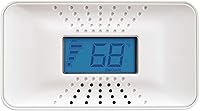
The Kidde Plug-In CO Alarm with Digital Display has Peak Level Memory, which records the last time carbon monoxide was detected or when the unit was last tested. Its display shows the CO level the alarm is sensing.
The display and memory give you information about the alarm’s readings and history, but they don’t turn a button press into a sensor check. Use the manual to understand what the display shows and what each signal means.
How do you check a plug-in detector and its backup power?
Confirm the outlet has power, then test the alarm as its manual directs. For a model with battery backup, install or replace the battery as instructed and use the button to check the alarm response.
The First Alert Plug-In CO Alarm with Digital Display has battery backup and a test and silence button. Its backup battery is not intended to power the alarm for an extended period without AC.
If the display or power indicator doesn’t respond, check the outlet and follow the manual’s troubleshooting steps. Being plugged in does not by itself confirm that the alarm is ready.
For a location without a suitable outlet, the First Alert CO710 is battery powered and has a test/silence button. Its built-in 10-year lithium battery is designed to provide power for the alarm’s life, so there’s no routine battery change.
Compare plug-in and battery carbon monoxide detectors if you’re choosing between outlet power and a standalone alarm. Think about the outlet location, backup power needs, and whether you can reach the test button comfortably.
How do you choose a detector that’s easy to check?
Choose based on power, placement, and the information you want from the alarm. A button test is easier to make part of your routine when the alarm is easy to reach and you can quickly identify its normal signals.
A plug-in alarm suits a spot with a usable outlet. Both plug-in models here have backup batteries, but their battery types differ: Kidde uses a 9V backup, while the First Alert CO615 uses AA backup.
Check the manual for battery installation and replacement instructions.
The Kidde is a clear fit if you want a digital display and Peak Level Memory. The First Alert CO615 suits someone who wants a plug-in unit with a test and silence button and battery backup.
Either is a poor fit for a spot without a suitable outlet.
The First Alert CO710 suits a location where you prefer a standalone, battery-powered alarm and don’t want routine battery changes. Skip it if you specifically need a plug-in model.
Its built-in battery means you should follow the unit’s replacement timing rather than plan to swap a battery.
Place alarms according to the manual and local requirements. First Alert recommends an alarm on each level and in each bedroom; review how many carbon monoxide detectors you need when planning coverage.
What mistakes make a detector check less useful?
The most common mistake is treating a successful button test as proof that the sensor can detect CO. A button test checks the alarm’s functions, not the air or the sensor’s response to real carbon monoxide.
Avoid these errors:
- Using exhaust or flame as a test source. Never expose yourself or the alarm to carbon monoxide to see if it reacts.
- Skipping the manual. Button timing and signal patterns differ by model.
- Ignoring power. A plug-in alarm still needs a working outlet, and backup batteries need care as directed.
- Leaving a fault or chirp unresolved. Identify the signal using the manual and act on its instructions.
- Keeping an expired alarm because it passes the button check. A test does not extend its service life.
If an alarm doesn’t respond, check power and battery status, then follow the manual’s troubleshooting steps. Don’t open the unit or attempt to repair its sensor.
What should you do if the detector doesn’t respond?
Treat a failed test as a reason to troubleshoot or replace the alarm according to its manual. Check its power source, battery, and any fault signal, then repeat the check only as instructed.
For a plug-in model, confirm the outlet works and check the backup battery. For a battery-powered model, follow the instructions for its battery and end-of-life signals.
If it still doesn’t respond, arrange a working CO alarm for the area while you replace or service the faulty one. Review how many carbon monoxide detectors you need to consider coverage around your home.
How can you tell a test from a warning signal?
Use the sound and indicator guide in your specific model’s manual. Alarm patterns differ, so a signal you remember from another brand or model may not mean the same thing.
A low-battery or end-of-life chirp may mean the alarm needs attention, while a CO warning calls for immediate action. If you can’t identify an unexpected signal, move outside to fresh air and call emergency services or your local fire department from there.
The guide to carbon monoxide detector chirping patterns explains why the count and timing matter. Never silence an unexplained alarm and stay inside to investigate.
When should you replace a carbon monoxide detector?
Replace the alarm when it reaches the end of its service life or signals that it has expired. Check the date on the unit and confirm its service life and replacement steps in the manual.
A button test that sounds correctly doesn’t extend the alarm’s service life. Follow the manufacturer’s replacement instructions, including any end-of-life signal or date-based guidance.
Power type can help narrow a replacement choice. Compare plug-in and battery carbon monoxide detectors if you need to decide which option suits the location.
What should you do if the alarm sounds outside a test?
Leave the building immediately and get everyone outside to fresh air. Call emergency services or your local fire department from outside, and don’t re-enter until responders say it’s safe.
Don’t assume an alarm is false because no one feels ill or because the sound stops. Carbon monoxide has no color or smell, and its symptoms can resemble the flu.
For placement planning, read how many carbon monoxide detectors you need. Follow local requirements and each alarm’s instructions when choosing locations.
How to test a carbon monoxide detector and choose the right alarm
Pick an alarm that fits the location, then follow its manual for button checks and replacement timing. A plug-in model suits a spot with a working outlet; a battery-powered model fits a location where you don’t want to rely on one.
Choose the Kidde if a digital display and Peak Level Memory matter to you. Choose the First Alert CO615 for a plug-in alarm with battery backup and a test and silence button, or the CO710 if you want a standalone alarm with a built-in 10-year battery.
Whatever model you choose, a successful button test confirms the response described in its instructions, not that the sensor detects CO in the room. If the alarm sounds unexpectedly, get outside first and call for help.
Frequently asked questions
How do you test a carbon monoxide detector?
Press and hold the test button for the time stated in the alarm's manual, then confirm that its sounder and indicators respond as described. A button test checks alarm functions; it doesn't expose the sensor to carbon monoxide or prove the sensor will detect CO in every condition.
Does a carbon monoxide detector test button check the sensor?
A test button checks the alarm's electronic and sound functions, but it does not confirm that the sensor detects carbon monoxide in the room. Follow the manual for sensor checks and replacement timing, and never use vehicle exhaust or another fuel-burning source to test an alarm.
How often should you test a carbon monoxide alarm?
Test it at the interval stated in its manual, and check it after installation or a power interruption if the instructions call for that. Keep the manual nearby because test steps and signal patterns vary by model; replace the unit at the end of its stated service life.
What if a carbon monoxide alarm sounds during a test?
If you started a test, a brief alarm can be the expected response described in the manual. If the alarm sounds unexpectedly or indicates CO, move everyone outdoors to fresh air and call emergency services or your local fire department from outside; don't ignore the signal.