Does a Carbon Monoxide Detector Detect Gas?
No. A standard carbon monoxide detector detects carbon monoxide only, so it will not respond to natural gas, propane, or methane. To catch a gas leak you need a separate gas alarm or a combination unit.
On this page (10 sections)
- What does a carbon monoxide detector actually detect?
- Does a carbon monoxide detector detect natural gas or propane leaks?
- Which alarms cover both carbon monoxide and gas?
- What gases and hazards does a standard CO alarm miss?
- Why the confusion between carbon monoxide and gas alarms?
- Where should each alarm go in a home?
- Which CO detectors work well in a home?
- When is a portable CO detector the better choice?
- What should you do when a CO or gas alarm sounds?
- The short answer on gas detection
No. A carbon monoxide detector detects carbon monoxide only, so a gas leak from a stove or boiler won't set it off.
The short answer to "does a carbon monoxide detector detect gas" is that it senses one invisible threat, not every gas in your home.
That gap matters because natural gas and propane leaks have their own warning signs. This guide explains what a CO alarm catches, what it misses, and how to cover both risks.
What does a carbon monoxide detector actually detect?
A CO detector senses carbon monoxide in the air and sounds an alarm when the level and time cross its threshold. It does not sense gas odor, smoke, or most other gases.
The sensor is usually electrochemical. It reacts to carbon monoxide and produces a small electrical signal that the alarm reads.
A digital model shows the reading in parts per million and updates as the air changes.
Carbon monoxide has no color, taste, or smell, which is why the alarm exists. You can't notice it yourself before symptoms start.
That's also why the device is tuned to CO and nothing else.
A CO alarm won't detect a gas leak because carbon monoxide and fuel gas are different chemicals. Your nose catches the added smell in natural gas or propane long before a CO sensor would react.
A plain CO alarm stays silent while gas fills a room.
Does a carbon monoxide detector detect natural gas or propane leaks?
No. A CO alarm won't respond to natural gas, propane, or methane, because those fuels aren't carbon monoxide.
They burn into CO, but the raw gas itself doesn't trigger the sensor.
This is a common mix-up. People smell gas near the stove, check the CO alarm, and see a normal reading.
The alarm is doing its job. It just wasn't built to sense that fuel.
A gas leak still needs attention. Leave the building, avoid switches and flames, and call the gas utility or emergency services from outside.
A CO alarm gives you no warning here, so never treat a quiet unit as proof that the air is safe.
If you heat or cook with gas, add an explosive gas alarm. It senses methane, propane, and natural gas and sounds when those build up.
Some units also include a CO sensor, which brings us to the next point.
Which alarms cover both carbon monoxide and gas?
A combination gas and carbon monoxide alarm covers both risks in one plug-in unit. It sounds for CO and for explosive gas, so one device guards the kitchen or utility room.
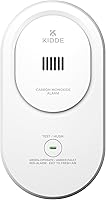
The Kidde Carbon Monoxide Detector, Propane, Natural, Methane, & Explosive Gas Alarm is one example. It plugs into a 120V outlet and keeps a 9-volt battery backup for power outages.
Its digital display shows the carbon monoxide level or states "GAS" when explosive gas is present. An 85-decibel alarm sounds in either case.
Peak Level Memory records the last CO event or test.
The unit uses an electrochemical sensor. Kidde backs it with a 5-year limited warranty.
Place it near a gas appliance and on each level with fuel-burning equipment.
What gases and hazards does a standard CO alarm miss?
A standard CO alarm misses gas leaks, smoke, and low oxygen, so it is one layer of home safety, not the whole system. Each hazard needs its own sensor.
- Natural gas and propane leaks. These need an explosive gas alarm. Your nose is the usual early warning, but some people can't smell the additive.
- Smoke and fire. A smoke alarm uses an ionization or photoelectric sensor. Our guide on whether smoke detectors detect carbon monoxide explains why the two alarms don't swap jobs.
- Low oxygen. CO alarms don't measure oxygen. Confined spaces and fuel-burning rooms need different monitoring.
- Other combustion gases. A CO alarm is tuned to carbon monoxide, not to every byproduct of burning fuel.
A CO alarm also won't find the source of a leak. It warns you, then you ventilate and call a technician.
That's why alarms and regular appliance checks go together.
Why the confusion between carbon monoxide and gas alarms?
The confusion comes from the fact that fuel gas and carbon monoxide are linked but not the same. Gas appliances produce CO when they burn poorly, so both risks live in the same rooms.
A furnace, water heater, or stove burns fuel. With good combustion and proper venting, the CO goes outside.
A blocked flue or a dirty burner can push carbon monoxide indoors instead.
A gas leak is a different failure. The fuel escapes unburned before it ever reaches the flame.
That's why an explosive gas alarm and a CO alarm watch two separate problems in one room.
Labels add to the mix. A "gas alarm" can mean explosive gas detection, while "CO alarm" means carbon monoxide.
Check the box wording before you buy, and don't assume one covers the other.
Where should each alarm go in a home?
Put CO alarms near bedrooms and on every level, and put gas alarms near the fuel-burning appliance. Location decides whether either alarm warns you in time.
For CO, mount the unit outside sleeping areas and on each floor of the home. Follow the maker's height guidance and keep the alarm away from dead air corners and bathroom steam.
Our guide on how to choose a carbon monoxide detector covers placement in more detail.
For explosive gas, place the alarm near the furnace, water heater, or stove. Gas is usually lighter or heavier than air depending on type, so follow the unit's mounting instructions.
Test both alarms monthly with their test buttons. Replace batteries as the maker advises and respect the end-of-life signal.
If a unit is chirping five times, check what that pattern means before you silence it.
Which CO detectors work well in a home?
A plug-in CO alarm is the simplest choice for most homes, because it needs no wiring and keeps a battery backup. You plug it into a standard outlet on each level.
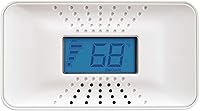
The Kidde Plug-In CO Alarm with Digital Display shows the carbon monoxide level in parts per million and updates as air changes. A 9-volt battery backup keeps it working during an outage.
Its 85-decibel alarm sounds when carbon monoxide is detected. Peak Level Memory records the last CO event or the last test.
The Smart-Hush button silences the unit for about 8 minutes during false triggers like shower steam.
Kidde backs it with a 10-year limited warranty. It plugs into a standard 120V outlet.
For homes with several floors, one per level is the usual plan.
If you'd rather compare outlet-powered options, our roundup of the best plug in carbon monoxide detector picks models for bedrooms, kitchens, and basements.
When is a portable CO detector the better choice?
A portable CO detector suits travel, camping, and spot checks, not round-the-clock home protection. It runs on its own battery and goes where you do.
The TOPTES CT-580 is a rechargeable handheld unit with a color display. It detects carbon monoxide from 0 to 1000 PPM and responds within 0.3 seconds, per TOPTES.
Three alarm modes fire at once: light, sound, and vibration.
It includes a built-in flashlight, adjustable screen brightness, and USB-C charging. A protective case and cable come in the box.
TOPTES says it's certified by a national accredited lab.
Use it to check a hotel room, a camper, or a workshop before you settle in. It is not a substitute for a fixed home alarm, because it only watches while it's on and nearby.
For home safety, keep the plug-in alarm installed and use the portable unit as a backup check.
What should you do when a CO or gas alarm sounds?
Get everyone outside, then call for help from a safe spot. Treat any alarm as real until a professional says otherwise.
Don't hunt for the source first. Don't flip switches or strike matches.
Move people and pets out, then call the fire department or gas utility. Tell them whether the alarm was CO or explosive gas.
Once outside, don't re-enter until responders clear the building. A CO alarm that sounded may need a reset or replacement afterward.
A gas alarm means a leak until proven otherwise.
After the event, have the appliance serviced and check vents and flues. An alarm that keeps sounding after a professional clears the air may be faulty.
Replace units past their service life rather than trusting an old sensor.
The short answer on gas detection
A carbon monoxide detector does not detect gas leaks, smoke, or low oxygen. It detects carbon monoxide, and that's the job it does well.
If you heat or cook with gas, pair it with an explosive gas alarm.
Pick the Kidde combination unit if you want one plug-in device for both CO and gas. Pick the Kidde plug-in CO alarm for bedrooms and living areas on each floor.
Add the TOPTES portable unit for camping, travel, and checking rooms away from home.
Whichever you choose, test the alarms monthly and keep fuel-burning appliances serviced. That routine, more than any single device, is what keeps a home safe from both carbon monoxide and gas.
Frequently asked questions
Will a carbon monoxide detector go off for a natural gas leak?
No. A plain CO alarm senses carbon monoxide and stays quiet when natural gas escapes.
A gas explosion can still happen without any warning from it, so homes with gas appliances need a separate explosive gas alarm.
Why does my CO detector show a number when there is no problem?
A digital CO alarm shows the amount of carbon monoxide it senses in parts per million. Low readings can come from a nearby car, a stove, or a fireplace, and the display updates as air clears.
Does a portable CO detector replace a home alarm?
No. A handheld CO detector is a spot-check tool for travel, camping, or checking a room, not a 24-hour guard.
Keep a plug-in or battery CO alarm installed at home for continuous protection.
Can a detector sense carbon monoxide from a generator outside?
It can, if enough CO drifts indoors through a window, door, or vent. CO alarms are designed to catch rising levels inside the home, so keep generators well away from the house and never run one in a garage.