Can Carbon Monoxide Detectors Go Off Falsely?
Yes, a carbon monoxide detector can alert without real CO present, but the false alarms are limited and predictable. A low battery chirp, dust in the sensor, or a unit past its end of life accounts for most of them.
On this page (9 sections)
- What makes a carbon monoxide detector go off falsely?
- How do you tell a false alert from a real carbon monoxide alarm?
- Why does a CO alarm chirp when there is no carbon monoxide?
- Which maintenance problems cause nuisance CO alerts?
- Could a real carbon monoxide leak cause what looks like a false alarm?
- Where should you place a CO detector to cut false alarms?
- Which CO detector features help you avoid and sort out false alerts?
- When should you replace a unit that keeps alerting?
- What should you do after a false carbon monoxide alarm?
Yes, a carbon monoxide detector can go off without real carbon monoxide in the air. The alarm is doing its job when it flags a hazard, but some alerts trace back to a battery, dust or an old sensor, not to CO gas.
That matters because you can't see or smell carbon monoxide. The question "can carbon monoxide detectors go off falsely" is really a question about when to trust the alarm and when to look at the unit itself.
The answer sits in the type of signal you hear.
What makes a carbon monoxide detector go off falsely?
The most common cause is not CO at all but the unit's own maintenance signals. A low backup battery, a dirty sensor or an end-of-life notice can all produce a sound people mistake for a gas alarm.
A real CO alarm is a steady, loud 85 dB horn. Kidde's plug-in models sound an 85-decibel alarm when carbon monoxide is detected.
A short beep every 30 to 60 seconds is usually a battery chirp, not a gas alert.
The second cause is a sensor that has aged past its useful life. Electrochemical sensors lose sensitivity over time, and makers build in a replacement signal so you swap the unit before detection gets weak.
A unit that's several years old and chirping is telling you it's done, not that your furnace is leaking.
The third cause is dust, lint, pet hair or a light spray near the sensor opening. A blocked or contaminated sensor reads air it shouldn't, and the alarm reacts.
Location choices and a quick vacuum around the vents prevent most of these.
How do you tell a false alert from a real carbon monoxide alarm?
Listen to the pattern and watch the display. A real CO event is a continuous horn; maintenance alerts are short, spaced beeps or a display message.
Here's the short version:
- Steady loud horn: treat it as real CO until proven otherwise.
- Short chirp every 30 to 60 seconds: battery or maintenance warning.
- Digital display showing a number in parts per million: a CO reading, not a chirp.
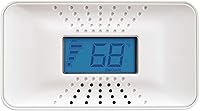
A digital display helps more than anything here. Models like the Kidde B00002N86A and the First Alert CO615 show the CO level the sensor reads and update it as the air changes.
That readout tells you whether the air is truly raised.
Owners who hear the alarm chirp repeatedly often find it's the backup battery, not a leak. Our guide to a carbon monoxide detector chirping 5 times walks through what each chirp pattern means.
Why does a CO alarm chirp when there is no carbon monoxide?
A chirp means the alarm needs attention, not that it has detected CO. The unit separates its maintenance beeps from its gas alarm so you can tell the difference.
The typical triggers are a backup battery going flat, a sensor past its replacement date, or a unit that lost AC power. A plug-in alarm with battery backup, like the Kidde KN-COPP-3, keeps its 9V battery ready for outages.
When that battery fades, the chirp starts.
The Kidde COP model takes 2 AA batteries as backup and includes power surge immunity. It still chirps when those cells run down.
None of that is a CO event.
If the chirp won't stop after a fresh battery, the unit may be at the end of its life. First Alert, for instance, builds an end-of-life signal chirp into its CO615 so you know when replacement is due.
A unit at that stage should be swapped, not silenced and left in place.
Which maintenance problems cause nuisance CO alerts?
Dust, blocked vents, old sensors and damp air are the usual suspects. Each one changes what the sensor reads or interrupts the unit's power.
Start by checking the sensor opening. Vacuum the slots gently with a brush attachment.
Pet hair and kitchen grease collect on wall and outlet-mounted units over time. A dirty sensor can read rising CO levels that aren't there.
Next, look at the power path. A loose outlet or a tripped breaker drops the AC supply and leaves the unit running on backup, which is a common source of chirps.
The Kidde B00002N86A plugs into a standard 120V outlet and carries a 9V backup, so a partial power loss can look like an alarm fault.
Then check age. A 10-year-old unit has reached the end of its detection window.
Replace it rather than keep it running on borrowed time. Newer models also make better use of a digital display when something does go wrong.
Could a real carbon monoxide leak cause what looks like a false alarm?
Yes, and this is why you never dismiss a steady horn as a false alarm. A real leak can set off the alarm with no obvious smell and no visible sign, which is exactly how carbon monoxide hurts people.
Common sources are a furnace, water heater, gas stove, fireplace or a car left running in an attached garage. Partial combustion produces CO.
The alarm's electrochemical sensor reacts to it within its designed response time.
If the horn sounds and stays loud, get everyone and pets outside. Call 911 or your gas emergency line from a safe place.
Don't unplug the alarm to quiet it, and don't re-enter to hunt for the source. The fire department or your utility can measure the air and find the cause.
Treat every CO alarm as real until responders clear the home. A false alarm that costs you a short wait outside is far better than ignoring a real leak.
Where should you place a CO detector to cut false alarms?
Put CO detectors near sleeping areas and on every level, away from steam and appliances. Placement is the cheapest way to reduce nuisance alerts and keep detection strong.
Keep plug-in units out of bathrooms and laundry rooms where steam builds up. Avoid spots right next to a gas stove or furnace vent.
Don't tuck a unit behind furniture or in a closed cabinet where air can't reach the sensor.
The Kidde COP model uses a rotating plug so it fits vertical or horizontal outlets without blocking the neighboring socket. That flexibility helps you place it near a bedroom without crowding the wall.
Its compact size also makes it easy to move if the air in one spot stays damp.
Compare how plug-in and battery units handle placement in our guide to plug-in vs battery carbon monoxide detectors.
Which CO detector features help you avoid and sort out false alerts?
A digital display, a clear status light and a test button make the biggest difference. These features separate a real reading from a maintenance chirp so you respond correctly.
The digital LED display updates the CO reading, so you can see whether the number is climbing or steady. Peak Level Memory records the last time carbon monoxide was detected or the unit was tested.
That history helps when you need to know whether an alert was a real event.
First Alert's CO615 uses an electrochemical sensor and shows the CO concentration on its backlit screen. The peak level feature keeps the highest reading it measured.
A 7-year limited warranty covers the unit, and an end-of-life chirp tells you when to replace it.
The Kidde COP runs on 120V AC with 2 AA batteries as backup. Its LED warning light changes with the alert status.
The rotating plug and small footprint make it easy to reposition if one outlet turns out to be a noisy spot.
To weigh these features against your home's needs, see our guide on how to choose a carbon monoxide detector. For a closer look at outlet-powered models, browse the best plug-in carbon monoxide detectors.
When should you replace a unit that keeps alerting?
Replace a CO alarm when it reaches its replacement date, chirps after a fresh battery, or shows an end-of-life signal. A unit that keeps raising false alerts is telling you it can no longer be trusted.
Kidde backs the B00002N86A with a 10-year limited warranty, and First Alert covers its CO615 for 7 years. Those periods line up with when the sensors are expected to fade.
A unit past that window should go, even if it still makes sound.
Swap in a fresh model with a digital display so you can read CO levels instead of guessing. Then keep a simple maintenance habit: test monthly, vacuum the vents, and change the backup battery as the maker advises.
None of this removes the core rule. When a steady alarm sounds, leave the home and call for help.
A false carbon monoxide alert from dust or a low battery is annoying, but the one time it's real, that response saves lives.
What should you do after a false carbon monoxide alarm?
Clear the air, reset the unit and find the cause before you relax. Open a window, let the room air out, then press the test or reset button as the model directs.
Check the battery first. A plug-in model with backup, like the Kidde COP with its 2 AA cells, will chirp when those run low.
Replace them and see whether the chirp stops. If it does, you've found the cause.
Then inspect the sensor area. Vacuum the vents and move the unit away from steam or spray.
If the alarm still fires without any CO reading on the display, the sensor may be failing. A unit that's near its replacement date should be swapped.
Don't disable the alarm and forget it. A silenced CO detector offers no protection.
If you can't explain the alert after basic checks, treat it as real and call for help. A fresh alarm is easy to fit and your safety is worth more than a dead unit on the wall.
Frequently asked questions
How long does a carbon monoxide detector last before it needs replacing?
Kidde backs its plug-in CO alarms with a 10-year limited warranty and First Alert covers its CO615 for 7 years. A unit past its replacement date can send nuisance alerts and may no longer detect CO reliably, so swap it rather than silence it.
Can a carbon monoxide detector false alarm from cleaning products?
Some sprays, solvents and aerosol products can trigger a CO alarm's sensor briefly, especially if sprayed near the unit. Move the product away, ventilate the room and clear the alarm.
If it sounds again without any spray nearby, treat it as a possible real event.
What should I do first when my CO alarm goes off?
Get everyone and pets outside to fresh air and call 911 or your gas emergency line from a safe spot. Don't unplug the alarm to quiet it and don't re-enter to search for the source.
Let trained responders or your utility check the home before anyone goes back inside.
Does a plugged-in CO alarm still chirp during a power outage?
A plug-in model with battery backup keeps watching for CO during an outage and can chirp if its backup battery runs low. That chirp is a battery warning, not a CO alert.
Replace the backup battery so the alarm stays ready when the power returns.
Can humidity set off a carbon monoxide alarm?
Steam from showers and very high humidity near the unit can affect some alarms and lead to nuisance alerts. Keep plug-in units out of steamy bathrooms and away from humidifiers.
Check the rated humidity range for your model and move it if the air stays damp.
Should I open windows when a CO alarm goes off?
Yes, opening windows and doors helps clear carbon monoxide while you evacuate. But fresh air can lower a CO reading before responders arrive.
Leave the home first and let the fire department or gas utility measure the air.