Carbon Monoxide Detector Types Explained
There are three main types of carbon monoxide detectors for homes: plug-in units, battery-powered units and portable detectors. Choose a plug-in model with battery backup for a fixed spot near bedrooms, a sealed 10-year battery model where there is no outlet, and a portable unit only for travel or spot checks.
On this page (9 sections)
- What are the different types of carbon monoxide detectors?
- How do plug-in carbon monoxide detectors work?
- How do battery carbon monoxide detectors work?
- How do plug-in alarms with battery backup compare to battery-only?
- How do portable carbon monoxide detectors fit in?
- Which type suits each room?
- What should you check before you buy?
- Which type is best for most homes?
- How do you keep each type working?
The three main types of carbon monoxide detectors are plug-in units, battery-powered units and portable detectors, and each suits a different spot in the home. Pick plug-in with a backup battery for a fixed spot near bedrooms, a sealed 10-year battery unit where there is no outlet, and a portable unit only for travel or spot checks.
That split matters because CO is odorless and invisible, so the alarm has to be in the right place and ready to run. The type you buy decides where it can go, how long it runs without attention and what its display can tell you.
The comparison below walks through the options we see most often when people ask about the different types of carbon monoxide detectors. It also covers the features that separate a good unit from a basic one.
What are the different types of carbon monoxide detectors?
There are four options worth knowing: battery-powered alarms, plug-in alarms, plug-in alarms with battery backup and portable CO detectors. Each one senses carbon monoxide gas but differs in how it gets power, where you mount it and how you read its display.
The short version is that fixed alarms protect the home and portable units check a space. A fixed alarm runs all the time, while a portable meter only reads CO while it is switched on.
| Type | Power | Best spot | Watch for |
|---|---|---|---|
| Battery | Sealed or replaceable cells | Any wall or ceiling, no outlet needed | Battery changes or a sealed 10-year cell |
| Plug-in | Wall outlet | Hallway or bedroom near an outlet | Dead unit in a power outage without backup |
| Plug-in with backup | Outlet plus 9V battery | Near bedrooms and sleeping areas | Backup battery still needs replacing |
| Portable | Rechargeable or AA cells | Travel, camping, spot checks | Not a 24/7 home alarm |
How does a carbon monoxide detector sense the gas?
Most home alarms in this guide use an electrochemical sensor, which measures CO through a chemical reaction and gives a reading in parts per million. That is the sensing technology most makers use in residential units.
The electrochemical cell is the standard today. It responds to CO rather than smoke, so a smoke alarm cannot do the same job.
The sensor's age is the main limit. A CO sensor loses accuracy over years, which is why most units carry a 7 to 10 year replacement schedule and an end-of-life chirp.
Rule: choose a unit whose sensor technology and lifespan match how long you plan to keep it.
How do plug-in carbon monoxide detectors work?
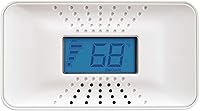
A plug-in CO alarm draws power from a standard 120V wall outlet and usually includes a backup battery so it keeps watching during a power outage. It sits at a fixed spot and reads CO levels all the time, without you changing batteries on a schedule.
The Kidde model in this guide shows how the type works in practice. It plugs into a 120V outlet and carries a 9-volt battery backup for outages.
Its digital LED display shows the CO level the alarm is sensing and updates as the reading changes.
A plug-in unit suits a hallway or landing near bedrooms where an outlet is already handy. The outlet keeps the unit powered, and the backup battery covers the hours when the power fails.
The display is the real advantage. A digital readout tells you how much CO the unit sees, not just that it alarmed.
That helps when you need to decide whether to air the room or leave.
Rule: pick plug-in if you have an outlet near the sleeping area and want a visible CO reading.
How do battery carbon monoxide detectors work?
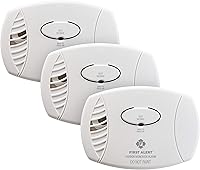
A battery CO alarm runs on its own cells and needs no outlet, so it can go on almost any wall or ceiling. Sealed 10-year units are the low-maintenance version, because the battery is built to last the life of the alarm.
The First Alert CO710 is the sealed-battery type. It runs on a built-in 10-year lithium battery and carries a backlit digital display that shows temperature and CO concentration.
The Peak Level feature keeps the highest CO reading it has measured.
A battery unit suits a spot where a cord would be awkward: a ceiling, a far wall or a room with no free outlet. It also keeps working when the power goes out, since it was never relying on the mains.
The trade-off is that you have to reach it for testing, and a sealed cell means you replace the whole unit at end of life. A loud 85-decibel alarm and an end-of-life chirp handle the warning side.
Rule: choose a sealed battery unit for a ceiling or wall spot with no outlet, and plan to replace the whole alarm at end of life.
How do plug-in alarms with battery backup compare to battery-only?
A plug-in alarm with backup combines mains power with a battery, so it runs on the outlet day to day and switches to the battery when power drops. A battery-only alarm runs on its cells at all times and never depends on the outlet.
That difference matters in a storm or outage. A plug-in unit without a backup battery stops sensing when the power fails.
The Kidde model here avoids that gap with its 9-volt backup, so it keeps watching through an outage.
A battery-only unit is simpler to place but asks more of the battery. The First Alert CO710 solves that with a sealed 10-year cell, so you are not swapping batteries each year.
Power source also changes how the alarm behaves when it ages. Both types here carry a 10-year limited warranty, and both use an 85-decibel alarm, so the choice comes down to placement and power, not volume.
Our plug-in vs battery carbon monoxide detectors comparison digs into this split when you are weighing the two for one room.
What changes when you add a digital display?
A digital display turns the alarm into a small meter, because it shows the CO level in parts per million as well as sounding the alarm. That extra readout helps you judge a scare and confirm a unit is working.
Both the Kidde and First Alert units here include a display. The Kidde model updates its reading as the level changes, and the First Alert shows current and peak CO along with temperature.
A display is worth the small extra cost in a main hallway. You can glance at the number after an alarm and decide whether the air has cleared.
A unit without a display only tells you that CO crossed the threshold.
Rule: choose a model with a digital display for the main hallway, and a plain unit is fine for a secondary spot.
How do portable carbon monoxide detectors fit in?
A portable CO detector runs on a rechargeable battery and reads CO on demand, so it works as a spot-check tool rather than a fixed home alarm. It suits travel, camping, a hotel room or checking a workspace before you settle in.
The TOPTES CT-580 is the portable type here. It uses a high-sensitivity DDS sensor and reads CO from 0 to 1000 PPM, with a response time the brand puts at 0.3 seconds.
Three alarm modes run together: a light, a sound and a vibration.
Its TFT color display shows the reading, and the unit has adjustable brightness, auto screen-off and a built-in flashlight. USB-C charging means you top it up like a phone.
A portable unit should not replace fixed alarms at home. It only reads while it is switched on and charged, so a fixed alarm still needs to cover the sleeping area.
Take the portable unit on the road and leave the fixed units running at home.
Rule: buy a portable unit as a travel and spot-check tool, and keep fixed alarms in the home.
Which type suits each room?
Match the type to the room rather than buying one kind for the whole house. A plug-in unit with backup fits the main hallway, a sealed battery unit fits the far bedroom, and a portable unit stays in the travel bag.
Near bedrooms, a plug-in model with a display is the strongest pick because you can see the reading at night. An outlet in the hallway makes installation a one-step job.
On a ceiling or a wall without an outlet, the sealed battery type wins. The First Alert CO710 runs for its full 10-year life without a battery swap, which suits a spot you do not want to reach often.
In a finished basement or a room with a fuel-burning appliance, a display unit helps because you can watch the number after any alarm. Our how to choose a carbon monoxide detector guide covers placement rules in more depth.
For the plug-in pick in the main hallway, our best plug-in carbon monoxide detector roundup compares more options.
Where should each type go in the home?
Place a CO alarm on each level of the home and outside each sleeping area, and keep units at least 5 feet from fuel-burning appliances. That spacing keeps the sensor away from the source, so it reads room air rather than exhaust.
A plug-in unit goes where the outlet already is, usually a hallway or landing. A battery unit goes on the wall or ceiling of a bedroom or a stairwell.
A portable unit goes in a bag until you need it.
Avoid garages, kitchens with gas ranges and bathrooms with fuel-burning water heaters. Those rooms can set off a false alarm from normal exhaust or steam.
Rule: one fixed alarm per level, plus one outside each sleeping area, and keep every unit away from the appliance itself.
What should you check before you buy?
Check three things before you buy: the power source, the display and the sensor life. Those three decide where the unit can go, what it tells you and when you replace it.
Start with power. If the spot has an outlet and you want backup, a plug-in model with a 9-volt cell covers both.
If the spot has no outlet, a sealed battery unit is the fit.
Then look at the display. A digital readout helps in a main hallway; a plain unit is fine for a secondary spot.
The Kidde model shows the level it senses and keeps a peak memory, which is useful after a scare.
Finally, check the lifespan. Both fixed units here carry a 10-year limited warranty.
A sealed battery unit ends its life with the alarm, while a plug-in unit may outlast several backup batteries.
What does an end-of-life chirp mean?
An end-of-life chirp means the sensor has reached the end of its rated life and the alarm needs replacing. It is not a CO warning and it is not a low battery signal.
The First Alert CO710 includes this signal as part of its 10-year design. If your unit starts a steady chirp that is not the alarm tone, check the age before you assume there is a leak.
Our guide to a carbon monoxide detector chirping 5 times explains the common chirp patterns and what each one means.
Rule: when the end-of-life chirp sounds, replace the whole alarm rather than trying to revive it.
Which type is best for most homes?
For most homes, the best setup is a plug-in CO alarm with battery backup in the main hallway plus a sealed battery unit near the far bedrooms. That pairing covers mains power and outages, and it puts a display where you will see it.
The Kidde plug-in model is the pick for the main hallway. It runs on a 120V outlet, carries a 9-volt backup and shows the CO level on a digital display.
The 85-decibel alarm and peak memory round out the package.
The First Alert CO710 is the pick for a bedroom or ceiling spot with no outlet. Its sealed 10-year battery means no yearly swap, and its backlit display shows current and peak CO along with temperature.
A portable unit like the TOPTES CT-580 belongs in the travel bag. It is the right tool for a hotel room or a campsite, not a substitute for the fixed alarms at home.
Rule: buy one plug-in unit with backup for the main hallway, one sealed battery unit for a far bedroom, and a portable unit only if you travel.
How do you keep each type working?
Keep each type working with a monthly test, a yearly check of the backup battery and a replacement at end of life. The type you own decides which of those steps needs the most attention.
Test each unit with its test button once a month and confirm the alarm sounds. The Kidde model records the last test in its peak memory, so you can see when it was last checked.
The First Alert unit has a test and silence button for the same job.
Check the backup battery in a plug-in unit each year. A 9-volt cell in the Kidde model protects during an outage, and a dead backup leaves the unit blind when the power fails.
Keep dust off the vents and avoid painting over the unit. A clogged sensor can delay a reading or cause a false alarm.
Replace any unit at its rated end of life, and follow the brand's cleaning guidance.
Rule: test monthly, check the backup battery yearly and replace the whole alarm when its sensor life ends.
Frequently asked questions
How many carbon monoxide detectors should a home have?
Put one on each level of the home and one outside each sleeping area. A finished basement and an attached garage count as extra zones worth covering, so most houses end up with three to five units.
Do I need a carbon monoxide detector if I have a smoke alarm?
Yes. A smoke alarm senses smoke particles and a CO alarm senses carbon monoxide gas, so a smoke alarm cannot warn you about a CO leak.
Combination units cover both in one device, but they still count as separate sensing jobs.
Where should a carbon monoxide detector not go?
Keep CO alarms out of garages, kitchens with gas ranges and bathrooms with fuel-burning water heaters. Also avoid spots within 5 feet of a fuel-burning appliance or right beside a supply vent, because those places can give false readings.
How long does a carbon monoxide detector last?
Most home CO alarms are rated for 7 to 10 years of sensor life. The Kidde unit here carries a 10-year limited warranty and the First Alert CO710 has a 10-year battery, so both are built around that lifespan.
Is a portable carbon monoxide detector safe to rely on at home?
No. A portable unit is a spot-check tool for travel, camping or checking a room before you sleep, not a replacement for a fixed alarm that runs all the time.
Keep fixed alarms in the home and use the portable unit as a backup.
What is the difference between a plug-in and a battery carbon monoxide detector?
A plug-in unit draws power from a wall outlet and usually carries a backup battery for outages, while a battery unit runs on its own cells with no cord. Plug-in models suit a fixed spot near an outlet; battery models go anywhere.