How to Choose a Carbon Monoxide Detector
Choose a carbon monoxide detector by matching four things to your home: a sensor that reacts to low CO levels, a power source that survives outages, a display you will actually read, and placement on every level with sleeping rooms. A plug-in unit with battery backup covers most households; a sealed 10-year battery unit suits homes with few outlets or frequent outages.
On this page (9 sections)
- Which sensor type should you choose for carbon monoxide detection?
- Plug-in or battery: which power source fits your home?
- Does a digital display change how you use a detector?
- What alarm features matter most for safety?
- How do you match a detector to your household and rooms?
- What should you check before buying a carbon monoxide detector?
- How should you install and maintain the detector?
- Which carbon monoxide detector fits each household?
- The decision rule for choosing a carbon monoxide detector
The best carbon monoxide detector for most homes is a plug-in model with battery backup and a digital display. It monitors continuously, keeps working through a power outage and shows you the CO level it senses.
Choose a sealed 10-year battery unit instead when outlets are scarce or outages are common.
That short answer covers the majority of buyers. The rest of this guide works through the decisions one at a time: sensor, power, display, alarm sound and placement.
Each section ends with a firm rule you can act on.
Carbon monoxide is invisible, odorless and tasteless, so a working alarm is the only warning many households get. Matching the features to your home matters more than buying the most expensive unit on the shelf.
If you already own detectors, our plug in carbon monoxide detector comparison shows where corded models fit.
Which sensor type should you choose for carbon monoxide detection?
Choose an electrochemical sensor for the most reliable low-level detection. It responds to carbon monoxide itself and is the technology most modern household detectors use.
Older ionization-based units react differently and are a smaller part of the current market.
The sensor is the part that decides when the alarm sounds. Its job is to notice carbon monoxide before the level becomes dangerous and to stay quiet when the air is clean.
A good sensor also resists false alarms from humidity and household fumes.
Electrochemical sensors work through a small cell that produces a tiny current when carbon monoxide reaches it. The current rises with the CO concentration, and the alarm trips when the reading crosses its threshold.
These cells also age, which is why detectors carry an end-of-life signal.
When you compare models, check the maker's stated sensor type on the packaging or in the manual. All units sold for residential use should meet the UL 2034 standard for carbon monoxide alarms.
That standard sets the response times and thresholds a detector must hit.
Sensor quality is only part of the picture. A detector with a sealed cell and a long warranty is easier to trust over its full service life.
First Alert says its CO alarms are tested to meet UL standards and backs the CO710 with a 10-year limited warranty.
Pick an electrochemical sensor and confirm the unit meets UL 2034. Skip any bargain detector that does not name its sensor type or its standard, because you cannot judge what you are relying on.
Plug-in or battery: which power source fits your home?
Pick a plug-in model with battery backup when you have a free outlet near the bedrooms and want the detector to keep watch without you thinking about batteries. Pick a sealed 10-year battery model when outlets are scarce, cords are a tripping risk or outages happen often.
Power source is the decision most buyers get wrong. Each option has a clear best case, so match it to how your home actually runs.
Plug-in units with battery backup
A plug-in detector draws its main power from a standard 120V outlet and keeps a battery in reserve. During an outage the backup battery takes over, so the unit keeps monitoring.
You get continuous protection without remembering to change batteries on a schedule.
The catch is the outlet. You need a spot near the sleeping area where the unit can sit undisturbed.
Some models include an extension cord so the detector can sit on a table or shelf rather than at the wall.
Sealed 10-year battery units
A sealed battery detector carries its own power for its whole service life. It needs no outlet and no cord, so you can mount it high on a wall or on a ceiling away from furniture.
First Alert's CO710 uses a built-in 10-year lithium battery and an end-of-life chirp tells you when the unit is due for replacement.
The trade-off is replacement cost at the end of the decade. You replace the whole unit, not just a battery.
For a home with few outlets, though, that is often the simplest path to coverage.
Pick plug-in with backup for most homes, and sealed 10-year battery where outlets or outages make cords a problem. Our carbon monoxide detector plug in vs battery breakdown compares the running costs and placement limits in more detail.
Does a digital display change how you use a detector?
Yes. A digital display shows the carbon monoxide level the alarm senses, not just that it sounded.
That reading helps you judge whether the level is rising and gives you something concrete to report to a gas technician or fire department.
Without a display, a detector only tells you CO is present. With one, you see numbers that update as the air changes.
A peak-level memory goes further and records the highest reading since the last reset.
The Kidde plug-in model shows the CO level it senses on an LED display and updates it every 15 seconds. Its peak-level memory records the last time carbon monoxide was detected or when the unit was last tested.
That history is useful after a scare, when you want to know how high the level went.
A display also helps you tell a real event from a nuisance alarm. If the reading stays near zero while the alarm sounds, the cause may be something other than carbon monoxide.
You still treat every alarm as real, but the number gives you context.
The display is not a substitute for the alarm. It is a diagnostic tool you read after the unit has already warned you.
Many detectors show the level only briefly or when you press a button, so read the manual to know what yours does.
Choose a model with a digital display and peak-level memory if you want to understand what the alarm sensed. Skip the display only if you want the lowest-cost coverage and will rely on the alarm alone.
What alarm features matter most for safety?
The 85-decibel alarm is the feature that matters most, because it must wake sleepers and reach every room. Everything else supports that one job.
A detector you cannot hear is not protecting the people who need it.
All three models here sound an 85-decibel alarm when carbon monoxide reaches dangerous levels. That level is loud enough for most homes, though closed doors and distance reduce how well it carries.
Place units so the alarm has a clear path to bedrooms.
Look for a test and silence button as well. Testing confirms the unit still responds, and silence lets you quiet a nuisance alarm without disabling protection.
The First Alert CO710 has a test/silence button that silences the alarm and checks its function.
An end-of-life signal is another feature to check. It chirps when the sensor is nearing the end of its service life, so you know to replace the unit rather than waiting for a failure.
The First Alert models here both include it.
Peak-level memory and a backlit display help after the alarm sounds. A backlit screen is easier to read at night, which matters when an alarm wakes you.
The CO710's display shows temperature alongside CO concentration, so you get a quick read on the room.
Insist on an 85-decibel alarm, a test/silence button and an end-of-life signal. Treat a display, peak memory and backlight as useful extras, not as the reason to buy.
How do you match a detector to your household and rooms?
Match detectors to the rooms where people sleep, the fuel-burning appliances you run and the levels of your home. A single unit cannot cover a whole house.
The number and type of detectors should follow the layout and the risks.
Start with the bedrooms. Place a detector in or just outside each sleeping area so an alarm reaches people while they sleep.
If bedrooms sit on separate floors, each floor needs its own unit.
Then look at the fuel-burning equipment. A furnace, water heater, gas stove, fireplace or attached garage all produce carbon monoxide when something goes wrong.
A detector near those areas gives you an earlier warning, though you should follow the maker's spacing advice and keep units away from the appliance itself.
Consider the people in the home. A household with older adults, young children or anyone who sleeps deeply benefits from more coverage and louder alarms near the beds.
A single detector in a hallway may not reach a closed bedroom door.
Our guide on how many carbon monoxide detectors do i need maps coverage room by room. Use it to plan before you buy, so you do not end up short on a floor that needs protection.
Match one detector to each sleeping area and each level, then add one near fuel-burning appliances. Buy the number your layout needs in one order rather than adding units piecemeal.
What should you check before buying a carbon monoxide detector?
Before you buy, check the sensor type, power source, alarm loudness, display and warranty in that order. These five points separate a detector that fits your home from one that sits in a drawer.
Sensor type comes first because it decides how the unit detects CO. Confirm the maker states an electrochemical sensor and that the unit meets UL 2034.
Without that, the other features do not matter.
Power source comes next. Decide between a plug-in unit with battery backup and a sealed 10-year battery model based on your outlets and outage history.
This choice shapes where the unit can go and how you maintain it.
Check the alarm rating and the buttons. An 85-decibel alarm, a test/silence button and an end-of-life signal are the baseline.
A digital display and peak-level memory are worth paying for if you want to read the CO level after an event.
Read the warranty last. A longer warranty suggests the maker expects the unit to last, and it protects you if the sensor fails early.
The First Alert CO710 carries a 10-year limited warranty; the Kidde plug-in carries a 10-year limited warranty as well.
Make your shortlist on sensor, power, alarm, display and warranty, in that order. Do not let a bright screen or a low price pull you away from a unit that meets the basics.
How should you install and maintain the detector?
Install each detector where the maker's instructions say, then test it monthly and replace it at end of life. Installation and upkeep are what keep a good detector working.
A unit mounted in the wrong spot or left untested gives false confidence.
Follow the mounting instructions for wall or ceiling placement. Keep detectors away from bathrooms, cooking fumes and the immediate area around fuel-burning appliances.
Those spots can cause nuisance alarms and shorten the sensor's life.
Test the unit once a month with its test button. Testing confirms the alarm still sounds and the sensor still responds.
If a unit fails its test or chirps in a pattern you do not recognize, treat it as a warning and check the manual.
Watch for the end-of-life signal. When a detector chirps to say its sensor is spent, replace the whole unit.
A chirping detector is easy to ignore, but our guide to a carbon monoxide detector chirping 5 times explains what the pattern usually means and when to act.
Keep the unit clean and free of dust. A blocked sensor opening can delay detection or cause false alarms.
A quick vacuum or wipe around the vents during your monthly test is enough.
Test monthly, clean the vents and replace the unit when its end-of-life signal sounds. Put the replacement date on the unit or in your calendar so the next swap is not a surprise.
Which carbon monoxide detector fits each household?
Here are three models matched to common household needs. Each one solves a different problem, so pick the one that matches how your home is set up.
Best for power outages and cord-free placement
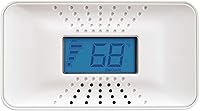
The First Alert CO710 runs on a built-in 10-year lithium battery, so it monitors continuously even during a power failure. Its backlit digital display shows temperature and CO concentration, and the peak-level feature records the highest reading.
It sits on a dresser or tabletop, which helps in a bedroom without a free outlet. The 10-year limited warranty matches the battery's service life.
Best for a constant digital readout
The Kidde plug-in model draws power from a standard 120V outlet and keeps a 9-volt battery in reserve. Its LED display shows the carbon monoxide level the alarm senses and updates every 15 seconds.
Peak-level memory records the last detection or test. An included extension cord lets you place it on a table or shelf, and its 10-year limited warranty covers the unit.
Best for a plug-in unit with a peak reading
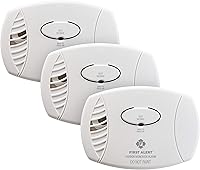
The First Alert CO615 works in any standard outlet and keeps a battery backup for outages. Its advanced electrochemical sensor pairs with a peak-level feature that shows the highest concentration measured.
The backlit screen shows CO and power levels at a glance. A 7-year limited warranty and an end-of-life chirp round out the package.
Pick the sealed 10-year unit for outage-prone homes, the Kidde for a constant readout, and the First Alert plug-in for a simple corded setup with peak memory. Then add units until every sleeping area and level is covered.
The decision rule for choosing a carbon monoxide detector
Pick a plug-in unit with battery backup and a digital display if your home has convenient outlets and you want to read the CO level after an alarm. Pick a sealed 10-year battery unit if outages are common or you have no free outlet near the bedrooms.
Add units until every level and sleeping area is covered, and test each one monthly.
That is how to choose a carbon monoxide detector without overbuying: decide on sensor and power first, then let the display and extras follow. The right unit is the one that stays powered, stays loud and stays tested for its full service life.
When a unit starts chirping or reaches its replacement date, swap it rather than waiting.
Frequently asked questions
What is the most important feature when choosing a carbon monoxide detector?
A sensor that responds to carbon monoxide and an alarm loud enough to wake sleepers matter most. After that, pick a power source that keeps working during an outage.
A plug-in unit with battery backup covers most homes, while a sealed 10-year battery model suits frequent outages.
Should I buy a plug-in or battery carbon monoxide detector?
Buy a plug-in model with battery backup when you have convenient outlets and want a constant digital readout. Choose a sealed 10-year battery model when outlets are scarce or outages are common.
Battery-only units avoid cord clutter but need a plan for replacement.
How many carbon monoxide detectors does a home need?
Place at least one on every level of the home and one near each sleeping area. A finished basement, attached garage or fuel-burning appliance room may deserve an extra unit.
More detectors shorten the distance between a leak and an alarm you can hear.
What does a digital display add to a carbon monoxide detector?
A digital display shows the carbon monoxide level the alarm senses, not just that it sounded. That helps you judge whether the reading is rising and gives you information to share with a technician.
Many models also keep a peak-level memory of the highest reading.
Where should I install a carbon monoxide detector?
Install detectors on each level near bedrooms and outside sleeping areas, following the maker's mounting instructions. Avoid spots too close to fuel-burning appliances or humid rooms like bathrooms.
A unit needs clear air and an audible path to the people it protects.
How long does a carbon monoxide detector last?
Most carbon monoxide detectors last 7 to 10 years, depending on the model. Sealed 10-year battery units are built to run for that span without a battery change.
Replace any unit when its end-of-life signal sounds, and test it monthly.