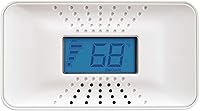
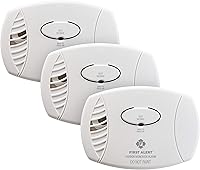
8 Best Portable Carbon Monoxide Detectors (November 2026)
The best portable carbon monoxide detectors for travel include the Kidde Carbon Monoxide Detector for most trips and homes, the TOPTES CT-580 Portable Carbon Monoxide Detector for reading CO levels, and the Siterlink Carbon Monoxide Detectors Plug for hotel rooms with an open outlet.
On this page (8 sections)
- The best portable carbon monoxide detectors for travel and home
- How these portable CO detectors compare
- How we compared these detectors
- What should you check before you pack a CO detector?
- How do you use a portable CO detector in a hotel room?
- How long do batteries and sensors last?
- Do you still need a home CO alarm?
- The verdict: which portable CO detector should you buy?
The best portable carbon monoxide detector for most people is the Kidde Carbon Monoxide Detector COB, because two included AA batteries let it run without an outlet and keep watching during a power cut. For a screen that shows live CO numbers, choose the TOPTES CT-580.
If you always have a socket nearby, the folding Siterlink plug-in model packs flat.
Travel is where a portable CO alarm earns its place. Hotel rooms, vacation rentals and cabins have fuel-burning appliances you did not install and cannot inspect, and a small alarm you carry yourself closes that gap.
The picks below range from pocket-size battery alarms to rechargeable meters for inspections.
Our picks at a glance
-
1

-
2
 Best for reading CO levels
TOPTES CT-580 Portable Carbon Monoxide Detector
9.4/10 our score
See it on Amazon -
3
 Best for hotel rooms with an open outlet
Siterlink Carbon Monoxide Detectors Plug
9.2/10 our score
See it on Amazon
- 4
 Check it
Heiman Carbon Monoxide Detectors
Best for low-level early warning - 5
 Check it
TOPTES CT-913 Portable Carbon Monoxide Detector
Best for long field trips - 6
 Check it
SITERWELL Plug in Carbon Monoxide Detector 10
Best for leaving plugged in - 7
 Check it
Siterwell Travel Carbon Monoxide Detector 7 Year
Best for a clear readout on battery - 8
 Best for home base with travel useCheck it
The best portable carbon monoxide detectors for travel and home
The Kidde COB is the pick for most readers because battery power removes the outlet problem that trips up plug-in alarms in unfamiliar rooms. Every other model here wins on one specific need, from a live PPM display to a plug that folds into a bag.
Kidde Carbon Monoxide Detector: Best for most trips and homes
- Two AA batteries included
- 85 dB alarm and LED warning light
- Test/Hush button
- UL 2034 5th Edition and ETL Listed
Battery power and a compact body make this the easiest CO alarm to pack for a hotel or vacation rental. It also works as a full-time home alarm.
Pros
- Runs on two AA batteries with no wiring
- Small and light enough for a suitcase
- 10-year limited warranty
Cons
- No digital CO readout
- Not approved for RV or boat use
This Kidde model suits anyone who wants one alarm for the house and the suitcase. Two AA batteries are included, so it starts working as soon as you pull the tab, and there is no cord to tangle in a carry-on.
At 5.92 oz it adds little weight to a bag.
In daily use, the 85 dB alarm and LED warning light give you both sound and sight cues. The Test/Hush button lets you check it works or silence a nuisance alert without pulling the batteries.
The electrochemical sensor is rated for 10 to 95 percent relative humidity and up to 100 °F, so bathrooms and warm kitchens sit inside its comfort zone. It is tested to UL 2034 5th Edition and ETL Listed, and Kidde backs the alarm with a 10-year limited warranty.
The trade-off is that you get no digital readout, so you cannot watch CO creep up in small steps the way the Heiman and TOPTES meters let you. Kidde also says it is not approved for RV or boat use, and it asks you to remove the batteries before travel and reinsert them on arrival.
For a home-and-trip alarm, though, the battery design is hard to beat. If you would rather leave one plugged in at home, see our guide to the best plug in carbon monoxide detector.
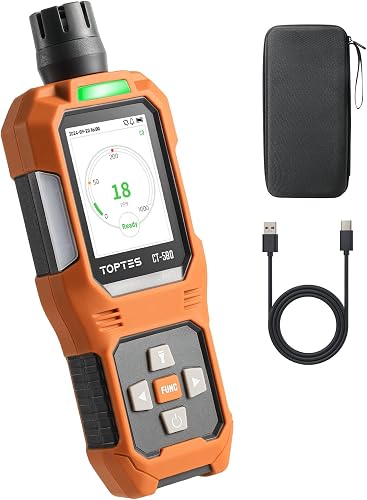
TOPTES CT-580 Portable Carbon Monoxide Detector: Best for reading CO levels
- 0 to 1000 PPM range
- 0.3-second response
- Vibration, light and sound alarms
- USB-C charging and built-in flashlight
A rechargeable handheld meter that shows real-time CO numbers, so you can see a low reading build before it reaches alarm level.
Pros
- Live PPM readout on a color screen
- Three alarm types at once
- USB-C charging
Cons
- Needs recharging between trips
- A manual inspection tool rather than a fixed home alarm
The TOPTES CT-580 is for the traveler who wants numbers, not just a siren. Its color screen shows CO in parts per million from 0 to 1000, so you can see a room reading change before it reaches the alarm threshold.
TOPTES says the DDS sensor responds within 0.3 seconds.
Three alarm modes fire together when CO hits the threshold: a light, a sound and a vibration. The vibration matters in a noisy room or when the alarm sits in a bag on a nightstand.
A built-in flashlight and adjustable brightness help when you are checking a dark rental at night.
It is a rechargeable handheld tool, charged over USB-C and sold with a protective case. That means you need to top it up before each trip, unlike the Kidde's disposable batteries.
The menu goes further than most travel alarms, with two alarm thresholds, alarm history and both zero and standard gas calibration settings for business users. TOPTES also certifies it through a national accredited lab.
That depth is the point and the trade-off. A reader who wants to set and forget will find the menus unnecessary, and the recharge is one more thing to remember.
A reader who wants to watch a cabin's readings settle over an evening will use the screen every night. For checking a room or a cabin before you sleep, the display is the reason to buy it.
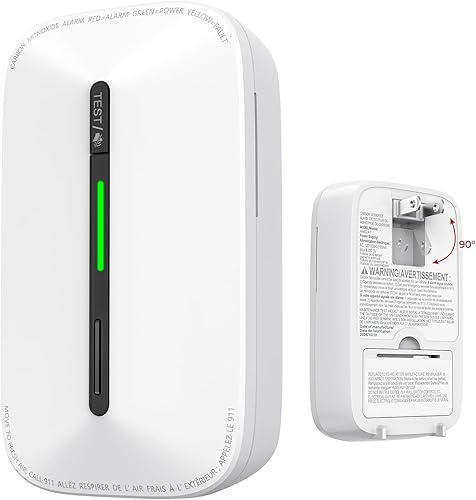
Siterlink Carbon Monoxide Detectors Plug: Best for hotel rooms with an open outlet
- Foldable plug
- 10-year replaceable battery backup
- Soft green status light
- Electrochemical sensor
The folding plug packs flat and runs from any standard outlet, with a backup battery that keeps it going through a blackout.
Pros
- Foldable plug packs easily
- 10-year battery backup
- Soft status light for bedrooms
Cons
- Needs an accessible outlet
- 120V plug limits use abroad
Siterlink's plug-in model suits the traveler who knows there will be an outlet beside the bed. The plug folds down flat, so it slides into a pocket of your bag without a bulky cord.
Unfold it, push it into a standard outlet and it runs on AC power right away.
If the power goes out, a built-in 10-year backup battery takes over. That matters in a storm or an older rental where the supply is unreliable.
A soft green breathing light shows it is working without lighting up the room, and a steady green LED adds a quick check that power is stable. That makes it a better fit for a bedroom than a bright status panel.
The electrochemical sensor is designed to cut false alarms, though no alarm is completely free of them. The limit is the plug itself: this is a 120V unit, so it needs a standard US outlet and will not run on AC abroad.
Pair it with a battery alarm if you travel outside the US. Inside the US, it is the simplest way to get continuous power in a rental.
If you are unsure whether to plug in or go battery-only, our carbon monoxide detector plug in vs battery comparison walks through the trade-offs.
Heiman Carbon Monoxide Detectors: Best for low-level early warning
- LCD shows live CO from 20 ppm
- 30 ppm early warning
- 12-hour alarm memory
- UL 2034 5th Edition and CSFM approved
A small battery alarm that shows a number on screen and warns early when CO creeps up slowly, which suits rentals and cabins.
Pros
- Digital readout from 20 ppm
- 30 ppm early warning
- Very small and light at 4.37 oz
Cons
- Battery only, no plug option
- Not for garages or workshops
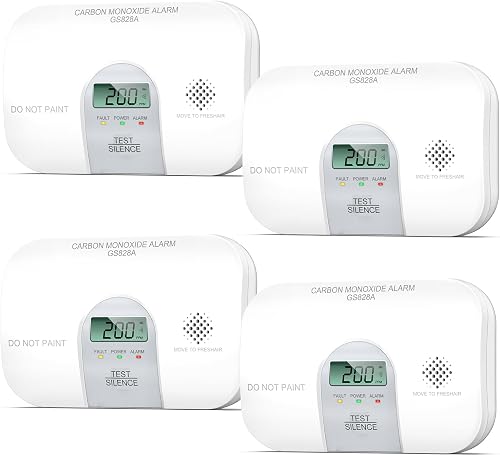
Heiman suits a reader who wants early warning, not only a siren at the danger point. The LCD shows live CO from 20 ppm across a 20 to 999 ppm measuring range, and a 30 ppm early warning stage flags a slow buildup before the loud 85 dB alarm sounds.
A 12-hour alarm memory tells you about a missed event when you get back to the room.
It runs on two AA batteries and takes up very little space: 4.09 by 2.89 by 1.43 inches and 4.37 oz. You can stand it on a table or mount it on a wall with the hardware in the box.
A safety lock stops the cover closing without batteries fitted, and it powers on by itself after a 100-second warm-up.
Heiman certifies it to UL 2034 5th Edition and holds CSFM approval, with an operating range of 40 to 100 °F. The Test/Hush button silences nuisance alarms for 4 minutes, low-battery chirps for 12 hours and end-of-life alerts for 48 hours while monitoring continues.
The trade-off is battery-only power with no plug option, and Heiman says it is not for garages, workshops or spots under a vehicle exhaust. For a bedside table in a rental or cabin, the screen and early warning make it the stronger choice over a basic alarm.
Our guide to choosing a carbon monoxide detector explains where the early warning thresholds sit.
TOPTES CT-913 Portable Carbon Monoxide Detector: Best for long field trips
- 4000mAh battery, over 60 hours per charge
- 0 to 1000 PPM range
- Trend graph and alarm history
- USB-C charging
A rechargeable meter with a bigger battery and a trend graph, built for inspections and days away from a charger.
Pros
- More than 60 hours per charge
- Trend graph shows CO changes
- Alarm record storage
Cons
- Bulkier than the pocket-size alarms here
- Costs more than a basic travel alarm
The TOPTES CT-913 is built for longer trips and inspection work. Its 4000mAh battery runs more than 60 hours per charge, so a weekend away or a week of site checks does not need a charger in your bag.
USB-C charging tops it up when you do need it.
The 0 to 1000 PPM range comes with a trend graph, so you can watch CO concentration move over time rather than reading one number. Alarm record storage keeps a history of events for later review.
Visual, audible and vibration alarms fire together when a threshold is reached, and the thresholds themselves can be customized to suit the job.
It is a professional-leaning tool in an industrial-grade ABS body, sold with a storage case, cable and manual. The upgraded UK DDS electrochemical sensor is the same family of technology as the CT-580, with the trend view and longer battery as the real differences.
The trade-off against the smaller alarms here is size and complexity: at 8.58 inches deep it is not the alarm you tuck beside a hotel pillow. Choose it when you need a record of readings, such as checking a cabin, RV or workshop over several days.
For a one-night rental stop, the Kidde or Heiman is easier to pack and simpler to trust.
SITERWELL Plug in Carbon Monoxide Detector 10: Best for leaving plugged in
- AC power with 10-year battery backup
- 85 dB alarm
- Breathing status light
- One-touch silence
A plug-in alarm with a backup battery and a gentle status light, sized to sit in a bag when you move between rooms or rentals.
Pros
- 10-year backup battery
- Quiet breathing light
- Compact enough to pack
Cons
- Tied to a 120V outlet when plugged in
- No digital display
SITERWELL's plug-in model fits a reader who wants an alarm to leave plugged in at a rental for a whole stay. It runs on AC power and keeps a 10-year backup battery in reserve for outages.
The 85 dB alarm and electrochemical sensor cover the basics without extra menus.
Its breathing light is the friendliest feature for a bedroom. Green means normal, yellow means a fault and red means an alarm, so a glance tells you the status without a manual.
The one-touch silence function lets you quiet a nuisance alert and keep monitoring. SITERWELL rates it for 25 to 95 percent relative humidity and up to 37.8 °C, which covers most conditioned rooms.
It is compact at 4.72 by 2.76 by 1.65 inches, so it goes into a suitcase or handbag when you move on. SITERWELL says its lab covers US and European fire testing standards.
The trade-off is that AC power needs an outlet, and there is no display to show you a ppm reading. That makes it a set-and-leave alarm rather than a diagnostic tool.
If a plugged-in alarm is what you want at home too, the plug-in detector guide compares the main options.
Siterwell Travel Carbon Monoxide Detector 7 Year: Best for a clear readout on battery
- LCD shows real-time CO levels
- Three-color LED status
- 85 dB alarm at 3 meters
- Wall-mount or free-standing
A battery alarm with a screen and a choice of wall mounting or sitting on a table, so it works in a rental without tools.
Pros
- Real-time CO number on screen
- Stands alone or mounts on a wall
- Seven-year product life
Cons
- Batteries are built in for the unit's life
- No plug-in option
The Siterwell Travel model suits a reader who wants a battery alarm with a screen and no charger to remember. Its LCD shows real-time CO levels, and a three-color LED flashes red, green or yellow for alarm, power or fault.
The 85 dB alarm is rated at 3 meters.
You can stand it on a table or mount it on a wall, so it works in a rental with or without tools. Two AA alkaline batteries are built in and SITERWELL gives it a seven-year product life, with continuous power for that span as long as the cells hold up.
ETL listing covers the safety side, and a three-year limited warranty covers the unit.
The trade-off is that the batteries are not meant to be swapped out for the life of the unit, so you replace the whole alarm when it reaches the end of its life rather than just the cells. That is a longer commitment than the Kidde's replaceable AAs, and its warranty is shorter than the 10-year limited warranty the two Kidde models carry.
Choose it when the on-screen number matters more than swapping batteries, and you plan to keep one alarm for years. Our post on a carbon monoxide detector chirping 5 times helps if the low-battery or fault signal starts.
Kidde COP Plug-In CO Alarm: Best for home base with travel use
- 120V AC with two AA backup batteries
- Rotating plug for vertical or horizontal outlets
- 85 dB alarm
- UL 2034 5th Edition and ETL Listed
The plug-in version of the top pick, with a rotating plug and backup batteries that keep it watching during outages.
Pros
- Rotating plug fits either outlet type
- Backup batteries during outages
- 10-year limited warranty
Cons
- Needs a 120V outlet to run on AC
- Not approved for RV or boat use
Kidde's plug-in COP is the home-base version of the top pick. It runs on 120V AC with two AA backup batteries included, so it keeps watching when the power drops.
A rotating plug fits vertical or horizontal outlets without blocking the socket next to it.
It carries the same 85 dB alarm, LED warning light and Test/Hush button as the COB. Kidde says the sleep-friendly design avoids nighttime chirps.
Power surge immunity helps it ride out voltage swings in older wiring. It is tested to UL 2034 5th Edition, ETL Listed and backed by a 10-year limited warranty, and the plastic housing and 10 to 95 percent humidity range match the COB.
The limit for travel is the plug: without an outlet it falls back on batteries, and it is not approved for RV or boat use. Kidde also asks you to remove the batteries before travel.
Buy it as the alarm that stays plugged in at home, and keep a battery-only model for the road. That pairing covers both bases without carrying a cord.
If you are deciding between the two power styles for good, our comparison covers plug in carbon monoxide detector options in more detail.
How these portable CO detectors compare
All eight models detect carbon monoxide with an electrochemical sensor and sound an audible alarm, so the choice comes down to power, display and how you will carry it. Battery alarms suit unfamiliar rooms; plug-in models with backup batteries suit a fixed spot; rechargeable meters suit inspection work.
| Product | Best for | Power | Alarm | Sensor | Our score |
|---|---|---|---|---|---|
| Kidde Carbon Monoxide Detector | most trips and homes | AA battery powered | Audible and visual | Electrochemical | 9.6 |
| TOPTES CT-580 Portable Carbon Monoxide Detector | reading CO levels | Rechargeable battery | Audible | 9.4 | |
| Siterlink Carbon Monoxide Detectors Plug | hotel rooms with an open outlet | AC plug-in with battery backup | Electrochemical | 9.2 | |
| Heiman Carbon Monoxide Detectors | low-level early warning | Two AA batteries | Audible with LCD display | Electrochemical | 9.0 |
| TOPTES CT-913 Portable Carbon Monoxide Detector | long field trips | Rechargeable battery | Audible | Electrochemical | 8.9 |
| SITERWELL Plug in Carbon Monoxide Detector 10 | leaving plugged in | Corded electric with battery backup | Audible | Electrochemical | 8.8 |
| Siterwell Travel Carbon Monoxide Detector 7 Year | a clear readout on battery | Two AA batteries | Audible with LCD display | Electrochemical | 8.5 |
| Kidde COP Plug-In CO Alarm | home base with travel use | Corded electric with battery backup | Audible and visual | Electrochemical | 8.0 |
How we compared these detectors
We compared specs and features against what a traveler actually needs: a power source that works without asking the front desk for an outlet, an alarm loud enough to wake you, and a size that fits a bag. We weighed battery type, whether a display shows live CO, alarm modes and certification.
Our score weighs specs, features and buyer feedback against what you're shopping for. Battery models that keep working in a power cut scored higher for travel than plug-in units that need AC power.
A digital readout or a long rechargeable battery raised a score when the extra detail helps a real decision. A plug that folds or rotates earned credit for fitting awkward hotel sockets.
What should you check before you pack a CO detector?
Check three things before a CO alarm goes in your bag: the power source, the size and weight, and whether the maker allows travel use. A battery alarm with included cells needs no outlet and no charger.
A plug-in model needs an accessible 120V socket, so confirm the room has one before you rely on it. Kidde asks owners to remove batteries before travel and reinsert them on arrival.
That step protects the alarm in transit and confirms it is live when you arrive.
Battery or plug-in power?
Battery power is the safer default for travel. It works in a room with no free outlet and keeps running when the power fails.
Plug-in models with a backup battery give you continuous AC power plus a reserve, but only when a socket is available. For a trip, choose battery.
For home, either works. Watch the voltage too: Kidde notes its COB and COP are 120V single voltage and may not work with 220V outlets, so a plug-in unit bought for US use will not help on a European trip.
Does a digital display matter?
A display shows you CO in parts per million and helps you spot a slow rise before the alarm sounds. That is useful when you want to check a room before sleeping.
If you only need an alarm to wake you, a light-and-sound model without a screen does the same core job for less complexity.
Do you need early warning below the alarm point?
A standard alarm sounds at the levels set by UL 2034, which is the safety floor every certified model here meets. A low-level early warning model like the Heiman adds a 30 ppm stage so a slow buildup shows up sooner.
That catches a smoldering stove or a leaking boiler before the alarm point, which matters in a cabin with a wood stove or an older rental. The trade-off is more alerts that are not full alarms, so you have to read the screen rather than wait for the siren.
How do you use a portable CO detector in a hotel room?
Place the alarm near where you sleep, on a nightstand or dresser, and keep it away from bathrooms where steam can trigger a false alarm. A tabletop model needs no tools, which is why the Heiman and Siterwell Travel units suit rentals.
If you plug in, use an outlet that stays live overnight rather than one tied to a room light switch.
What about cabins and RVs?
Cabin and RV use needs care. Kidde says its COB and COP models are not approved for RV or boat use.
Heiman lists RVs and cabins among the places its compact alarm can go. Read the maker's limits before relying on any alarm in a vehicle.
For a cabin with a wood stove or gas heater, a display model that shows low readings gives you more warning than a siren alone.
How long do batteries and sensors last?
Battery life varies by model. The Siterlink and SITERWELL plug-in units pair AC power with a 10-year backup battery.
The Siterwell Travel model has a seven-year product life with built-in AA cells. The TOPTES CT-913 runs more than 60 hours per charge.
Replace the whole alarm when its end-of-life signal sounds, because the sensor fades over time even when the batteries still work.
What do the chirps mean?
A chirp is usually a low battery or a fault, not a CO alarm. A continuous 85 dB alarm means CO is present.
Check the maker's signal guide before you assume a chirp is harmless, and never silence a full alarm without moving to fresh air.
Do you still need a home CO alarm?
Yes. A portable detector adds coverage on the road, but it does not replace a fixed alarm at home.
A plug-in model with backup batteries runs all the time without you thinking about it, and a battery alarm covers outages. Our comparison of plug in carbon monoxide detector models helps you pick one for the house.
Keep the portable unit for trips and rentals.
The verdict: which portable CO detector should you buy?
The Kidde Carbon Monoxide Detector COB is the best portable carbon monoxide detector for most readers. It runs on two AA batteries, packs light and keeps working when the power fails, and its UL 2034 5th Edition listing and 10-year limited warranty back it up.
Pick the TOPTES CT-580 when you want live PPM readings, the Siterlink plug-in when you always have an outlet, or the Heiman when low-level early warning matters most. For a long inspection trip, the TOPTES CT-913 and its 60-hour battery are the better tool.
Whatever you choose, carry one and test it before each stay.
Our top 3 picks at a glance
-
1
-
2
Best for reading CO levels
TOPTES CT-580 Portable Carbon Monoxide Detector
9.4/10 our score
See it on Amazon -
3
Best for hotel rooms with an open outlet
Siterlink Carbon Monoxide Detectors Plug
9.2/10 our score
See it on Amazon
Frequently asked questions
How long does a portable CO detector last?
That depends on the model. The Siterwell Travel unit has a seven-year product life, while the two Kidde models carry a 10-year limited warranty on the alarm.
Sensors fade over time, so replace the unit when its end-of-life signal sounds.
Why does a CO detector read zero when something smells?
Carbon monoxide has no smell. TOPTES notes that an odor may come from another gas, so a CO meter reading zero does not rule out a different problem.
Open a window and investigate the smell with the right detector.
Should I pack a plug-in or battery CO alarm for a trip?
Pack battery power if you want the alarm to keep working without an outlet. Pick a plug-in model with a backup battery when you know the room has a socket and you want continuous AC power.
Battery-only is the safer default for unfamiliar rooms.