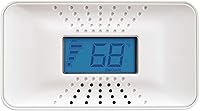
Can You Recycle Old Carbon Monoxide Detectors?
Usually not in your curbside bin. Most carbon monoxide detectors count as e-waste or hazardous waste, so take them to a local drop-off, a retailer take-back program, or a maker's return program instead.
On this page (10 sections)
- Can you recycle old carbon monoxide detectors in your curbside bin?
- Where can you take an old carbon monoxide detector?
- Does the brand take back expired detectors?
- What should you do before recycling a CO detector?
- Is a CO detector e-waste or hazardous waste?
- Can you throw an old CO detector in the trash?
- How often should you replace a CO alarm?
- What about smoke alarms and combination units?
- Which replacement alarm makes recycling easy next time?
- The short version on recycling CO detectors
You can recycle old carbon monoxide detectors, but not in the bin at the curb. Most CO alarms belong in e-waste or household hazardous waste, because the unit holds a circuit board, an electrochemical sensor cell and often a small battery.
The work is to find the right drop-off, not to trash it. That answer surprises people who treat an alarm like a spent battery, but it's electronics, and a little planning keeps the metals and plastics out of landfill.
Can you recycle old carbon monoxide detectors in your curbside bin?
No, curbside recycling doesn't take a whole CO alarm. Sorting facilities reject small electronics because the boards, sensors and batteries jam their machinery and contaminate paper and plastic streams.
Your city's blue-bin list usually covers bottles, cans, cardboard and paper. A smoke or CO alarm looks like a plastic box, so some people drop one in anyway, and it ends up screened out and sent to landfill.
The fix is simple: keep the alarm out of the bin and set it aside until you can reach a proper drop-off. That one habit keeps the electronics recoverable.
If you're not sure whether your area counts gas alarms as e-waste, call the city's waste line before pickup day.
Where can you take an old carbon monoxide detector?
Take it to an e-waste collection site, a household hazardous waste facility or a retailer that runs a take-back program. Many municipalities hold e-waste days where residents can drop off small electronics at no charge.
Check these options in order:
- Your city or county waste website for an e-waste drop-off or a one-day collection event.
- A local household hazardous waste facility, since the sensor cell and batteries need special handling.
- Big-box hardware or electronics stores that advertise battery and small-electronics recycling.
- The manufacturer's own return or recycling program, when one exists.
Call ahead before you drive over, because hours change and some sites cap how many items they accept per visit. A quick call also confirms the site takes gas alarms, not just old phones and laptops.
Does the brand take back expired detectors?
Sometimes. Some makers run take-back or trade-in programs, and a few cover the shipping or offer a discount on a replacement.
Kidde has offered recycling and replacement programs in the past, so check its current program page before you box the unit. When you contact the maker, have the model number ready, since the COB and COP models are stamped with their model names.
Ask whether the program is free, whether you pay return shipping, and what you get back. If the brand has no active program, the local e-waste route still works, and a municipal drop-off costs nothing in most areas and accepts the same electronics.
What should you do before recycling a CO detector?
Pull the batteries, note the expiration date and wipe the unit down. Those three steps make the handoff easier and keep a small cell from rolling loose in an e-waste bin.
Step 1: remove the batteries
Take out the AA or 9-volt cells and set them aside. Alkaline and lithium batteries go to a separate battery drop-off, not the e-waste bin.
A plugged-in unit with a backup battery also needs its cells pulled first. The COB runs on two AA batteries, the KN-COEG-3 takes a 9-volt backup, and the COP uses two AA backups alongside its 120V plug.
Step 2: check the expiration date
Find the date stamped on the back or inside the battery door. That date marks when the sensor's reliable service life ends.
If the date hasn't passed, the unit isn't ready to recycle. If it has, the unit is due for replacement anyway.
Step 3: wipe the surface and bag it
A quick wipe with a damp cloth removes dust. Slip the unit into a bag or box so its plastic doesn't crack in transit.
That's all the preparation most drop-off sites expect.
Is a CO detector e-waste or hazardous waste?
It depends on your area, and the line matters because the two routes have different drop-off sites. Many programs treat a whole CO alarm as e-waste because of the electronics, while some treat the sensor cell and batteries as hazardous waste and want them handled separately.
Call your local waste authority and describe the unit: a carbon monoxide alarm with an electrochemical sensor. Ask which category it falls under and where it goes.
A few minutes on the phone saves a wasted trip or a wrong-bin mistake. If the site splits the unit, follow its instructions for the batteries and the housing, and otherwise hand over the whole alarm as one item.
Can you throw an old CO detector in the trash?
Technically yes in many places, but it's the worst option. Landfilling a CO alarm wastes recoverable metal and leaves a sensor cell and batteries to sit in the ground.
Some states and cities have rules against putting electronics or batteries in the trash. The metals in the board and the plastic housing can be recovered instead.
Before you toss it, spend five minutes on the local waste website. A drop-off is usually close, often free, and takes the whole unit without disassembly, which is the whole difference between landfill and recovery.
How often should you replace a CO alarm?
Replace it when the manufacturer's replacement date arrives, or sooner if the unit fails its test. Ten years is the common service life for a CO sensor, and the model's limited warranty often lines up with that span.
Kidde's COB runs on two AA batteries and is built for travel as well as home use. The COP plugs into a standard outlet with AA backup and a rotating plug for vertical or horizontal sockets.
Both carry a 10-year limited warranty on the alarm. Treat the date on the unit as the cue to plan a replacement.
When the alarm starts chirping before its date, the sound usually means a battery or end-of-life issue. Our guide to a carbon monoxide detector chirping 5 times explains the patterns.
Test the unit with its Test/Hush button after any battery change. If the unit keeps chirping after fresh batteries, it's likely time to retire it and recycle the old one.
What about smoke alarms and combination units?
The same e-waste rule applies. A smoke alarm or a combination smoke and CO unit holds the same electronics, and some models also carry a radioactive sensor.
Those units almost always need a hazardous waste or e-waste drop-off, never the blue bin. Check your local rules for smoke alarms specifically, since a few makers run mail-back programs for their own models and some hazardous waste sites accept them alongside CO alarms.
Don't break a unit open to remove parts unless the maker's instructions say to. If you have a combination unit in the house, our guide to plug-in vs battery carbon monoxide detectors helps you choose the next one.
Which replacement alarm makes recycling easy next time?
Pick a replacement with a clear model name and a printed replacement date. Those two details make the next handoff simple, because you'll know when the unit expires and what to tell the drop-off staff.
The Kidde Carbon Monoxide Detector (B0G1CR88J9) is a battery-powered COB with two AA batteries included and a compact body you can mount or set on a table. It's the easiest model to take to a drop-off, since there's no cord to deal with. {{product B0G1CR88J9 | A travel-ready battery CO alarm with two AA cells and a printed replacement date.}}
The Kidde Carbon Monoxide Detector (B0002EVNJ6) is a plug-in unit with a 9-volt backup and a digital display that shows the CO level. Pull the battery before recycling. {{product B0002EVNJ6 | A plug-in CO and gas alarm with a 9-volt backup you remove first.}}
The Kidde COP Plug-In CO Alarm (B0G1CPTKNQ) runs on 120V AC with two AA backups and a rotating plug for tight outlets. Its two batteries come out quickly. {{product B0G1CPTKNQ | A plug-in CO alarm with a rotating plug and two AA backups.}}
Read our guide to how to choose a carbon monoxide detector to match the next unit to the room. Then decide on a recycle route before you buy, so the old alarm leaves the house the right way when its date arrives.
The short version on recycling CO detectors
So, can you recycle old carbon monoxide detectors? Yes, through e-waste or hazardous waste programs, not the curbside bin.
Pull the batteries, check the expiration date, and take the unit to a local drop-off or a maker's take-back program. Keep the whole unit together for the handoff, bag it so the plastic doesn't crack, and call the site first to confirm it takes gas alarms.
When the replacement's date arrives years from now, run the same three steps. That small routine keeps every alarm you own out of the trash and on a proper recycling path.
Frequently asked questions
Can I put a carbon monoxide detector in my recycling bin?
Almost never. Curbside recycling programs accept paper, glass and some plastics, not circuit boards or gas sensors.
Put a whole CO alarm in the trash and you lose recoverable metal and electronics, so route it to e-waste instead.
Should I take the batteries out before recycling a CO alarm?
Yes. Pull the AA or 9-volt batteries first and recycle them separately at a battery drop-off, since alkaline and lithium cells don't belong in e-waste bins or the trash.
Check your local rules for the exact battery type.
What does an expiration date on a CO alarm mean?
It marks the end of the sensor's reliable service life, not a recycling deadline. Kidde's COB and COP carry a 10-year limited warranty on the alarm, and that warranty period is a useful clue for when to replace and recycle the unit.
Are carbon monoxide detectors hazardous waste?
Often yes, because of the electrochemical sensor cell and the electronics inside. Many household hazardous waste facilities and e-waste drop-offs accept them.
Call ahead to confirm the site takes gas alarms before you drive over.
What should I do with a CO alarm that still works?
Don't recycle it early. Reuse it in a garage, basement or second home if the expiration date hasn't passed, or pass it to someone who needs one.
Recycle it only when the sensor is at the end of its service life.