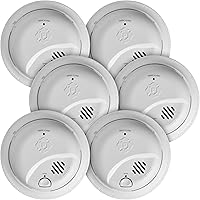
Can Paint Fumes Set Off Smoke Detectors?
Yes, paint fumes can set off smoke detectors. Photoelectric alarms sense particles in the air, and solvent or oil paint vapors can look enough like smoke to trigger the alarm. Plan ahead so the fumes clear before you start painting near a detector.
On this page (9 sections)
- What in paint fumes can set off smoke detectors?
- Which types of paint are most likely to trigger an alarm?
- How does a photoelectric detector read paint vapors?
- How do you paint near a smoke detector without false alarms?
- What about hardwired and interconnected alarms?
- How do you handle the alarm if it goes off mid-job?
- Which alarm and batteries suit a painting project?
- How long should you wait before testing the alarm again?
- The short answer on paint fumes and smoke detectors
Yes, paint fumes can set off smoke detectors. Photoelectric alarms watch for particles in the air, and some paint vapors carry enough of them to be mistaken for smoke.
The reaction depends on the paint and the alarm, so a little planning keeps the peace.
The bigger risk isn't a broken detector. It's an alarm that wakes the house at the wrong moment, or a detector you silence so often that you stop trusting it.
Both are easy to avoid once you know what sets it off.
What in paint fumes can set off smoke detectors?
Solvent and oil-based paints are the main culprits, because their vapors leave fine particles in the air that a smoke sensor can read as smoke. Water-based latex paints are much less likely to trigger an alarm.
Aerosol sprays are another story. Spray paint, primer and clear coat throw a visible mist into the air that behaves a lot like smoke.
Even a short burst near a ceiling unit can be enough.
The key point is that detectors don't measure "smoke" as a chemical. They look for changes in how light passes through air.
Anything that scatters that light can count.
That's why an alarm can react to burnt toast, steam from a shower, and a solvent-soaked rag in a bucket. Our guide to why does my smoke detector go off randomly covers the everyday triggers in more detail.
Which types of paint are most likely to trigger an alarm?
Oil-based and alkyd paints and their thinners carry the most risk, because the solvent vapors hang in the air longer and in higher concentrations. Spray products come next.
Water-based latex sits at the low end.
| Paint type | Typical trigger risk | Why |
|---|---|---|
| Oil-based and alkyd paint | High | Strong solvent vapors that linger |
| Spray paint and aerosol primer | High | Fine mist that spreads fast |
| Paint thinner and mineral spirits | High | Concentrated vapors from open containers |
| Water-based latex paint | Low | Mostly water vapor |
Two things make the difference: how volatile the product is and how close it sits to the detector. A water-based paint used in a well-ventilated room is unlikely to matter.
A solvent paint in a closed hallway near the ceiling unit is a real risk.
Read the label for "flammable," "solvent-based" or "use in a ventilated area" wording. That tells you how much care the product needs.
How does a photoelectric detector read paint vapors?
A photoelectric alarm shines a light inside a sensing chamber and watches for particles that scatter it. When enough particles enter the chamber, the alarm sounds.
Paint fumes that carry tiny droplets or solvent particles do the same thing. The sensor can't tell paint particles from smoke particles, so it raises the alarm.
Ionization alarms work differently. They react to very small particles and tend to be less bothered by paint vapors, though no alarm type is fully immune.
Most newer homes now run photoelectric units, so the reaction is common enough to plan around.
How do you paint near a smoke detector without false alarms?
Air the room first, keep the detector out of the wet zone, and use low-fume products where you can. The goal is to keep the air around the sensor clear while the paint cures.
Here's the order that works best.
- Open windows and set a fan to push air toward the exit, away from the ceiling unit.
- Choose water-based paint or a low-odor formula when the room has an alarm close to the work.
- Move furniture and drop cloths so you don't spray near the unit.
- Let the first coat dry and air out before adding the next.
- Check the room's smell before you start a second session.
Do you need to move or cover the detector?
Move or cover the unit only when the paint or spray will be close to it, and only for as long as the fumes last. A plastic bag or a painter's cover over the head stops particles from reaching the sensor.
Don't leave a cover on when you finish for the day. An alarm that can't see the air can't protect anyone.
Set a phone reminder or tie a ribbon around the bag so you remember to remove it.
The safer habit is to keep the paint away from the unit and let ventilation do the work. If you do cover it, take the cover off the same day and press the test button once the room is clear.
What about hardwired and interconnected alarms?
Hardwired alarms with a 10-year backup still react to fumes and still sound without mains power. Cutting the breaker is not a reliable way to stop them, and it leaves the whole system quiet.
Interconnected alarms raise one more wrinkle. If one unit near the paint goes off, the others in the chain sound too.
That means a small false alarm can set off the whole house at once.
The Kidde 20SA10 is a hardwired photoelectric unit with a 10-year backup battery and interconnect capability. If your paint job is close to a ceiling unit like this, moving the work zone beats fighting the alarm.
Kidde says its enhanced sensing helps reduce false alarms from cooking and steam, but it still senses particles in the air. Don't count on that feature to ignore a solvent mist.
Check where your unit sits before you open the can.
How do you handle the alarm if it goes off mid-job?
Clear the air first, then quiet the alarm. Open windows and doors, move the paint and rags out of the room, and let the fan run.
Most alarms stop once the air clears.
If your model has a hush button, press it to pause the alarm while the room airs out. That's a short pause, not a permanent fix.
Our guide to how to reset a smoke detector walks through the steps if the unit keeps chirping after the air is clear.
Don't wipe the sensor or paint over the vents to stop the noise. That can damage the unit and leave you with a detector that won't work when it matters.
A chirp pattern after the event, like smoke detector 3 beeps, usually points to a low battery or a fault rather than paint.
Which alarm and batteries suit a painting project?
A photoelectric alarm with a sealed 10-year battery means fewer chirps and no battery swaps during the job. That's useful when the detector is in a room you're repainting.
The X-Sense SD2J0AX is a battery-powered photoelectric unit with a sealed 10-year lithium battery and a one-button hush and test. It's ETL listed to UL 217 and needs no wiring, so you can place it away from the paint zone during the job and put it back when the room is done.
It's a standalone unit with no wireless interconnect. If one alarm near the paint goes off, the others in the house stay quiet.
If your existing alarms take 9V batteries, keep a pack on hand for replacements. The Amazon Basics 8-pack is a simple standby supply for the units you already own.
Swap batteries when the low-battery chirp starts, not as a way to silence a false alarm. A fresh battery won't fix a detector that's reacting to paint vapors.
How long should you wait before testing the alarm again?
Wait until the room smells clean and the paint has dried to the touch. That's usually a few hours for latex and longer for oil-based products.
Run the fan and keep windows open until then.
Once the air is clear, press the test button to confirm the alarm responds. If it stays quiet or won't test, check the battery and the sensor vents before relying on it again.
For a unit that keeps chirping after the paint smell is gone, see our guide to why does my smoke detector keep beeping. It separates low-battery chirps from faults and nuisance alarms.
The short answer on paint fumes and smoke detectors
Can paint fumes set off smoke detectors? Yes, especially with solvent, oil-based and spray products near a photoelectric unit.
Ventilate the room, keep paint away from the ceiling sensor, and cover the alarm only for the time the fumes last.
Pick a water-based paint when the room has an alarm close to the work. If you need to move a unit, choose a battery-powered photoelectric alarm like the X-Sense set and keep spare 9V cells for any older units.
Then test every detector once the room is clear and the paint is dry.
Frequently asked questions
Can latex paint set off a smoke alarm?
Rarely, when it's water-based. Latex paint releases mostly water vapor, which most detectors ignore.
Aerosol cans, spray primer and strong oil-based products are the bigger risk because their particles stay in the air longer.
How long should I wait before painting near a detector?
Give the room time to air out fully before you start. Open windows and use a fan to push air away from the ceiling unit.
If the air still smells of paint thinner or solvent when you begin, wait longer or move the alarm first.
Does covering a smoke detector stop it from going off?
Covering the unit stops its sensor from reading the air, but it also leaves your home without that alarm while you paint. If you must, use a plastic bag or a painter's cover and remove it the moment the fumes clear.
Should I disconnect a hardwired alarm while painting?
Only as a last step, and only for as short a time as possible. Hardwired units with a battery backup still chirp or alarm without mains power.
A better plan is to move the unit away from the wet paint and keep your other alarms active.
What should I do if the alarm goes off while I'm painting?
Open windows and doors to clear the air, and let the alarm finish its cycle. Press the hush button if your model has one.
Don't paint over or wipe the sensor, and test the unit once the room is clear to confirm it still works.