Do Plug-In Carbon Monoxide Detectors Work?
Yes. A plug-in carbon monoxide detector works like any other CO alarm: its sensor reads the gas and sounds an 85 dB alarm before levels get dangerous. The cord only changes where the power comes from, so the alarm still runs day and night as long as the outlet has current.
On this page (7 sections)
- Do plug-in carbon monoxide detectors actually detect CO?
- How does a plug-in CO alarm get its power?
- Why do people choose a plug-in over a battery alarm?
- What should you check before you buy one?
- Where should a plug-in detector be installed?
- Why does placement and maintenance decide whether it works?
- So, do plug in carbon monoxide detectors work?
Yes. A plug-in carbon monoxide detector works the same way as a battery model: its sensor reads the gas and sounds an 85 dB alarm when levels climb.
The cord only decides where the power comes from, so the alarm still guards your home all day as long as the outlet has current.
That makes plug-in units a real safety device, not a gadget. The question worth asking is whether the corded design fits how you live.
Do plug-in carbon monoxide detectors actually detect CO?
Yes. A plug-in alarm uses an electrochemical sensor, the same sensing method as many battery alarms.
That sensor reacts to carbon monoxide in the air and triggers the alarm when the reading passes the set threshold.
The Kidde KN-COPP-3 and both First Alert models listed here all use an electrochemical sensor. The First Alert CO615 pairs it with a peak-level readout, while the CO606 keeps a simple test and silence button.
None of them just beeps on a timer; each one reads gas.
The cord changes only the power path. A 120V outlet feeds the alarm so you don't swap batteries every few months.
Detection and alarm behavior stay the same as on a cordless model. The sensing part sits inside the housing, so the placement advice for a battery unit still applies here.
What does the digital display add?
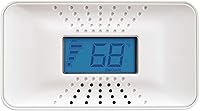
A digital display shows the CO level the alarm is sensing, updated as the reading changes. The Kidde unit refreshes its readout about every 15 seconds, so you can watch the number move during a test.
That matters when you want to understand what set the alarm off. A display also lets you check that the sensor is reading near zero in normal air.
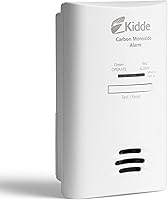
The Kidde unit goes further with peak level memory, which records the last time carbon monoxide was detected or the unit was last tested. That history helps when an alarm fired while you were out of the room.
The First Alert CO615 offers a similar peak level feature that shows the highest concentration measured.
The CO606 skips the display and uses a plain test and silence button. A number readout isn't required for detection, but it helps when you want more than an alarm tone.
How does a plug-in CO alarm get its power?
It draws power from a standard 120V outlet and, on these models, keeps a battery backup for outages. The outlet supplies steady current without battery changes, and the backup carries the unit when the power fails.
The Kidde model includes a 9V battery backup. The First Alert CO615 uses AA batteries for backup, and the CO606 takes a 9V.
That backup is what covers a storm or a tripped breaker.
One detail matters: the backup is a backup. The alarm is built to run on AC current, so a dead outlet plus a dead battery leaves you unprotected.
First Alert notes the battery is for backup only and not meant to power the alarm for an extended period without AC. Check the battery on the schedule the maker gives you.
Do they work in a power outage?
They only keep working in an outage if the backup battery is installed and charged. When the current drops, the alarm switches to the backup and keeps sensing, but only for as long as that battery holds.
Replace backup batteries on the maker's schedule and test the unit after each change. If a unit chirps when the power is out, the backup is the likely cause.
Our post on a carbon monoxide detector chirping 5 times explains the common patterns.
Treat the backup as the second line of defense. A corded alarm without a good battery is only as reliable as the outlet.
Why do people choose a plug-in over a battery alarm?
The main reason is convenience: no monthly battery swaps for the primary power. The unit stays plugged in and runs from the outlet, so daily upkeep drops to an occasional test and battery check.
A second reason is the display. Plug-in models often put a CO readout on the front, while many battery-only alarms keep a simpler light or sound.
A third is placement. An outlet sits at a convenient height, so the alarm is easy to reach for testing and easy to see.
You don't need a ladder for routine checks. The Kidde unit even ships with an extension cord for placing it on a table or shelf, and with mounting hardware for the wall-mount option.
Battery-only alarms still make sense in homes with few outlets or where wiring is unreliable. Compare the trade-offs in our guide to plug-in vs battery carbon monoxide detectors.
What should you check before you buy one?
Check the backup power, the display and the warranty, in that order. Those three decide how much attention the alarm asks of you and how long it will serve.
Start with the backup. A model without a battery is a poor fit for anyone who loses power often.
The Kidde includes a 9V backup, and both First Alert models also carry one. The CO615 uses two AA batteries and the CO606 a 9V, so match your spare batteries to the unit you pick.
Then look at the readout. A display is worth the extra if you want to see levels during a test or after a chirp.
The CO606 trades that readout for a single button.
Finally, look at the service life and warranty. The Kidde carries a 10 year limited warranty; the two First Alert units carry 7 year limited warranties.
Also check the environment limits, since all three here are rated for indoor use in ordinary household humidity. For a full buying walkthrough, see how to choose a carbon monoxide detector.
Which plug-in model fits your home?
The Kidde unit is the most complete of the three here. It pairs a 9V backup with a display that shows what the sensor is reading and a peak level memory that records the last CO event.
A 10 year limited warranty covers it. It is also UL certified and meets the UL 2034 and UL 217 standards.
The CO615 adds a backlit screen and an end of life timer. It takes AA batteries for backup and carries a 7 year limited warranty.
It suits anyone who wants to read the number at a glance. Its test and silence button lets you quiet a nuisance alarm and then check the functions in one place.
The CO606 is the plain option. It skips the display and uses one button for testing and silencing, with a 9V backup inside.
It also mutes the low battery signal for up to 8 hours, which helps when a backup runs down at night. Pick it if you want the simplest possible setup.
Our list of the best plug in carbon monoxide detector picks puts all three side by side.
Where should a plug-in detector be installed?
Put one in a standard outlet on every level of your home and near each sleeping area. Those spots keep the alarm close to the air people breathe at night.
Aim for outlets that aren't hidden behind furniture or blocked by curtains. The alarm needs open air to sample, so a corner behind a sofa is a poor spot.
Keep the unit away from steamy bathrooms and kitchens. Moisture and cooking fumes can set off nuisance alarms, and the maker's manual gives the exact clearance distances.
The First Alert units list an operating humidity range up to 95 percent, but steam still belongs away from the sensor.
Avoid outlets near the floor and in dead-air pockets. Carbon monoxide mixes with room air, so a spot at normal breathing height reads best.
Don't plug a unit into an outlet that's controlled by a wall switch.
Why does placement and maintenance decide whether it works?
A good detector only protects you if the sensor can read the air and the unit stays powered. Placement and upkeep turn a working device into a working alarm.
Test each unit on the schedule in its manual. Replace backup batteries as the maker directs and keep the vents free of dust.
A vacuum brush on low suction clears lint without forcing it into the sensor.
Watch for the end of life signal. The First Alert units use an end of life chirp to flag replacement, and the Kidde's 10 year limited warranty marks the same idea.
A unit past its service life should come out.
Don't paint over or cover the vents. Keep the front clear so sound carries into bedrooms.
So, do plug in carbon monoxide detectors work?
Yes. A plug-in CO detector senses carbon monoxide and sounds a loud alarm, and the cord just supplies steady power.
Add a working backup battery and a sensible outlet location, and the unit guards your home day and night.
The Kidde model is the strongest all-rounder here, thanks to its 9V backup, display and peak level memory. Pick the First Alert CO615 if you want a backlit readout, or the CO606 for the simplest setup.
Either way, skip the shortcuts: don't rely on an outlet alone, don't cover the vents and don't run a unit past its service life. If you're still deciding between corded and cordless, read the plug-in vs battery comparison before you buy.
Frequently asked questions
Are plug-in CO detectors as good as battery ones?
Both sense carbon monoxide with an electrochemical sensor and sound an alarm when levels rise. A plug-in unit runs on household power without battery swaps, while a battery-only alarm keeps working when the outlet loses current.
Where should you plug in a carbon monoxide detector?
Put it in a standard 120V outlet on each level of your home and near each sleeping area. Keep it away from the floor, steamy bathrooms and dead-air corners so the sensor can read the air people breathe.
How long do plug-in carbon monoxide detectors last?
The sensor inside has a limited service life, so follow the maker's replacement guidance and watch for an end-of-life chirp. The Kidde KN-COPP-3 carries a 10 year limited warranty and the First Alert units carry a 7 year limited warranty.
Why is my plug-in CO detector chirping?
A short chirp usually means low or missing backup batteries, while a repeated pattern near the end of the unit's life means it needs replacing. Our guide to a unit that is chirping five times explains the patterns.