9 Best Smoke Detectors That Don't False Alarm (November 2026)
The best smoke detectors with fewer false alarms include the BRK First Alert 9120BFF/ SMI100-AC Smoke Detector for whole-home hardwired protection, the X-Sense Smoke Detector Carbon Monoxide Detector Combo for smoke and carbon monoxide in one unit, and the SITERWELL Smoke Detector for reducing cooking nuisance alerts on a wired circuit.
On this page (8 sections)
- The best smoke detectors for fewer false alarms
- How these smoke detectors were compared
- What causes smoke detectors to false alarm?
- Which sensor type reduces false alarms best?
- How much does interconnection matter for false alarms?
- Should you choose a 10-year sealed battery or a replaceable one?
- Where should each alarm go in a busy home?
- Verdict
The best smoke detector that doesn't false alarm for most busy homes is the BRK First Alert 9120BFF, a hardwired unit with battery backup, interconnection and a single button that tests and silences. Choose the X-Sense SC07 if you want carbon monoxide coverage in the same mount, or a battery model like the Kidde 10SDR where wiring isn't an option.
Nuisance alarms usually trace back to placement and sensor type, not a faulty unit. Steam from a shower or smoke from a pan of bacon can trip an alarm that would stay quiet in a hallway.
A smoke alarm that goes off during dinner is more than annoying. People who silence it once may silence it again and again, or pull the battery for good.
The best smoke detectors that don't false alarm keep their sensitivity while giving you a quick, deliberate way to quiet a nuisance alert.
This guide compares hardwired, battery and combo units across nine models. We weighed sensor type, silence controls, interconnection and power backup against how a busy household actually uses alarms.
Our picks at a glance
-
1
 Best for whole-home hardwired protection
BRK First Alert 9120BFF/ SMI100-AC Smoke Detector
9.7/10 our score
See it on Amazon -
2
 Best for smoke and carbon monoxide in one unit
X-Sense Smoke Detector Carbon Monoxide Detector Combo
9.5/10 our score
See it on Amazon -
3

- 4
 Best for small rooms and no-wiring setupsCheck it
- 5
 Check it
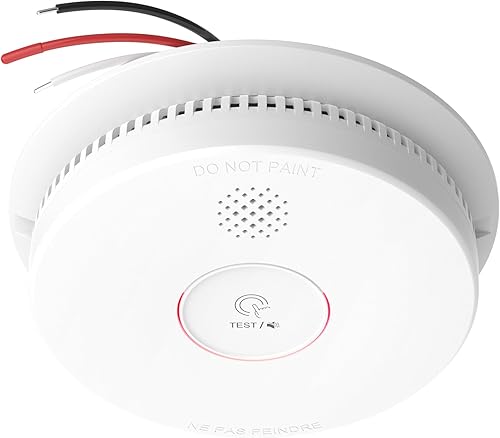
Siterlink Hardwired Interconnected Smoke Detectors
Best for fast whole-home evacuation - 6
 Check it
X-Sense SD2J0AX 10-Year Smoke Alarm 3-Pack
Best for low-maintenance multi-room coverage - 7
 Check it
FIRST ALERT BRK SC9120B Hardwired Smoke
Best for replacing an old hardwired combo alarm - 8
 Best for replaceable-battery simplicityCheck it
- 9
 Best for wired homes that also want interconnectionCheck it
The best smoke detectors for fewer false alarms
The BRK 9120BFF wins overall because it combines reliable smoke detection with the controls that make nuisance alerts easier to manage. Each pick below earns its place for a specific home or wiring setup.
BRK First Alert 9120BFF/ SMI100-AC Smoke Detector: Best for whole-home hardwired protection
- Ionization sensor
- 120V AC hardwired with 9V battery backup
- Interconnects with up to 12 First Alert or BRK alarms
- Single test/silence button
- 85 dB alarm
The 9120BFF is the strongest fit for a wired home because one silenced button and a latching indicator keep nuisance alerts manageable.
Pros
- Battery backup during outages
- Interconnects with up to 12 units
- Latching indicator shows which unit triggered
Cons
- Ionization sensor needs careful kitchen placement
- Requires existing AC wiring
The BRK 9120BFF suits a house that already has 120V wiring for alarms. Its ionization sensor detects fast flaming fires and its 85 dB horn is loud enough to wake a sleeping floor.
The battery backup keeps it running through a power failure, a common time for fire risk to rise.
The part that matters for false alarms is the single test/silence button. Press it and the horn quiets without you taking the unit down.
A latching indicator also shows which alarm triggered, so you know whether the smoke came from the kitchen or the basement.
It connects with up to 12 First Alert or BRK alarms. That means a burned pan in the kitchen sounds every unit in the house, which is the point of interconnection but also the downside: one nuisance alert becomes several.
Trade-off: an ionization sensor reacts more to cooking particles than a photoelectric one. Place this one well away from the stove and keep the photoelectric models here in mind for the kitchen itself.
For a wired whole-home system, it's the strongest pick.
X-Sense Smoke Detector Carbon Monoxide Detector Combo: Best for smoke and carbon monoxide in one unit
- Photoelectric smoke and electrochemical CO sensors
- 10-year sealed lithium battery
- 85 dB alarm
- UL 217 and UL 2034 certified
The SC07 covers two hazards in one mount and its photoelectric sensor responds faster to smoldering fires, which helps reduce cooking-related nuisance alerts.
Pros
- 10-year sealed battery
- Two sensors in one unit
- Mounts without rewiring
Cons
- Standalone unit with no wireless interconnection
- Larger footprint than a smoke-only alarm
The X-Sense SC07 fits a buyer who would rather mount one device than two. Its photoelectric sensor responds faster to slow, smoldering fires and helps reduce cooking-related false alarms.
An electrochemical sensor handles carbon monoxide detection alongside it.
Its sealed lithium battery lasts 10 years, so there's no low-battery chirp at 3 a.m. and no ladder work for a battery swap. Installation needs no rewiring: the bracket, screws and anchors are in the box.
It meets UL 217 and UL 2034 standards, which matters if your local code requires listed alarms.
A clear LCD display shows status. Note that the SC07 is a basic standalone unit.
It doesn't interconnect wirelessly or connect to Wi-Fi, so if you want all alarms to sound together, you'd need a different model.
Trade-off: it's larger than a smoke-only alarm, and the battery is sealed for the life of the unit. For a kitchen-adjacent hallway or a rental, that simplicity is a real advantage.
SITERWELL Smoke Detector: Best for reducing cooking nuisance alerts on a wired circuit
- Photoelectric sensor
- 120V AC hardwired with 9V backup
- Interconnects with up to 12 units
- 10-hour silence mode
- UL 217 10th Edition listed
SITERWELL's photoelectric sensor and 10-hour silence mode make it a strong wired pick when everyday cooking fumes keep setting off the alarm.
Pros
- 10-hour silence mode
- Interconnects with up to 12 detectors
- Photoelectric sensing for slow smoldering fires
Cons
- Fewer units in circulation than the big brands
- Still needs 120V wiring
SITERWELL's hardwired photoelectric alarm targets the most common false-alarm source in a busy home: the kitchen. Its photoelectric sensor identifies slow smoldering fires and combustion particles, which the brand says reduces alerts from cooking and daily interference.
The brand also says it responds in 1 second and delivers 5x higher accuracy than traditional detectors.
The 120V AC wiring comes with a replaceable 9V backup battery, so a blackout doesn't leave the unit dead. It interconnects with up to 12 detectors: when one sounds, all sound.
The 85 dB alarm and flashing red LED give audio and visual warning.
What makes it stand out for nuisance alerts is the silence mode. A button press mutes the unit for up to 10 hours, long enough to get through a smoky cooking session without disabling protection.
It's UL 217 10th Edition listed and housed in flame-retardant ABS+PC plastic.
Trade-off: it's a newer name with fewer units in homes than BRK or Kidde. If you need to match an existing wired brand, check compatibility first.
For a fresh wired install where cooking fumes are the worry, this is the pick.
Kidde Compact Smoke Detector: Best for small rooms and no-wiring setups
- Photoelectric sensor
- Two AA batteries included
- Test and Hush button
- 85 dB alarm
- 4-inch compact body
The compact Kidde 10SDR fits tight spaces and runs on AA batteries, with sensing technology that helps separate real smoke from cooking or steam.
Pros
- Compact 4-inch body
- No wiring needed
- Test and Hush button
Cons
- Battery changes every year or so
- Standalone, so it won't sound with other alarms
The Kidde 10SDR is the pick for tight spaces and rentals where you can't run wiring. Its 4-inch compact body fits small hallways and odd ceiling spots, and two AA batteries come in the box so it works the moment you mount it.
Kidde says the photoelectric sensing technology helps distinguish real smoke from everyday cooking or steam. The Test and Hush button lets you silence a nuisance alarm without pulling the unit down.
A loud 85 dB alarm and red LED cover the alert side.
It's tested to UL 217 10th Edition and FCC standards, and Kidde backs it with a 10-year limited warranty from purchase. That's a long coverage window for a battery-powered alarm.
Trade-off: AA batteries need replacing roughly once a year, and the unit is standalone. It won't sound with alarms in other rooms.
If you want low-maintenance coverage across several rooms, the 10-year sealed models here do that better. For one small room, it's a clean fit.
Siterlink Hardwired Interconnected Smoke Detectors: Best for fast whole-home evacuation
- Photoelectric sensor
- 120V AC hardwired with 9V backup
- Interconnects so all alarms sound together
- One-touch silence up to 10 hours
- Hidden LED indicator
Siterlink's interconnected system alerts the whole house from one trigger and its one-touch silence mutes nuisance alarms for up to 10 hours.
Pros
- All connected alarms sound together
- Long silence window
- Soft hidden LED indicator
Cons
- Needs 120V wiring
- Silence button still requires you to reach the unit
Siterlink's GS562A is built for the whole-house alert, and its interconnect capability is the headline. When one alarm triggers, every connected unit sounds at once, which gives everyone a faster path out.
It runs on 120V AC with a 9V backup for outages.
The false-alarm feature here is the one-touch silence mode. It mutes the alarm for up to 10 hours, so a smoky kitchen session doesn't mean repeated trips to the ceiling.
The brand says the photoelectric sensor detects the environment more accurately and reduces cooking-related false alarms.
A hidden LED indicator is soft enough not to disturb sleep, which suits a child's room. The 9V backup keeps it live through storms and circuit failures.
Trade-off: it needs 120V wiring, so it's not a fit for older homes without alarm circuits. The silence button still means reaching the unit.
But for a wired home that wants every room to hear one alarm, the interconnection makes it a strong value.
X-Sense SD2J0AX 10-Year Smoke Alarm 3-Pack: Best for low-maintenance multi-room coverage
- Photoelectric sensor
- 10-year sealed lithium battery
- ETL listed to UL 217
- One-button hush and self-test
- 3-pack
Three sealed-battery alarms cover bedrooms and hallways without wiring or annual battery swaps, and the photoelectric sensor helps limit cooking nuisance alarms.
Pros
- Three alarms in one pack
- 10-year sealed battery
- No wiring or electrician needed
Cons
- Alarms work independently
- No app alerts or base station
The X-Sense SD2J0AX 3-pack is the practical answer for covering bedrooms, a hallway and a basement without an electrician. Each unit runs on a sealed 10-year lithium battery, so there's no wiring and no annual battery run.
The photoelectric sensor helps reduce unwanted alarms from cooking fumes and steam. A single button handles self-tests and nuisance silencing.
Each alarm is ETL listed to UL 217, and mounting hardware is included for a minutes-long install.
Because it's a 3-pack, the cost per room drops compared with buying singles. That makes it a sensible first setup for a rental or a newly finished basement.
Trade-off: the three alarms work independently. They don't interconnect or send app alerts.
If whole-home synchronization matters, look at the wired picks above. For straightforward, low-maintenance coverage in separate rooms, this pack is hard to beat.
FIRST ALERT BRK SC9120B Hardwired Smoke: Best for replacing an old hardwired combo alarm
- 2-in-1 smoke and carbon monoxide detection
- Hardwired with battery backup
- Ionization sensor
- Interconnects with First Alert and BRK alarms
The SC9120B combines smoke and carbon monoxide detection in one hardwired unit and interconnects with compatible First Alert and BRK alarms.
Pros
- Smoke and CO in one unit
- Interconnects with compatible alarms
- Battery backup
Cons
- Ionization sensor is more prone to cooking alerts
- Needs compatible hardwired base
The First Alert SC9120B suits someone replacing an old hardwired combo alarm. It packs smoke and carbon monoxide detection into one unit, so a single mount covers both hazards.
It runs on AC power with battery backup and connects with compatible First Alert and BRK alarms.
The ionization sensor reacts quickly to fast flaming fires. Interconnection means a trigger in one room alerts the others, which is valuable at night.
First Alert backs it with a 10-year limited warranty.
For false-alarm management, the unit relies on the standard hush control and on careful placement. An ionization sensor is more sensitive to cooking particles than a photoelectric one, so keep it out of the kitchen zone.
Trade-off: it needs a compatible hardwired base and it scores lower than the top hardwired picks here. But if your home already has First Alert wiring and you want CO coverage without a second device, it's a logical swap.
SITERWELL Smoke Detector: Best for replaceable-battery simplicity
- Photoelectric sensor
- Replaceable 9V battery
- Test/Mute button
- Above 85 dB alarm
- Low battery warning
The GS509A is a straightforward photoelectric alarm with a replaceable 9V battery and a mute button, suited to rooms where you want simple upkeep.
Pros
- Replaceable battery
- Photoelectric sensing for smoldering fires
- Simple wall or ceiling mount
Cons
- Needs fresh 9V batteries over its life
- Standalone unit
SITERWELL's GS509A is the simple battery alarm for a bedroom or hallway. It uses a replaceable 9V battery and photoelectric sensing, which is more sensitive to slow smoldering fires that give off light smoke and little heat.
SITERWELL says the unit has a 10-year product life with battery changes.
A Test/Mute button handles weekly testing and quiets nuisance alerts. The alarm is above 85 dB, and a low-battery signal tells you when to swap the battery.
It mounts on a wall or ceiling with the included bracket.
The photoelectric sensor makes it a reasonable choice near living areas where cooking fumes drift. The mute button gives you a way to quiet a false alert without removing the battery.
Trade-off: you'll replace the 9V battery over the unit's life, and it doesn't interconnect. That's fine for one room but not for a whole-home plan.
It's a solid, affordable standalone pick for a spare bedroom.
Kidde Smoke Detector: Best for wired homes that also want interconnection
- Photoelectric sensor
- 120V AC hardwired with two AA backup batteries
- Interconnects with other Kidde alarms
- 85 dB alarm
- Reduced false alarms
The Kidde 20SAR links to other Kidde alarms so the whole house sounds together, and its photoelectric sensor helps cut false alarms from cooking or steam.
Pros
- Interconnects with other Kidde alarms
- AA backup batteries included
- Photoelectric sensing
Cons
- Lower score than the other wired picks here
- Needs 120V wiring
The Kidde 20SAR is a hardwired photoelectric alarm that connects with other Kidde alarms. Its interconnect capability means one trigger sounds every linked unit, which helps when a fire starts in an empty room.
It runs on 120V AC with two AA backup batteries included.
Kidde says the sensing technology helps tell real smoke from cooking or steam, cutting false alarms while keeping detection quick. It's tested to UL 217 10th Edition and FCC standards and carries a 10-year limited warranty from purchase.
The 85 dB alarm and red LED give clear warning. For a wired home already using Kidde, adding this unit extends coverage without a new ecosystem.
Trade-off: it scores lower than the other wired picks here, and it only interconnects with Kidde alarms. If your home uses a different brand's wiring, matching that brand matters more.
For a Kidde-equipped house, it's the natural addition.
How these smoke detectors were compared
We scored each unit on sensor type, silence controls, power backup and interconnection, then weighed those against what a busy household needs. Photoelectric sensing counted heavily because it handles cooking fumes and smoldering fires better than ionization.
We also looked at whether the alarm works during a power outage, whether it connects to other units and how easy the silence button is to reach. Our score weighs specs, features and the fit with what you're shopping for.
A sealed 10-year battery raised a score for low-maintenance homes, while a standalone design lowered it for whole-house coverage. Every unit here carries a UL 217 listing, so the differences come down to placement flexibility and control.
| Product | Best for | Power source | Sensor type | Warranty | Our score |
|---|---|---|---|---|---|
| BRK First Alert 9120BFF/ SMI100-AC Smoke Detector | whole-home hardwired protection | 120V AC with 9V backup | Ionization | 10-year limited | 9.7 |
| X-Sense Smoke Detector Carbon Monoxide Detector Combo | smoke and carbon monoxide in one unit | 10-year sealed battery | Photoelectric and electrochemical | 5-year quality warranty | 9.5 |
| SITERWELL Smoke Detector | reducing cooking nuisance alerts on a wired circuit | 120V AC with 9V backup | Photoelectric | 9.4 | |
| Kidde Compact Smoke Detector | small rooms and no-wiring setups | Two AA batteries | Photoelectric | 10-year limited | 9.4 |
| Siterlink Hardwired Interconnected Smoke Detectors | fast whole-home evacuation | 120V AC with 9V backup | Photoelectric | 9.1 | |
| X-Sense SD2J0AX 10-Year Smoke Alarm 3-Pack | low-maintenance multi-room coverage | 10-year sealed battery | Photoelectric | 9.0 | |
| FIRST ALERT BRK SC9120B Hardwired Smoke | replacing an old hardwired combo alarm | AC/DC | Ionization | 10-year limited | 8.7 |
| SITERWELL Smoke Detector | replaceable-battery simplicity | Replaceable 9V battery | Photoelectric | 8.5 | |
| Kidde Smoke Detector | wired homes that also want interconnection | 120V AC with AA backup | Photoelectric | 10-year limited | 8.3 |
What causes smoke detectors to false alarm?
The two biggest triggers are cooking fumes and steam, and both are placement problems more than product faults. An alarm mounted within a few feet of a stove or a bathroom door will react to particles that aren't a fire.
Photoelectric sensors are less reactive to cooking than ionization sensors, which is why kitchen-adjacent alarms often use them.
Dust and insects inside the sensing chamber also cause nuisance alerts. A quick vacuum of the vents a couple of times a year helps.
So does keeping the unit away from a forced-air vent that blows dust across the sensor.
Cooking fumes and steam
Mount alarms at least 10 feet from cooking appliances. If your kitchen layout won't allow that, choose a photoelectric model and rely on the silence button for the occasional alert.
Bathroom doors should stay closed during showers, or the alarm in the hallway should sit farther away.
Dust, humidity and temperature swings
The SITERWELL GS562A is rated for humidity up to 95% and temperatures up to 100 F, like most units here. Attics and unfinished garages are poor spots unless the unit is rated for those conditions.
Dust from renovation work is another common trigger, so cover alarms during sanding or drywall work.
Which sensor type reduces false alarms best?
Photoelectric sensors reduce false alarms from cooking and steam better than ionization sensors. They detect the larger particles that slow smoldering fires produce, and they respond less to the tiny particles that burning food gives off.
Ionization sensors are quicker on fast flaming fires, which is why some homes use both types.
If you can only pick one type near living areas, photoelectric is the safer bet for fewer nuisance alerts.
Photoelectric
Photoelectric alarms are the pick for kitchens, hallways and bedrooms near a bathroom. Models here like the X-Sense SC07, SITERWELL units and both Kidde alarms use this sensor type.
They respond to smoldering fires and keep quiet through most cooking.
Ionization
Ionization alarms react fastest to open flames. The BRK 9120BFF and First Alert SC9120B use them.
Put these in living rooms and basements where flaming fires are the bigger risk, and keep them out of the kitchen zone. If your home has both, the mix gives you balanced coverage.
How much does interconnection matter for false alarms?
Interconnection helps safety more than it helps nuisance alerts. When one alarm sounds, every linked unit sounds too, so a fire in the basement wakes people upstairs.
That's a real benefit at night. The trade-off is that one smoky pan in the kitchen can set off the whole system.
If your home has wired alarms already, interconnection is usually worth keeping. For a small apartment or a single-room setup, standalone alarms are simpler and avoid the whole-house nuisance event.
Wired interconnection
Hardwired units like the BRK 9120BFF, SITERWELL GS562A, Siterlink and Kidde 20SAR link through the home's wiring. They need an existing alarm circuit.
When they interconnect, one trigger sounds them all, and the silence button quiets the triggered unit on most systems.
Standalone units
Battery models like the Kidde 10SDR and the X-Sense 3-pack work on their own. A nuisance alert stays in one room.
That's easier to live with day to day, but it also means an alarm in a closed bedroom won't wake someone in another part of the house.
Should you choose a 10-year sealed battery or a replaceable one?
A sealed 10-year battery wins for low-maintenance homes; a replaceable battery wins when you want to keep the unit longer. Sealed models like the X-Sense SC07 and SD2J0AX need no battery changes for a decade, which removes the most common reason people disable an alarm.
Replaceable models like the SITERWELL GS509A and Kidde 10SDR let you swap the battery and keep the unit going.
Either way, the whole alarm gets replaced at 10 years because the sensor wears out. Our guide to whether 10 year smoke detectors are reliable covers what that means for long-term cost and safety.
Sealed 10-year batteries
These are the best fit for rentals and for anyone who dislikes ladder work. The sealed design means no low-battery chirp in the middle of the night, and no temptation to pull the battery.
The trade-off is that when the battery ends, the unit ends with it.
Replaceable batteries
A replaceable 9V or AA battery gives you a second chance to keep the same unit running. You'll need to test monthly and change the battery yearly.
This suits a homeowner who wants the same alarm housing for years and doesn't mind the upkeep. A battery operated smoke detector is the easiest route if you have no wiring at all.
Where should each alarm go in a busy home?
Put a photoelectric alarm in or near the kitchen and keep ionization units away from cooking. That one placement rule prevents more false alarms than any feature.
Then cover each bedroom, the hallway outside sleeping areas and every level of the home.
For the kitchen itself, our guide to the best smoke detector for kitchen covers placement distances and models that tolerate cooking fumes. A photoelectric alarm 10 feet or more from the stove is the usual compromise between coverage and quiet.
If you're unsure whether you need a smoke alarm or a smoke detector, the smoke alarm vs smoke detector explainer covers the difference in plain terms. Most homes need both a smoke alarm and a carbon monoxide alarm, and a combo unit like the X-Sense SC07 can cover both in one mount.
Kitchens and living areas
Keep alarms at least 10 feet from the stove. A photoelectric sensor handles drifting cooking fumes better, and a silence button gives you a quick fix when bacon wins.
For living areas, an ionization sensor catches fast flaming fires quickly.
Bedrooms and hallways
Mount an alarm inside each bedroom and in the hallway outside. Interconnection matters most here, because a closed bedroom door blocks sound.
If you choose standalone units, make sure each bedroom has its own. A 3-pack like the X-Sense covers three rooms at once.
Verdict
The BRK First Alert 9120BFF is the best smoke detector that doesn't false alarm for most wired homes, with interconnection, battery backup and a single test/silence button. Pick the X-Sense SC07 if you want smoke and carbon monoxide coverage in one mount.
Choose the SITERWELL GS562A for the longest silence window on a wired circuit, the Siterlink for whole-home interconnection, or the Kidde 10SDR for a compact battery unit in a small room. For multi-room coverage without wiring, the X-Sense 3-pack is the low-maintenance choice.
Place any of them at least 10 feet from the stove and you'll hear far fewer nuisance alerts.
Our top 3 picks at a glance
-
1
Best for whole-home hardwired protection
BRK First Alert 9120BFF/ SMI100-AC Smoke Detector
9.7/10 our score
See it on Amazon -
2
Best for smoke and carbon monoxide in one unit
X-Sense Smoke Detector Carbon Monoxide Detector Combo
9.5/10 our score
See it on Amazon -
3
Frequently asked questions
Why do smoke detectors go off when I cook?
Cooking fumes, steam and burnt toast send particles into the sensor that look like smoke. Photoelectric sensors handle slow smoldering fires and everyday cooking fumes better than ionization sensors.
Place alarms at least 10 feet from a stove and press the silence button when a nuisance alert starts.
Does pressing the silence button disable my smoke detector?
No. The test/silence button mutes the alarm temporarily while the sensor stays active.
Most models restore normal sensitivity after about 10 minutes.
Some hardwired units like the SITERWELL offer a longer silence window, up to 10 hours, but the detector still monitors for smoke.
Where should I mount a smoke detector to avoid false alarms?
Keep detectors at least 10 feet from cooking appliances and away from bathrooms with showers. Mount them on the ceiling or high on a wall, at least 4 inches from the corner where the ceiling meets the wall.
Steam and cooking grease are the most common causes of nuisance alerts.
Should I choose photoelectric or ionization sensors?
Photoelectric sensors respond faster to slow smoldering fires and produce fewer cooking-related false alarms. Ionization sensors react quickly to fast flaming fires.
For a busy home with a kitchen nearby, photoelectric models like the X-Sense SC07 or Kidde 10SDR are the more practical choice.
Do I need interconnected smoke detectors in a two-story house?
Interconnection is strongly recommended for multi-level homes. When one alarm triggers, every connected unit sounds, giving upstairs sleepers time to react to a fire that started downstairs.
Hardwired models like the BRK 9120BFF and Siterlink link up to 12 units on one circuit.
How often should I replace a smoke detector?
Replace the whole unit every 10 years, even if it still chirps and tests fine. Sensors degrade over time and lose sensitivity.
Sealed 10-year battery models like the X-Sense SD2J0AX are designed to match that replacement cycle.
Change replaceable batteries at least once a year.


