9 Best Smoke Detectors for Home: Battery and Hardwired (October 2026)
The best smoke detectors for home include the Kidde 20SA10 Hardwired 10-Year Smoke Alarm 3-Pack for wired homes, the X-Sense SD2J0AX 10-Year Smoke Alarm 3-Pack for no-wire installs, and the First Alert SMI100-AC Hardwired Smoke Alarm 6-Pack for multi-alarm swaps.
On this page (6 sections)
The best smoke detectors for home use depend on the wiring already in place. The Kidde 20SA10 leads for compatible hardwired systems, while the X-Sense SD2J0AX is the straightforward choice when you need standalone alarms that install without wiring.
Start with the alarms already installed. A replacement has to match the power connection and the existing interconnection system if you rely on alarms sounding together.
Then plan how many units you need by level and room rather than choosing a pack based only on household size.
For a room-by-room starting point, see how to choose a smoke detector. This roundup compares hardwired and battery-powered models, sensor options and upkeep needs.
Our picks at a glance
-
1
 Best for wired homes
Kidde 20SA10 Hardwired 10-Year Smoke Alarm 3-Pack
9.2/10 our score
See it on Amazon -
2
 Best for no-wire installs
X-Sense SD2J0AX 10-Year Smoke Alarm 3-Pack
9.0/10 our score
See it on Amazon -
3
 Best for multi-alarm swaps
First Alert SMI100-AC Hardwired Smoke Alarm 6-Pack
8.8/10 our score
See it on Amazon
- 4
 Check it
Kidde 20SD10 10-Year Battery Smoke Alarm 3-Pack
Best for Kidde battery coverage - 5
 Check it
First Alert Hardwired Smoke Alarm, Precision Detection
Best for quick-connect swaps - 6
 Check it
X-Sense SD2L0AX 10-Year Smoke Alarm 3-Pack
Best for simple room coverage - 7
 Check it
First Alert SMI105-AC Hardwired Smoke Alarm, 10-Year Backup
Best for long-backup wiring - 8
 Check it
First Alert 10-Year Dual-Sensor Smoke Alarm
Best for dual-sensor rooms - 9
 Check it
First Alert 9120B Hardwired Ionization Smoke Alarm 3-Pack
Best for 9120B systems
The best smoke detectors for home use
The Kidde 20SA10 is the lead choice for homes with compatible wiring, and the other picks cover standalone, multi-alarm and dual-sensor needs. The scores reflect how each alarm's stated features fit the needs of someone shopping for home coverage.
Kidde 20SA10 Hardwired 10-Year Smoke Alarm 3-Pack: Best for wired homes
- 120V AC power
- Built-in 10-year battery backup
- Interconnect capability with compatible Kidde alarms
- Photoelectric sensor
The 20SA10 combines hardwired power, a built-in 10-year battery backup and interconnect capability. It fits homes replacing compatible wired alarms.
Pros
- Built-in backup battery
- Compatible Kidde alarms can interconnect
- Helps reduce cooking and steam nuisance alarms
Cons
- Requires compatible hardwired setup
- Check interconnection requirements for the other alarms
The Kidde 20SA10 is the strongest match for a home already set up for compatible hardwired alarms. It runs on 120V AC with a built-in 10-year battery backup, so it can keep operating during a power outage without routine battery replacement.
Kidde says its sensing technology detects smoke over 25% faster and helps reduce false alarms from cooking or steam. The alarm also has an 85-decibel alert, a red LED and a photoelectric sensor.
Compatible Kidde alarms can interconnect, so when one detects danger, the connected units sound together. Check the user guide for the models and wiring requirements before connecting it to other alarms.
Choose it when replacing compatible hardwired alarms and you want a built-in backup battery. Skip it if your home has no matching wired connection or you cannot confirm the interconnection requirements.
X-Sense SD2J0AX 10-Year Smoke Alarm 3-Pack: Best for no-wire installs
- Sealed battery powers alarm for up to 10 years
- Photoelectric sensing
- One-button self-test and hush
- Standalone, no wireless interconnection
This standalone set installs without wiring and has a sealed battery rated for up to 10 years. It does not connect alarms to sound together.
Pros
- No wiring or electrician required for installation
- One button for self-test or hush
- Helps reduce cooking and steam nuisance alarms
Cons
- Alarms work independently
- No Wi-Fi, app alerts or wireless interconnection
The X-Sense SD2J0AX fits buyers who want battery-powered alarms that mount without wiring. Its sealed battery can power the alarm for up to 10 years, reducing battery changes and low-battery chirps during that period.
Photoelectric sensing helps reduce unwanted alarms from cooking fumes and steam. A single button runs self-tests or silences nuisance alarms, and the set includes three alarms for bedrooms, hallways or other suitable locations.
These alarms work independently. They have no Wi-Fi, app alerts or wireless interconnection, so skip this model if you need alarms in separate rooms to sound together.
Pick this set for standalone coverage without wiring. For more options in this category, compare it with our best battery-operated smoke detectors.
First Alert SMI100-AC Hardwired Smoke Alarm 6-Pack: Best for multi-alarm swaps
- 120V AC power with 9V backup battery
- Interconnects with compatible alarms
- Single button silence and test
- 6 alarms included
The six-alarm set suits a home replacing several compatible wired units. Its backup uses a replaceable 9V battery.
Pros
- Six alarms in one set
- Can interconnect with compatible units
- Side-load battery compartment
Cons
- Uses replaceable 9V backup batteries
- Confirm compatibility with the existing wiring and alarms
The First Alert SMI100-AC 6-pack suits a home replacing several compatible hardwired alarms at once. Each unit uses 120V AC power with a 9V battery backup and has one button for testing or silencing.
The model can interconnect with compatible alarms, up to 18 devices in the described system. Its open mounting design and side-load battery compartment are useful when planning a multi-unit replacement.
This alarm uses an ionization sensor, which is described as helping detect fast flaming fires. Confirm system compatibility and the correct replacement model before removing existing units.
Choose the six-pack when you need several wired alarms and your current setup supports it. If you are changing only one or two units, a smaller set may suit your plan better.
See our guide to hard-wired smoke detector replacements for more options.
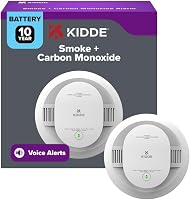
Kidde 20SD10 10-Year Battery Smoke Alarm 3-Pack: Best for Kidde battery coverage
- Built-in 10-year battery
- Photoelectric sensor
- 85-decibel alarm and red LED
- Helps reduce cooking and steam nuisance alarms
The 20SD10 is a standalone battery-powered option with a built-in 10-year battery and a photoelectric sensor. It shares several features with the hardwired 20SA10.
Pros
- No routine battery replacement
- 85-decibel alarm with red LED
- Helps reduce cooking and steam nuisance alarms
Cons
- Does not provide hardwired power
- No interconnect feature is stated
The Kidde 20SD10 is a sealed-battery alternative to the hardwired 20SA10. It has a built-in 10-year battery, photoelectric sensing, an 85-decibel alarm and a red LED for a visible warning.
Kidde says its sensing technology detects smoke over 25% faster and helps reduce nuisance alarms from cooking or steam. This model is battery powered and does not require a hardwired connection.
Interconnection is not specified for this model, so don't assume it will make other alarms sound. Choose the 20SD10 for Kidde-branded sealed-battery coverage without wiring, and skip it if you need to preserve a hardwired interconnect system.
For the differences between these two models, see Kidde 20SA10 vs 20SD10.
First Alert Hardwired Smoke Alarm, Precision Detection: Best for quick-connect swaps
- Hardwired alarm with battery backup
- Precision Detection sensing
- Quick Connect Plug
- Compatible alarms can interconnect
The Quick Connect Plug is intended to help replace an existing alarm without rewiring. Confirm that the plug and alarm match your current setup.
Pros
- Quick Connect Plug included
- Battery backup for power outages
- Visual indicator identifies the alarm that started the alert
Cons
- Confirm compatibility with the installed system
- Battery backup type is not specified
The First Alert Precision Detection alarm is worth considering when you need a compatible hardwired replacement with a quick-connect plug. The included Quick Connect Plug is intended to help replace an existing alarm without rewiring.
First Alert says its Precision Detection sensing helps reduce cooking nuisance alarms. The alarm also has battery backup, a visual indicator that identifies the unit that initiated an alarm and interconnect support for compatible alarms.
The backup battery type is not specified here, so confirm it before buying if the battery format matters to your maintenance plan. Match the alarm and connector to your existing wiring.
Choose it for a compatible quick-connect replacement. Skip it if you cannot verify the plug and interconnection fit your system.
For a closer look at replacement choices, see best hard-wired smoke detector replacements.
X-Sense SD2L0AX 10-Year Smoke Alarm 3-Pack: Best for simple room coverage
- Built-in battery rated for up to 10 years
- Photoelectric sensor
- Self-test and test/silence button
- No wiring needed
This standalone set has a built-in battery rated for up to 10 years, a self-test and a test/silence button. It installs with included screws and does not need wiring.
Pros
- No wiring or electrician needed
- Self-test monitors alarm performance
- Photoelectric sensing helps reduce cooking nuisance alarms
Cons
- Standalone alarms
- Interconnection is not specified
The X-Sense SD2L0AX is a standalone battery-powered choice with no wiring required. Its built-in battery is rated for up to 10 years, and its photoelectric sensor helps reduce nuisance alarms from cooking fumes and steam.
A built-in self-test monitors alarm performance, while the test/silence button lets you test or hush the unit. The three alarms mount with included screws, making this set useful when you need coverage in several rooms.
The SD2L0AX is designed as a basic standalone alarm. Interconnection is not specified, so it is not the pick for a home that needs alarms to sound together.
Choose it for straightforward battery-powered coverage with a self-test feature. Compare it with the X-Sense SD2J0AX 10-year alarm set if you want another battery option.
First Alert SMI105-AC Hardwired Smoke Alarm, 10-Year Backup: Best for long-backup wiring
- Hardwired alarm
- 10-year battery backup
- Compatible alarms can interconnect
- End-of-life warning
The SMI105-AC pairs hardwired power with a 10-year battery backup. Compatible alarms can interconnect to provide alerts through the home.
Pros
- 10-year battery backup
- Interconnects with compatible alarms
- End-of-life warning
Cons
- Requires compatible hardwired setup
- Check compatibility before replacing existing alarms
The First Alert SMI105-AC pairs hardwired power with a 10-year battery backup. It can interconnect with compatible alarms, and an end-of-life warning signals when it is time to replace the alarm.
First Alert's Precision Detection technology is intended to reduce cooking nuisance alarms. The alarm uses an ionization sensor, so check the model's instructions and your home's requirements when selecting detector types.
This set has three alarms. Confirm the connector and wiring match your current system before replacing units, especially if the existing alarms are from a different brand or series.
Choose the SMI105-AC when a long backup period matters in a wired system. Skip it if your home's wiring or connected alarms are incompatible.
First Alert 10-Year Dual-Sensor Smoke Alarm: Best for dual-sensor rooms
- Sealed 10-year battery
- Photoelectric and ionization sensors
- Test/silence button
- End-of-life warning
This standalone alarm combines photoelectric and ionization sensors and uses a sealed 10-year battery. Its dual-sensor design covers fast flaming and slow smoldering fires.
Pros
- Dual sensors for different fire types
- No battery replacements during the stated 10-year battery life
- End-of-life warning
Cons
- One alarm in the package
- Does not provide hardwired power
The First Alert dual-sensor alarm is a standalone option for buyers who want photoelectric and ionization sensors in one unit. First Alert says the sensors provide protection from fast flaming and slow smoldering fires.
Its sealed battery is designed to last 10 years, avoiding battery replacements and low-battery chirps during that period. A test/silence button supports basic checks, and an end-of-life warning signals when replacement is due.
This is a single alarm rather than a multi-pack, and it does not use hardwired power. It may fit a specific room or replacement need, but plan the rest of the home's coverage separately.
Choose this alarm when dual sensors are the priority and a standalone unit suits your setup. Skip it if you need several replacements in one purchase or require hardwired interconnection.
The smoke detector types and buying guide explains sensor and power considerations.
First Alert 9120B Hardwired Ionization Smoke Alarm 3-Pack: Best for 9120B systems
- Hardwired with 9V battery backup
- Ionization sensor
- Interconnects with compatible alarms
- Test/silence button
The 9120B uses an ionization sensor and a replaceable 9V backup battery. It can interconnect with compatible BRK or First Alert alarms.
Pros
- Battery backup during a power failure
- Compatible alarms can sound together
- Single test/silence button
Cons
- Uses a replaceable 9V battery
- Check compatibility with the existing hardwired system
The First Alert 9120B is a hardwired ionization alarm with a replaceable 9V backup battery. It can interconnect with compatible BRK or First Alert units, allowing connected alarms to sound together.
The ionization sensor is described as helping detect smoke from fast flaming fires. A test/silence button, side-load battery compartment and tamper-resistant locking brackets are included features.
This model is a 3-pack, so it can help replace several compatible alarms at once. Check the manual and existing system before mixing it with other alarm models.
Choose it when your home uses a compatible 9120B-style wired system. Skip it if you want sealed batteries or cannot confirm that its connector and interconnection match your current setup.
How should you choose a smoke detector for your home?
Choose by power source first, then confirm the sensing and interconnection features you need. A practical order is to identify the current system, map required locations, and then compare the models that fit those limits.
Are battery smoke detectors right for your home?
Battery-powered smoke detectors suit rooms without a compatible hardwired connection. Sealed 10-year batteries reduce routine battery changes, though the full alarm still needs replacement according to its end-of-life instructions.
Standalone battery alarms do not necessarily interconnect. If you want alarms in different rooms to sound together, verify that the specific model supports interconnection before you buy.
When should you choose a hardwired smoke detector?
A hardwired model is a logical replacement when your home already has compatible wired alarms. Some models include battery backup for outages and interconnect with compatible units, but connection requirements vary.
Don't assume two alarms are compatible because they share a brand. Check the model numbers, wiring and user guides before changing the system.
If a connector does not match, stop and identify the correct replacement rather than forcing a fit.
What sensor type should you consider?
Photoelectric sensors appear on several picks here, and some brands say they help reduce cooking or steam nuisance alarms. Ionization models are described as helping detect fast flaming fires, while the First Alert dual-sensor alarm combines photoelectric and ionization sensing.
Use the manufacturer's instructions and local requirements when deciding which sensor type fits a room. For a plain-language overview, read our smoke detector types and buying guide.
Does interconnection matter?
Interconnected alarms can sound together when one compatible unit detects danger. This can help people elsewhere in the home hear an alert, but the alarm models and their wiring must support the same system.
Decide whether you need wired interconnection, wireless interconnection or standalone alarms. The SD2J0AX explicitly works on its own, while several wired picks connect with compatible alarms.
Read the manuals before combining models.
How many alarms should you buy and where should they go?
Plan the locations before choosing a pack size. The right number depends on the home's levels, bedrooms and layout, as well as local fire codes and each alarm's installation instructions.
Make a simple room list, then mark where an alarm is needed on every level and in each required area. A three-pack may cover a smaller replacement project, while a six-pack may fit a broader wired replacement.
One dual-sensor alarm is a targeted option, not a whole-home plan.
Follow the alarm's approved locations and mounting directions. Our guide to where to place smoke detectors in a house covers room planning, and how long smoke detectors last explains replacement timing.
How do you set up and care for a smoke detector?
Install each alarm according to its own manual and the home's applicable requirements. Before mounting anything, confirm whether the alarm is battery powered or hardwired and whether the existing connector and interconnection system match.
For battery models, use the included mounting hardware and run the button-based self-test or test function after installation, as the instructions direct. Sealed batteries reduce routine changes, but they do not remove the need to check the alarm and replace it when its end-of-life signal or instructions call for it.
For hardwired models, confirm the circuit and connector requirements before removing an existing alarm. Use a qualified electrician if you are unsure about household wiring, and do not assume a quick-connect plug fits every alarm from the same brand.
Keep the manual or model number accessible, so you can identify the right alarm if a unit chirps or signals an end-of-life condition. Test and maintain alarms on the schedule set by the manufacturer and local guidance.
What smoke detector buying mistakes should you avoid?
The most common mistake is choosing by pack size or a long battery life before confirming the alarm fits the home. A mismatch in wiring, connector or interconnection can make a seemingly convenient replacement the wrong choice.
Avoid these mistakes:
- Assuming hardwired alarms are interchangeable. Check model numbers, connector type and system compatibility.
- Expecting standalone alarms to sound together. Verify interconnection support for the exact model.
- Treating a backup battery as the main power source. Hardwired alarms still depend on a compatible wired connection.
- Buying too few alarms. Map locations first, then select the pack size.
- Forgetting replacement timing. A sealed battery does not mean the entire alarm lasts indefinitely; follow its end-of-life instructions.
- Ignoring nuisance-alarm placement. Use the manual and local guidance to select locations and avoid placing an alarm where cooking fumes or steam trigger frequent disruptions.
Which smoke detector should you buy?
Choose the Kidde 20SA10 if you have compatible wiring and want hardwired power, a built-in 10-year backup and interconnection with compatible Kidde alarms. Pick the X-Sense SD2J0AX for no-wire standalone coverage, or the First Alert SMI100-AC when you need six compatible wired alarms with replaceable backup batteries.
For a sealed-battery Kidde option, consider the 20SD10. For a single dual-sensor alarm, choose the First Alert SM310.
Before buying, match the alarm to the existing system and plan every location. Our guide to the best battery-operated smoke detectors and the smoke detector selection guide can help you narrow the choice.
Our top 3 picks at a glance
-
1
Best for wired homes
Kidde 20SA10 Hardwired 10-Year Smoke Alarm 3-Pack
9.2/10 our score
See it on Amazon -
2
Best for no-wire installs
X-Sense SD2J0AX 10-Year Smoke Alarm 3-Pack
9.0/10 our score
See it on Amazon -
3
Best for multi-alarm swaps
First Alert SMI100-AC Hardwired Smoke Alarm 6-Pack
8.8/10 our score
See it on Amazon
Frequently asked questions
Which smoke detector is best for most homes?
The Kidde 20SA10 is a strong fit for homes with compatible hardwired connections because it combines 120V AC power, a built-in 10-year battery backup and interconnect capability. If your home lacks compatible wiring, choose a battery-powered alarm instead.
Check the installed alarm's model and wiring before you replace it.
Are battery or hardwired smoke detectors better?
The right choice depends on your home's wiring and the alarm you are replacing. Hardwired models connect to building power and may offer interconnection, while sealed-battery alarms can install without wiring.
For a closer comparison, see our guide to wired vs wireless smoke detectors.
Do smoke detectors need to be interconnected?
Interconnected alarms can sound together when one compatible unit detects danger. That can help alert people in other parts of the home.
Compatibility depends on the alarm models and wiring, so check the manuals before connecting units from different systems.
What type of smoke detector should I buy?
Choose an alarm that matches the home's wiring, placement and maintenance needs. Photoelectric models are common among the sealed-battery picks here, while some hardwired options use ionization sensors or combine both sensor types.
Our smoke detector types and buying guide explains the tradeoffs.
How many smoke detectors do I need?
Place alarms according to local fire codes and the manufacturer's instructions for each model. The right number depends on the home's levels, bedrooms and layout.
Use our guide to where to place smoke detectors in a house to plan coverage room by room.